In just a few decades, Pinot blanc has quietly but steadily carved out a place for itself among Alsace's impressive range of wines. It now accounts for 23% of the region's vineyard acreage and continues to attract growing interest. We spoke to producers, both small and large, to find out how they view this development, and how export and hospitality sales are performing. These are their insights.
Pinot blanc, a versatile grape in the vineyards of Alsace
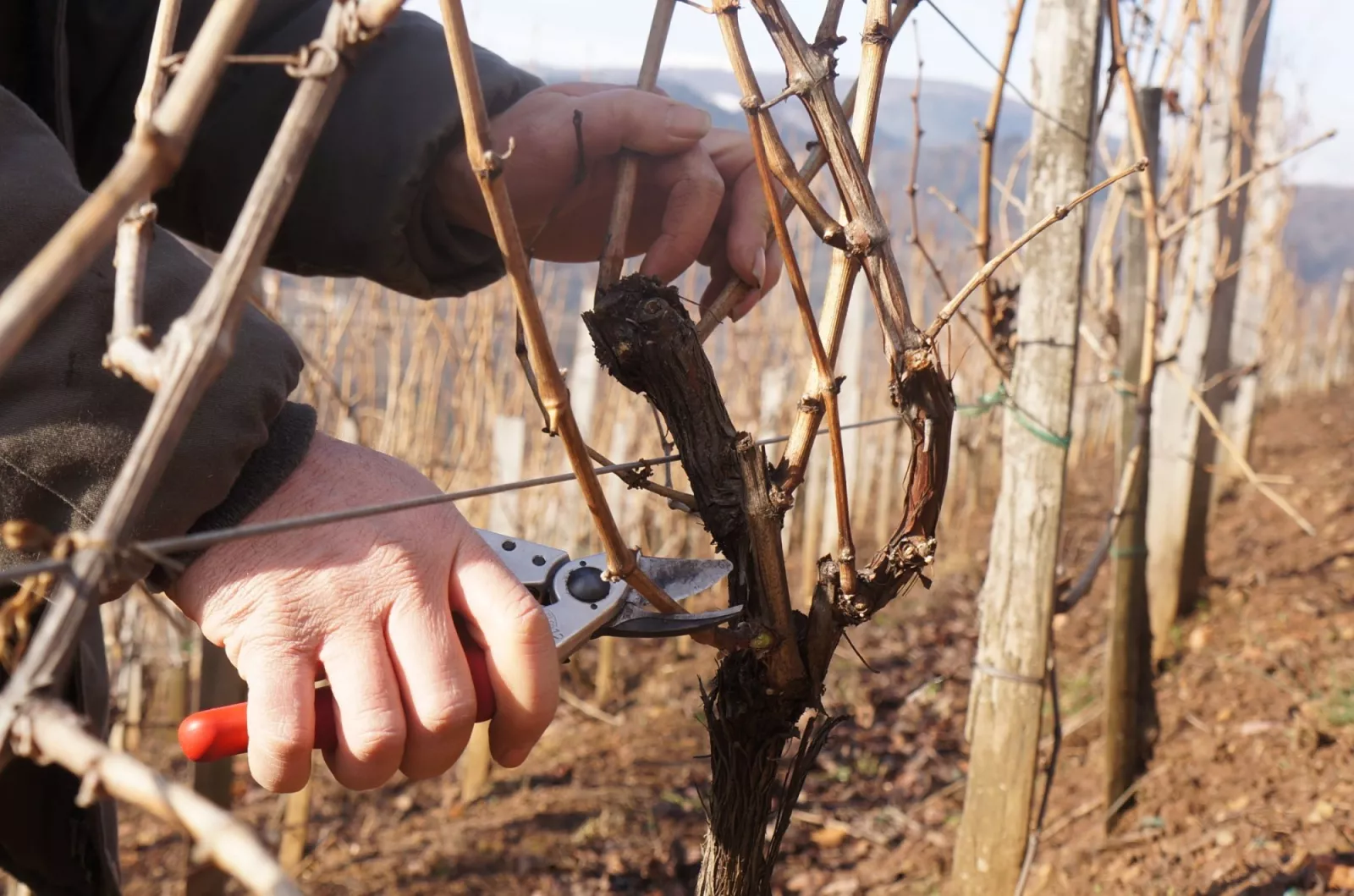
Pinot Blanc production has more than doubled since 1980...
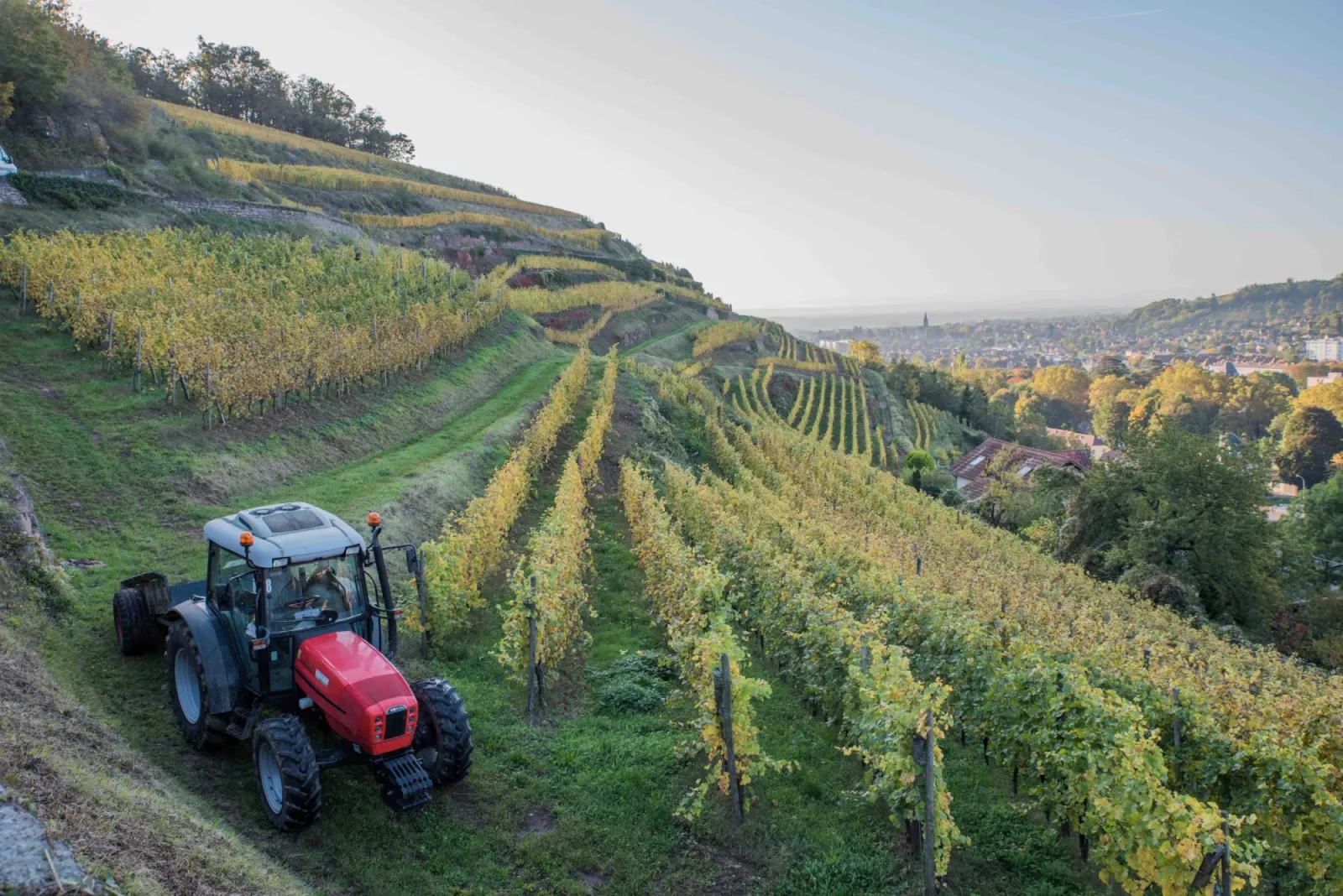
Sheltered from the prevailing westerly winds and rainfall by the blue ridge of the Vosges Mountains, whose eastern foothills gradually give way to the Rhine plain, the vineyards of Alsace thrive in their south-south-east facing sites and mild autumn weather. For centuries, the region has been defined by its white wines, across the entire sweetness spectrum. It capitalises on the idiosyncrasies of its varietal range, each grape shaping the style of the wine alongside the myriad microclimates, varied topology, remarkably diverse geology and the finely-tuned skills of the winegrower.
Pinot blanc has forged its own identity, proving remarkably versatile. Its multi-faceted personas range from storied bottlings and renowned age-worthy signatures that grace the finest tables to delicious late-harvest pours and approachable blends. These achievements stem from the many strings to its bow – its recognised versatility, its relatively early-ripening grapes and its consistently reliable yields.
Apolline Meyer, Domaine du Bollenberg: "It is perfectly in tune with today's tastes"
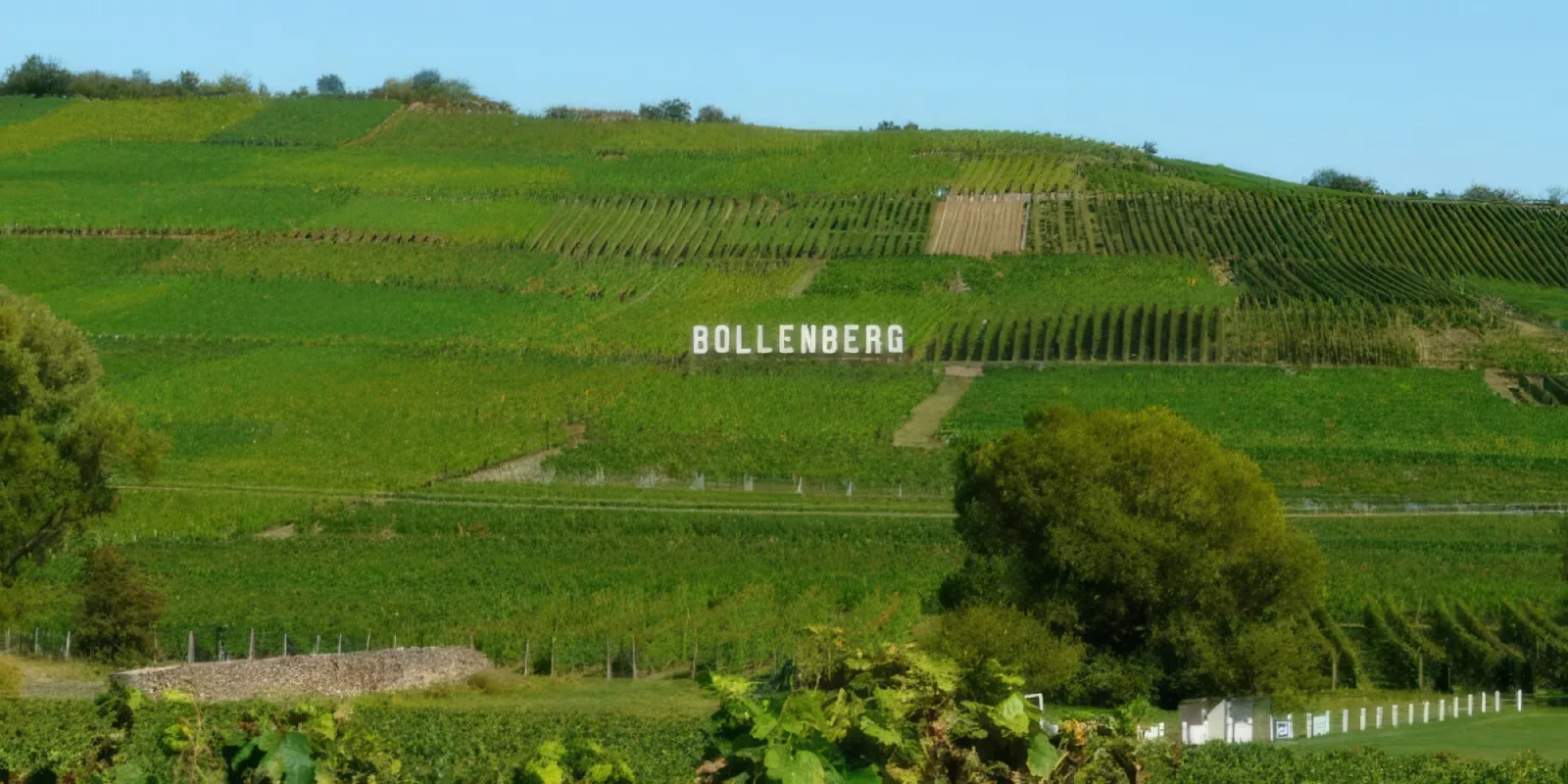
Domaine du Bollenberg: a family-run business founded in 1887 in this famous lieu-dit
Westhalten is tucked neatly in one of the sweeping bends along the picturesque wine route, between Rouffach and Guebwiller. Since 1945, the Meyer family has been shaping the future of Clos Sainte-Apolline – Domaine du Bollenberg (see Domaine du Bollenberg results at GGIC). The estate's vineyards form a single 25-hectare block and have been farmed organically since 2012. Apolline Meyer runs the estate alongside her cousins Francis and Benoît. Although Pinot blanc accounts for just 5% of production, Meyer is a firm believer in the variety. "It is perfectly in tune with today's tastes. It is a fresh, light wine that offers the ideal gateway for discovering Alsace wines. It doesn't compete with Riesling, Pinot gris or Gewurztraminer, which are naturally more complex. Instead, it complements them perfectly. Its clientele, however, is completely different – generally younger. When it is blended into Crémant d'Alsace, it lends a beautiful trace of freshness that enhances the wine's finesse".
Etienne Moellinger: "It's an uncomplicated, easy-drinking wine that's made for sharing"
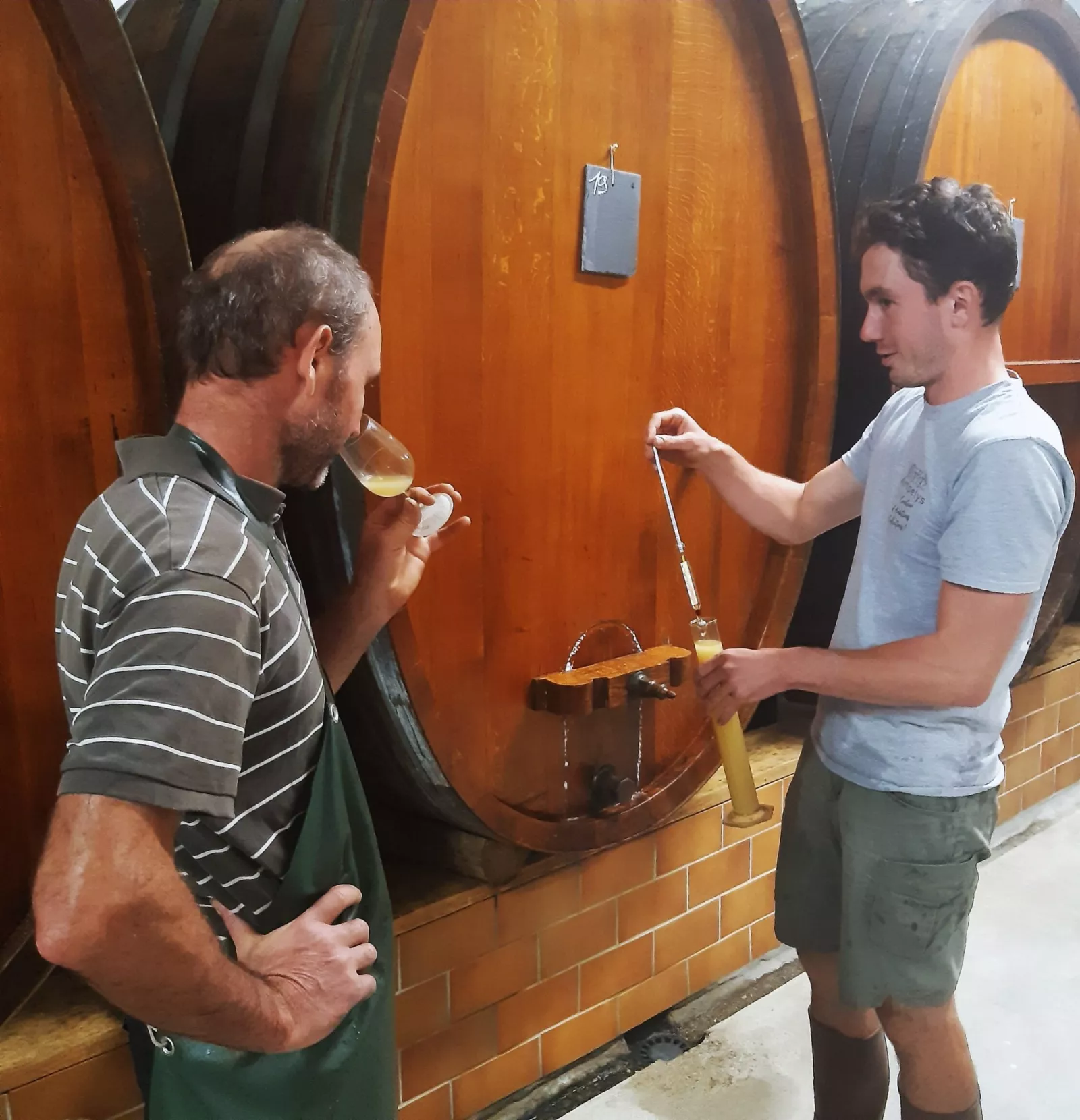
The large oak casks are over seventy years old and date back to the great grandfathers' era
Domaine Joseph Moellinger et fils perpetuates the family tradition of winegrowing across the estate's 16-hectare vineyard spread over five villages and some fifty individual blocks. From founder Joseph to the present-day incumbent Etienne, many generations have left their mark on the landscape they call home. Based in Wettolsheim, just a short distance from Colmar, the estate has been farmed organically since 2023 and is planted predominantly to Pinot blanc. Looking back over the decisions made by his father Michel, Etienne Moellinger comments: "Pinot blanc is an uncomplicated, easy-drinking wine that's made for sharing. You can open a bottle at any time and it works with a wide range of dishes. Wine lovers appreciate that it still offers a certain degree of complexity, and they often ask to taste it before moving on to the Riesling and Gewurztraminer". While Moellinger says that people are not necessarily rushing to buy Pinot blanc, he highlights how its popularity has grown over the years: "We always manage to sell our stocks. Pinot blanc may not have the ageing potential of the region's more celebrated varieties, but it drinks beautifully for three or four years, retaining its freshness and fruit".
Nathalie Freyburger: "We still have a lot to do to raise its profile…"
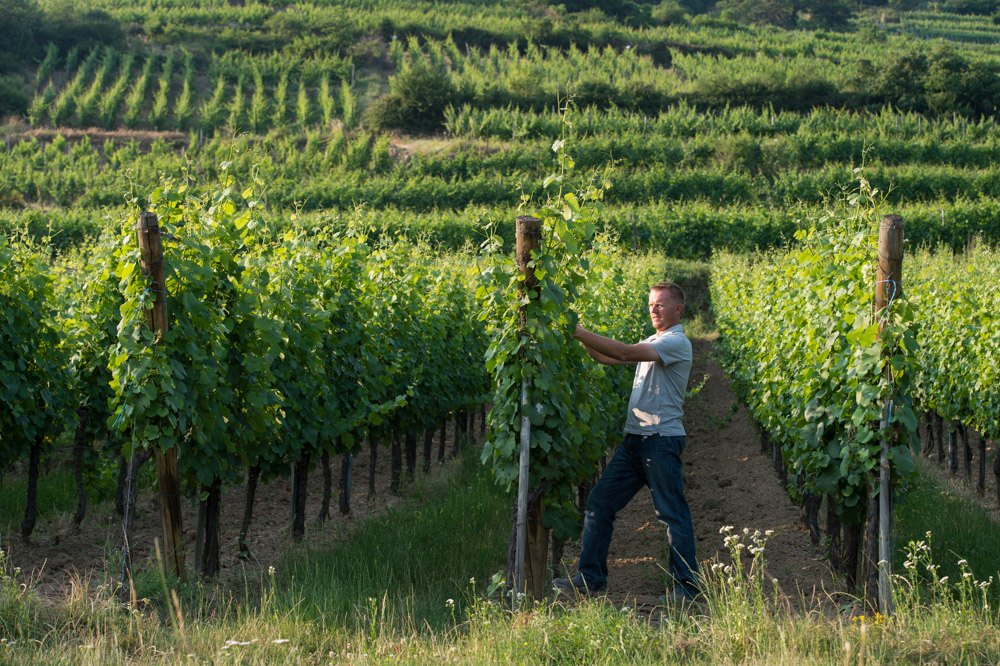
The fourth generation of the Freyburger family perpetuates its 70-year love affair with Pinot Blanc
Since 1994, Christophe and Nathalie Freyburger have been at the helm of their thriving, eponymous estate in Ammerschwihr (see Domaine Freyburger results at GGIC). What began as 3.5 hectares of vines has grown to nine hectares, all farmed organically. "Pinot blanc accounts for 29% of the estate's vineyard area", explains Nathalie Freyburger. "Our plantings have continued to evolve over the years. Since 2021, they have increased by a further 5%, driven by genuine demand, particularly from local customers. It's a different story for visitors passing through, who are often less familiar with the variety. We still have a lot to do to raise its profile, but once people discover it, they become converts". Does the wine resonate though with present-day tastes? "Absolutely! It's an accessible, light, straightforward wine with fairly moderate acidity. It is easy to drink and makes the ultimate wine for sharing". And what about Crémant? "Pinot blanc brings freshness and lively acidity. Our Extra-Brut is single varietal Pinot blanc. Compared with Chardonnay, it offers more aromatic intensity and fruity characters. It truly is an incredible calling card for Alsace".
Séverine and Thomas Schlumberger: "Pinot blanc is the Swiss Army knife of wine!"
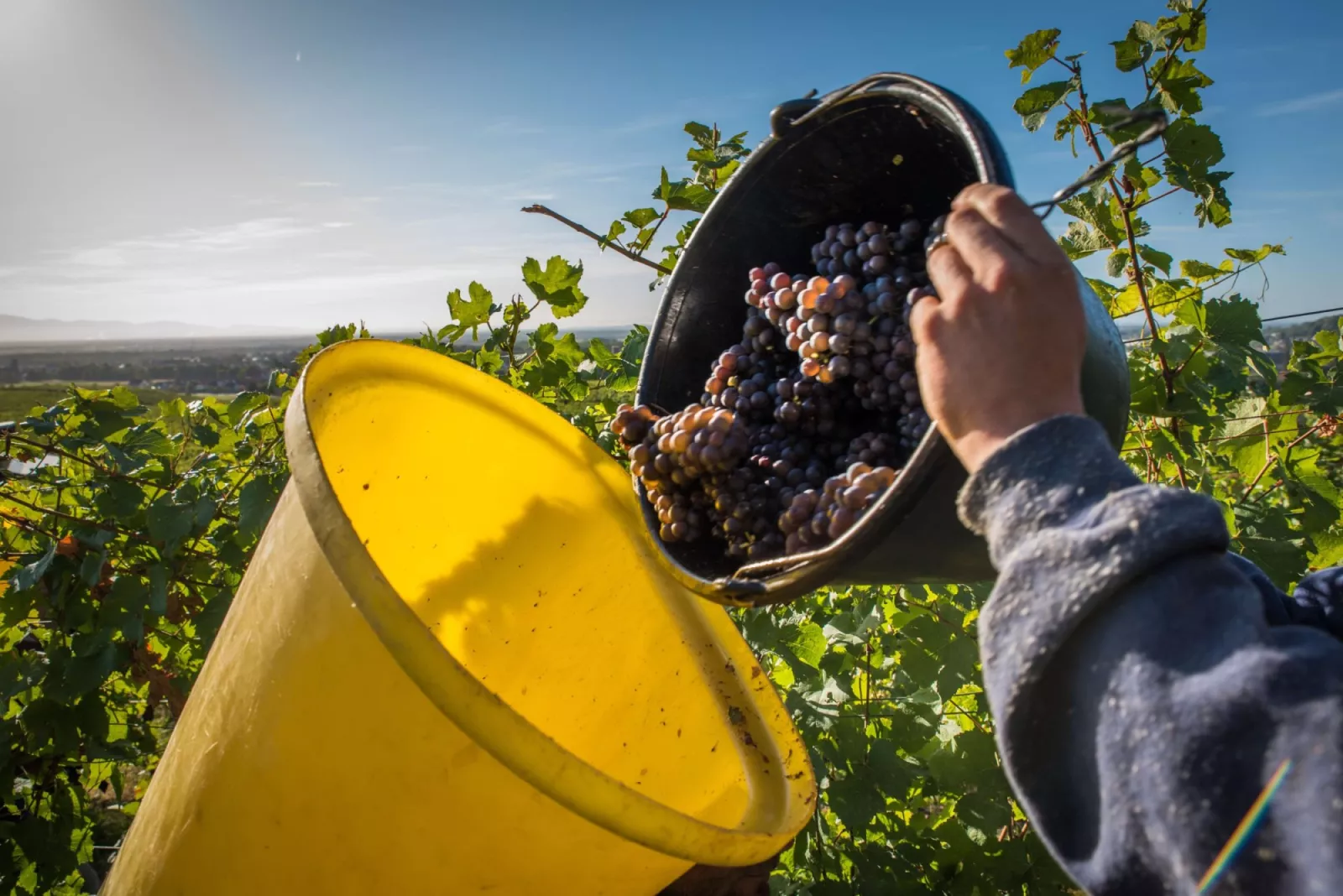
No fewer than seven generations have managed Les Domaines Schlumberger
Established in 1810, Les Domaines Schlumberger is the largest privately owned wine estate in Alsace, with 120 hectares under vine. Its reputation is built on a unique mosaic of fairly steep vineyard sites that lend the wines their distinctive hallmark. The estate commands the slopes of Guebwiller, beneath the rounded silhouette of the eponymous mountain. Séverine Schlumberger and her brother Thomas now lead the family business, remaining firmly committed to tradition rather than fleeting fashions. Pinot blanc, they believe, is a timeless variety, taking on a lovely sheen over the years. "We grow 15 hectares of Pinot blanc. Most Alsace winegrowers use it for Crémant, but, true to form, we go against the flow, making it as a still wine that we sell at entry-level. Therefore, it has to be flawless because it is the gateway to all our other wines". Is demand growing? "There's definitely growing curiosity but having said that, Pinot blanc remains a hidden gem. For me, it is the ultimate fresh white wine for al fresco drinking beside the pool: easy-going, incredibly versatile and capable of pairing with almost everything. Pinot blanc is the Swiss Army knife of wine!"
Laura Pereira, Domaine Goettelmann: "It fully deserves its place in the Alsace wine range"
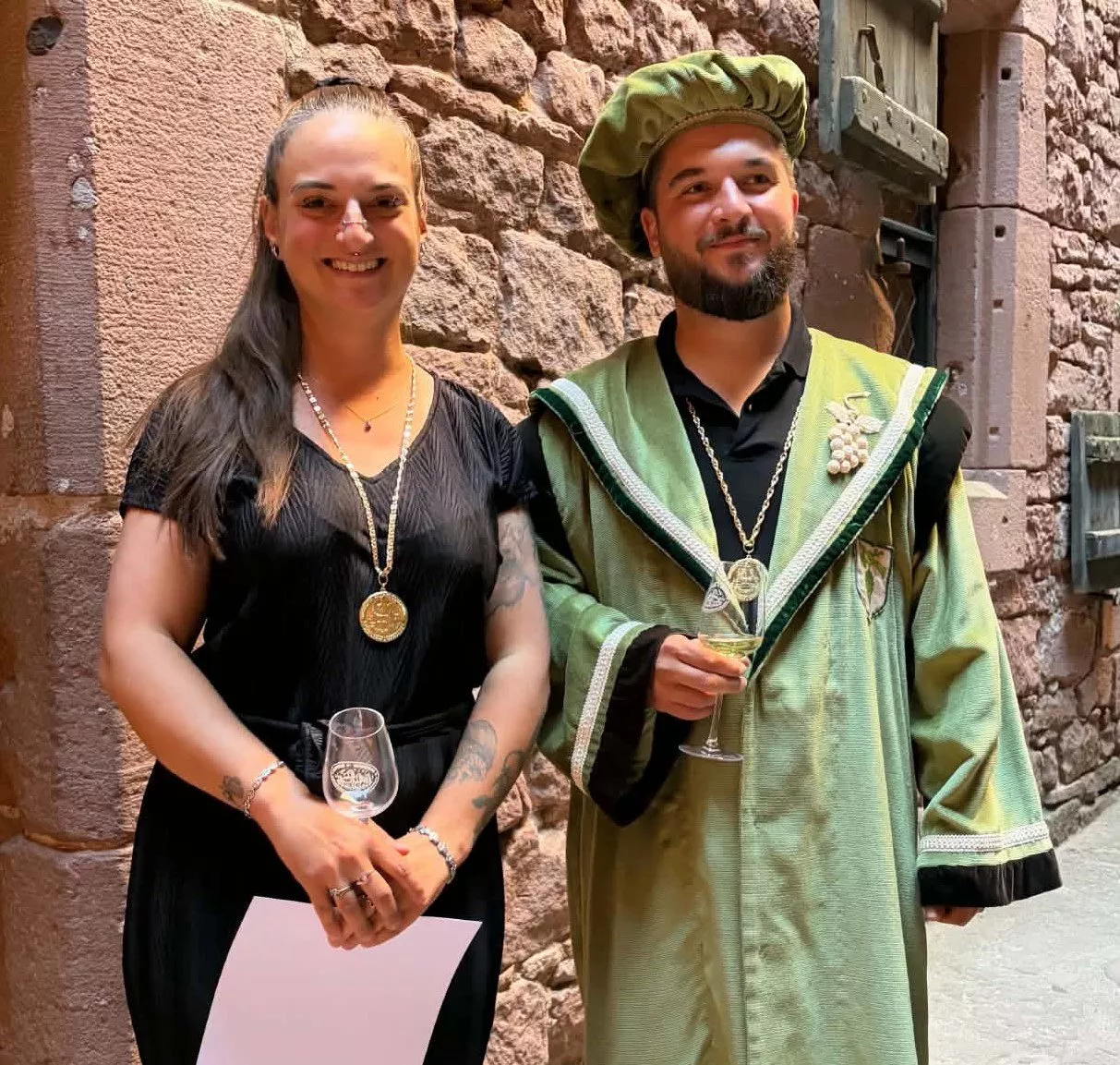
Joseph Pereira, with his sister Laura, are gradually taking over the estate
Nestled in Kintzheim, beneath the watchful gaze of Haut-Koenigsbourg Castle, Domaine Goettelmann (see Domaine Goettelmann Lucien results at GGIC) was founded in 1960 by Lucien Goettelmann. Through sheer hard work and determination, he earned a reputation that was widely recognised across the region. Today's eleven hectares under vine are managed by his grandchildren, Joseph and Laura, who are gradually taking over the reins. The vineyards are certified High Environmental Value. From the outset, Lucien Goettelmann chose to include Pinot blanc in his varietal range, designating it for his still wines. Since then, plantings have increased six fold to keep pace with growing consumer demand.
His granddaughter Laura expounds further: "Pinot blanc truly resonates with present-day demand. It's typically a fresh, well-balanced, versatile wine with soft acidity and restrained aromatics, making it a crowd-pleaser. It pairs effortlessly with everyday dishes and is incredibly approachable. Consumers show a genuine interest in it. There was a time when it was set aside mainly for blends, but it now fully deserves its place in the Alsace wine range due to its elegant simplicity and accessibility".
Henri Ehrhart: "When we remove Gewurztraminer vines, we often replace them with Pinot"

Despite being a large company, Maison Henry Ehrhart retains a family spirit
At Maison Henri Ehrhart (see Henri Ehrhart results at GGIC), near Colmar, growing vines has been part of the family's heritage for eight generations. The family-owned estate itself is relatively modest, with just seven hectares of meticulously tended vineyards. Since the 1970s, however, the business has expanded through its negociant activity. Today, the company sources grapes from more than 400 ha of vineyards farmed by local growers before vinting the wines itself. Its founder, Henri Ehrhart, now at the helm of a major company, recounts: "Within our business, the proportion of Pinot blanc grew significantly between 1969 and 2009, to the point where planted acreage tripled. Since then, growth has levelled off, although plantings continue to increase slightly. Whenever we remove Gewurztraminer vines, due to the current market downturn, we generally replace them with Pinot – blanc or noir – and Auxerrois". Asked about Pinot blanc's qualities, he replies: "It is accessible, straightforward, universally appealing, suited to all consumer audiences and reasonably priced. Its acidity is present without being intrusive and it has proved particularly popular with women. Consumers are invariably surprised to discover the wine has true structure, a gently creamy texture, a fairly delicate bouquet with white flower notes and a dash of acacia. At 12.5% ABV, its alcohol content is moderate, making it a very palatable wine".
Alsace Pinot blanc in export markets: ample room for development
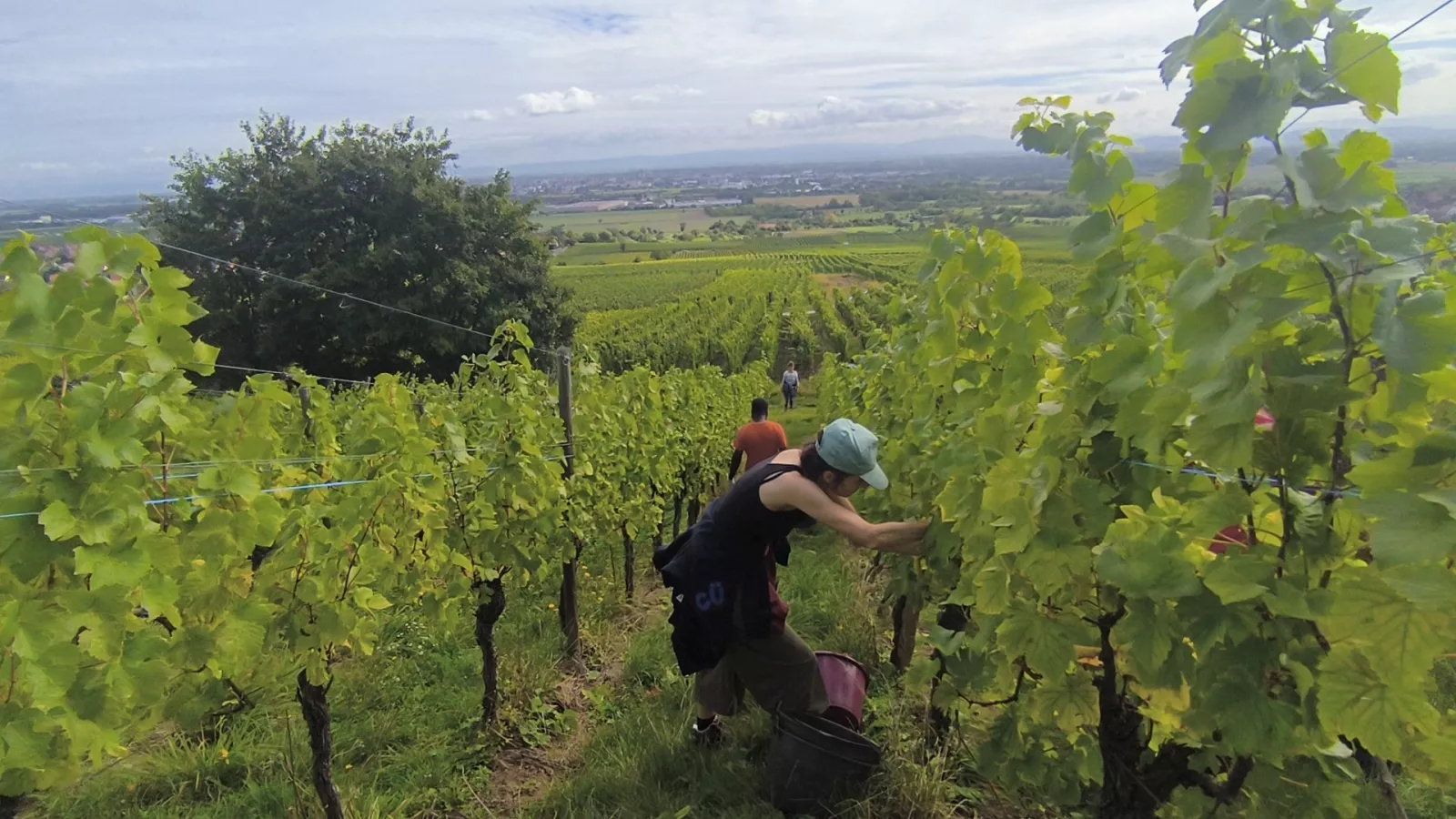
Domaine Goettelmann: eleven hectares of vines certified High Environmental Value
In export markets, Pinot blanc still offers considerable potential. According to Apolline Meyer, "Its market share grows regularly. We export throughout Europe and Canada, along with China although short-term protectionist measures are currently affecting our business there". In 2025, Domaine Moellinger exported 7% of its production, entirely within Europe. "Pinot blanc remains marginal at just 4%", says Etienne Moellinger, who admits he'd hoped for more. Nathalie Freyburger, however, feels the outlook is positive: "International customers are changing. In Scandinavia, for example, consumers are fond of this type of grape variety and enjoy its structure and flavour". Séverine Schlumberger drills down further: "It is a good introduction to our wines that competes with more established choices like Chardonnay. Pinot blanc brings something different to the category. 65% of our total production is exported to 57 countries, meaning our Pinot blanc can now be found worldwide. There is significant demand in Australia, which also grows the variety, as well as in New Zealand and the USA".
At Domaine Goettelmann, Laura Pereira is equally confident: "At the moment, our exports of Pinot blanc remain limited, but we are gradually developing this market. We have established promising contacts with importers and distributors in Denmark, Belgium and Portugal". As a prominent negociant, Henri Ehrhart can leverage significant volumes: "22% of our total production – including 7% of Pinot blanc – is shipped abroad, mostly to the Netherlands, Belgium, Denmark and Great Britain, along with Japan", he explains. "Russia was showing promising interest in our wines but recent events have so far halted discussions".
Pinot blanc and the on-trade: more aggressive marketing is needed
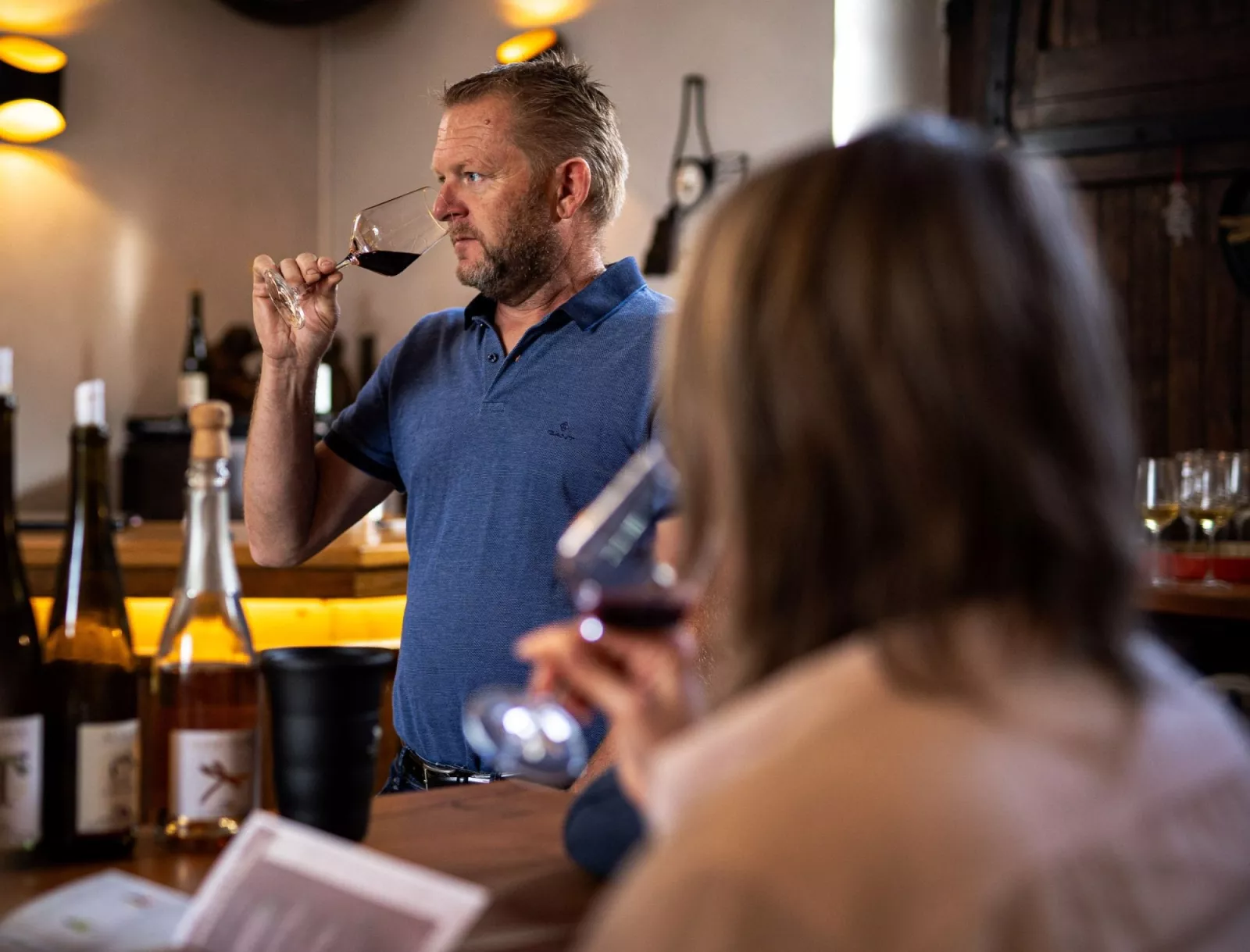
Domaine Freyburger: here, Pinot Blanc and Pinot Noir are celebrated with the same conviction...
In the on-trade – restaurants, bars and brasseries – Pinot blanc is gaining traction, but the wines themselves remain relatively scarce. Apolline Meyer agrees: "Pinot blanc has a loyal following and undeniable potential. Its value for money is a real advantage. When customers are impressed by it, it becomes a stepping stone towards the rest of our range". Henri Ehrhart shares her viewpoint: "A consumer who chooses Pinot blanc will naturally move up the range. That's a fact. It is popular in small brasseries while more gastronomic establishments are also beginning to take an interest. But it deserves to be highlighted more by the trade". Etienne Moellinger adds: "There could be greater interest. A well-crafted Pinot blanc from top vineyard sites with yields kept in check can deliver outstanding results and deserves far more attention from the on-trade".
Nathalie Freyburger similarly feels that promotion should be dialled up: "There's a shift happening in urban areas but people tend to still choose a Chardonnay or a Sauvignon over a Pinot blanc, even though it has a real opportunity to make its mark". Séverine Schlumberger is even more direct, arguing that on-premise outlets do not take enough interest in this style of wine: "At a time when consumer spending is under pressure but consumers are still looking for quality wines, Pinot blanc offers unbeatable value for money". At Domaine Goettelmann, Laura Pereira reinforces the message: "Pinot blanc is probably one of the most versatile food-friendly Alsace grape varieties but it does not get the recognition it deserves. Its freshness, balance and subtle aromatics make it suitable for an extremely wide variety of foods, without ever overpowering them".
Pinot blanc can be enjoyed both as a still and a sparkling wine, on its own or in blends, and it clearly has considerable room for growth. Its strongest advocates even argue that, when sourced from quality vineyard sites and crafted with care, it can be a match for a good Chablis – a Chardonnay-based wine – while offering a much more attractive price point.
The estates featured
DOMAINE DU BOLLENBERG
Tel. +33 3 89 49 67 10
www.bollenberg.com
DOMAINE MOELLINGER JOSEPH ET FILS
Tel. +33 3 89 80 62 02
www.vins-moellinger.com
DOMAINE FREYBURGER
Tel. +33 3 89 78 25 72
www.freyburger.fr
DOMAINES SCHLUMBERGER
Tel. +33 3 89 74 27 00
www.domaines-schlumberger.com
DOMAINE GOETTELMANN LUCIEN
Tel. +33 6 89 71 03 71
www.vinsluciengoettelmann.com
HENRI EHRHART
Tel. +33 3 89 78 23 74
www.henri-ehrhart.com
Photographs: © Domaine du Bollenberg, © LB-Multimédia, © Domaine Moellinger, © Domaine Freyburger / Benoît Facchi, © Vincent Schneider, © Domaine Goettelmann / Bruno.N_Photographe, © Alicia_Photographe
Alsace Pinot blanc: FAQ
How much of the Alsace vineyard is planted to Pinot blanc?
23%. Pinot blanc now covers nearly a quarter of Alsace's vineyard acreage, and its production has more than doubled since 1980. Among the producers Gilbert & Gaillard spoke to, its share varies widely: 5% at Domaine du Bollenberg, 29% at Domaine Freyburger and 15 hectares at Les Domaines Schlumberger.
How long can you keep an Alsace Pinot blanc?
Three to four years. According to Etienne Moellinger of Domaine Joseph Moellinger et fils in Wettolsheim, Pinot blanc may not have the ageing potential of the region's more celebrated varieties, but it drinks beautifully for three or four years, retaining its freshness and fruit throughout that time.
What food goes with Alsace Pinot blanc?
An extremely wide variety of dishes. For Laura Pereira of Domaine Goettelmann in Kintzheim, its freshness, balance and subtle aromatics pair effortlessly with everyday meals without ever overpowering them. Séverine Schlumberger calls it the Swiss Army knife of wine, the ultimate fresh white for al fresco drinking beside the pool.
Is Pinot blanc used in Crémant d'Alsace?
Yes. Most Alsace winegrowers use it for Crémant d'Alsace, where it brings freshness and lively acidity. Domaine Freyburger makes its Extra-Brut entirely from Pinot blanc. Les Domaines Schlumberger is the exception: it makes Pinot blanc only as a still, entry-level wine that has to be flawless.
Which Alsace Pinot blancs should I try?
Those from the six houses Gilbert & Gaillard spoke to: Domaine du Bollenberg, Domaine Joseph Moellinger et fils, Domaine Freyburger, Les Domaines Schlumberger, Domaine Goettelmann and Maison Henri Ehrhart, whose Pinot blanc is a moderate 12.5% ABV. For sparkling styles, read our feature on Alsace and its first-rate Crémants.
Can Pinot blanc compete with Chablis?
Yes, according to its strongest advocates. Sourced from quality sites and crafted with care, it can match a good Chablis at a more attractive price. Séverine Schlumberger finds its value for money unbeatable, while Henri Ehrhart highlights its true structure, gently creamy texture and white flower notes.