White wines from southern France have secured their place in every well-curated portfolio. Fuelled by growing demand for freshness, balance and authenticity, they continue to attract consumers well beyond their home regions. We explore this momentum through the lens of seven estates in Languedoc and Corsica.
For decades, wine regions across southern France built their reputation on generous, sun-drenched reds, celebrated for their concentration and warmth. Today, however, the wine landscape of Languedoc and Corsica tells a more nuanced story. White wines have emerged as some of the most dynamic expressions of these regions, propelled by shifting consumer expectations. As drinkers increasingly seek freshness, conviviality and wines suited to contemporary cuisine, so have producers adapted their vineyard and winemaking practices. Grapes are picked earlier to preserve natural balance and vibrant acidity, while cellar practices prioritise aromatic precision over sheer opulence. As a result, the wines show greater tension and drinkability, making them particularly relevant to modern drinking occasions. Across the South, vineyard sites provide excellent scope for site-expressiveness. Schist, limestone, granite, pebbles and clay soils impart their own unique stamp to the different grape varieties. Traditional Mediterranean grape varieties such as Grenache blanc, Viognier and Marsanne are complemented by Chardonnay in Languedoc and Vermentino in Corsica, also known locally as Rolle and Vermentinu. Together, they give rise to a broad stylistic spectrum in which vibrant fruit and freshness mesh harmoniously with each other. At a time when consumers are placing greater emphasis on thoughtful spending, these wines frequently deliver outstanding quality, character and value, further enhancing their appeal among an increasingly wide audience.
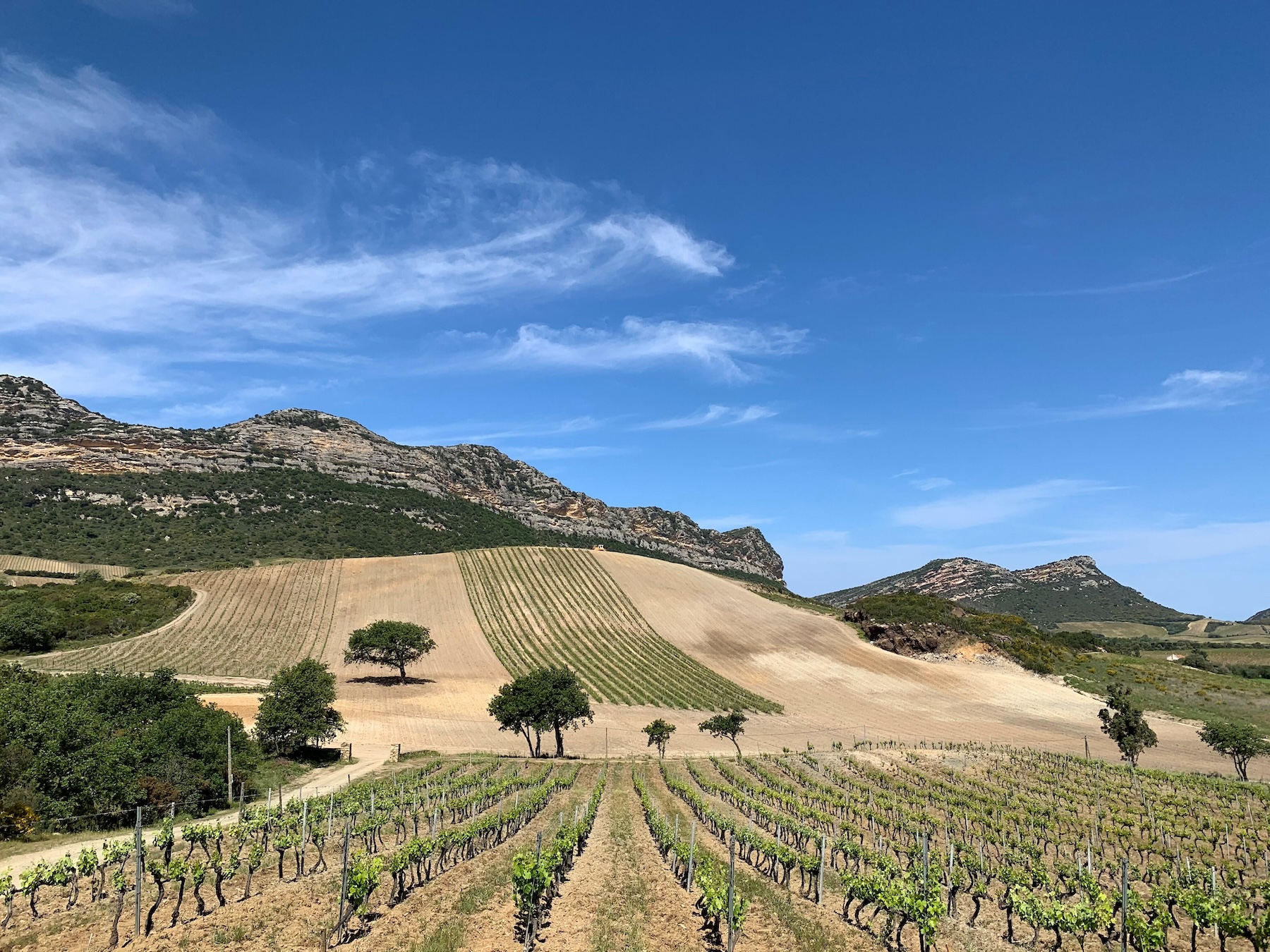
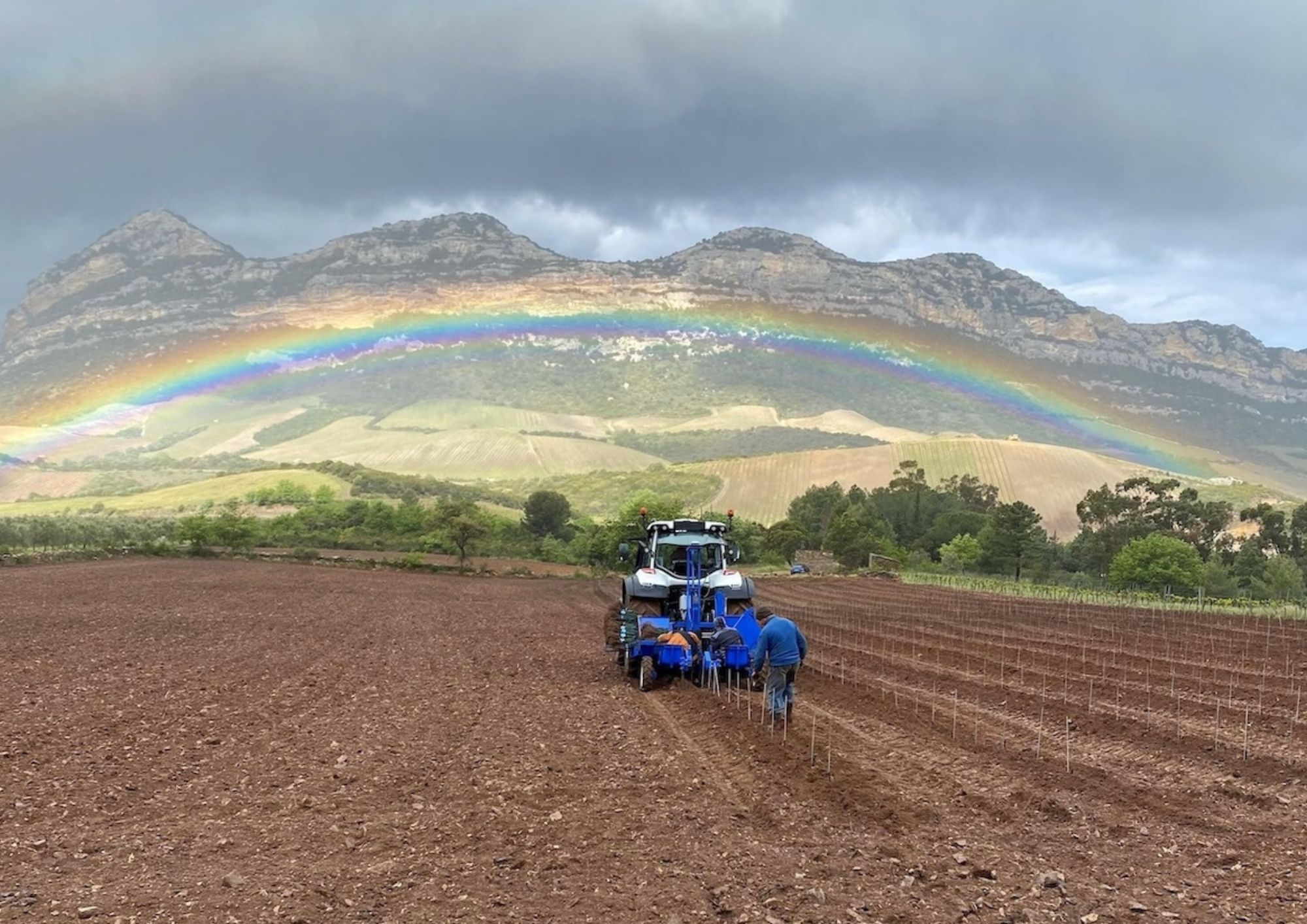
The Clay-Granite hillsides that are home to Clos Santini's vineyards
Corsica
Clos Santini: Corsican heritage
In the northern reaches of Patrimonio, Clos Santini (see Clos Santini results at GGIC) lies nestled within a quintessential Corsican landscape shaped by schist and windswept hillsides. Spanning 40 hectares, the estate is the legacy of a family winemaking tradition that has been seamlessly passed down through the generations since 1850. Certified organic since 2012, its vineyards are rooted in clay-limestone soils and cultivated without chemical inputs. The entire estate extends across the rolling hills of the Patrimonio appellation, where limestone, clay, schist and flint combine to form a mosaic of terroirs. All the grapes are harvested by hand. "Our choice of grape varieties is highly selective and every decision in the cellar is made with utmost care", explains Franck Santini. "From harvesting the fruit at optimal ripeness to the final stages of vinification, our goal is to craft authentic, complex wines". The estate's Vieilles Vignes label reveals a distinctive golden hue highlighted with green reflections. Made from Vermentinu, it is seductively soft yet tangy on the attack, lifted by herbal notes and a pronounced saline edge. Silky in texture and expressive, it stands out for its aromatic refinement, poise and balance.
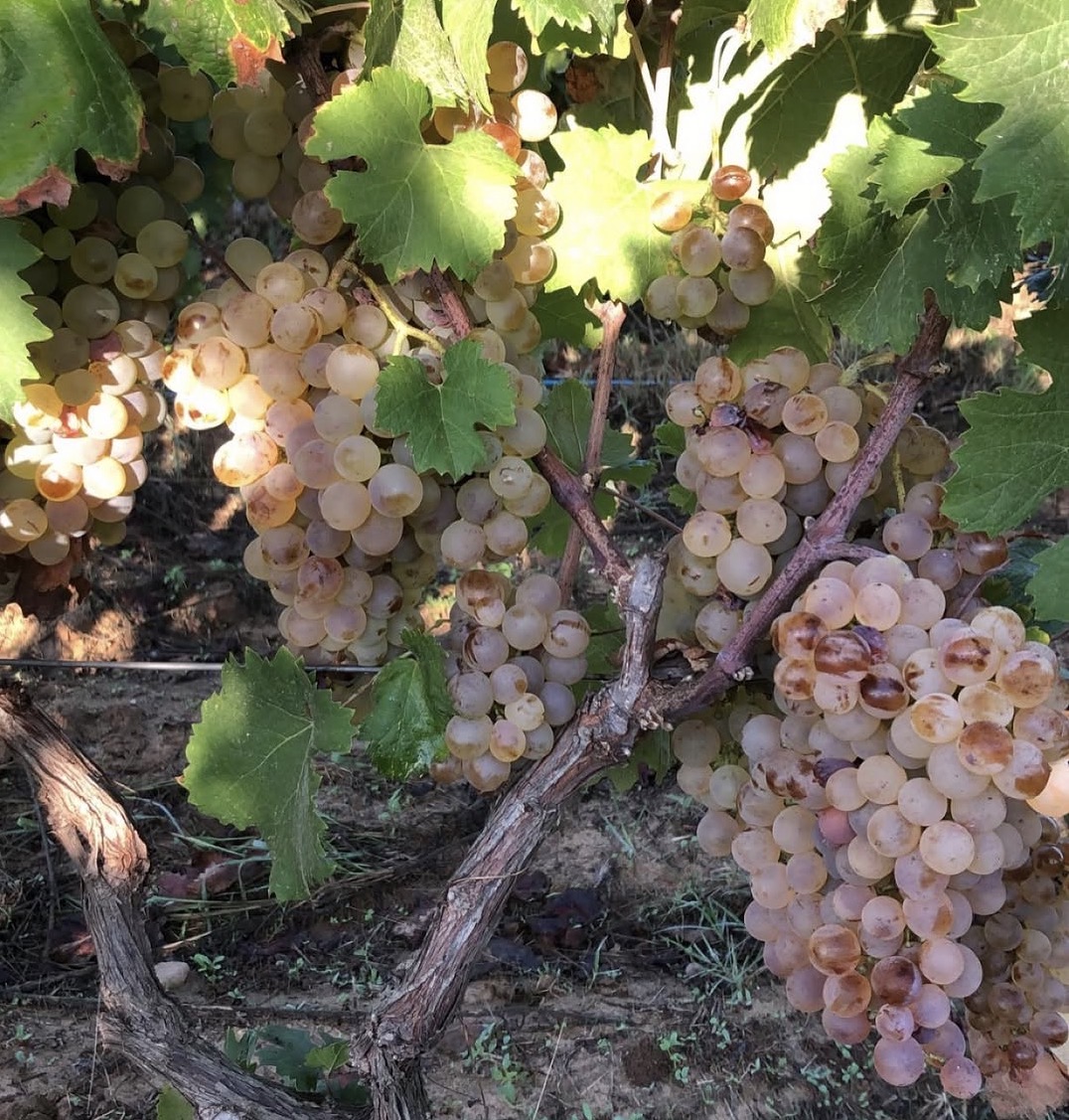
Fruit harvested at Domaine Antoine Poli
Domaine Antoine Poli: shaped by the sea breezes in Ajaccio
Situated on the southern shores of the Gulf of Ajaccio, Domaine Antoine Poli is one of Corsica's long-standing wine estates. Founded at the turn of the 20th century, this family-owned property now extends over several dozen hectares of granite hillsides. The estate's identity is defined by its maritime setting where cooling sea breezes and generous sunshine create ideal conditions for the typical island grape varieties to thrive. In the vineyard, the Poli family embraces a thoughtful, environmentally conscious approach, working in harmony with the natural balance of the ecosystem. In the cellar, the focus is firmly on preserving fruit purity, aromatic definition and achieving elegance through restraint. The estate offers a compelling expression of Sciaccarellu, the signature grape variety of the Ajaccio appellation, whose character finds a natural home on the region's granite soils. Its white wines are crafted from Vermentinu, a variety that yields fruity, aromatic, sun-kissed wines with a distinctive pale yellow hue tinted with green. Both elegant and well-balanced, they combine inviting freshness with a supple texture. Equally at ease as an aperitif or at the table, they pair effortlessly with seafood, soft cheeses and delicately-flavoured desserts, accompanying a meal from beginning to end with remarkable versatility.
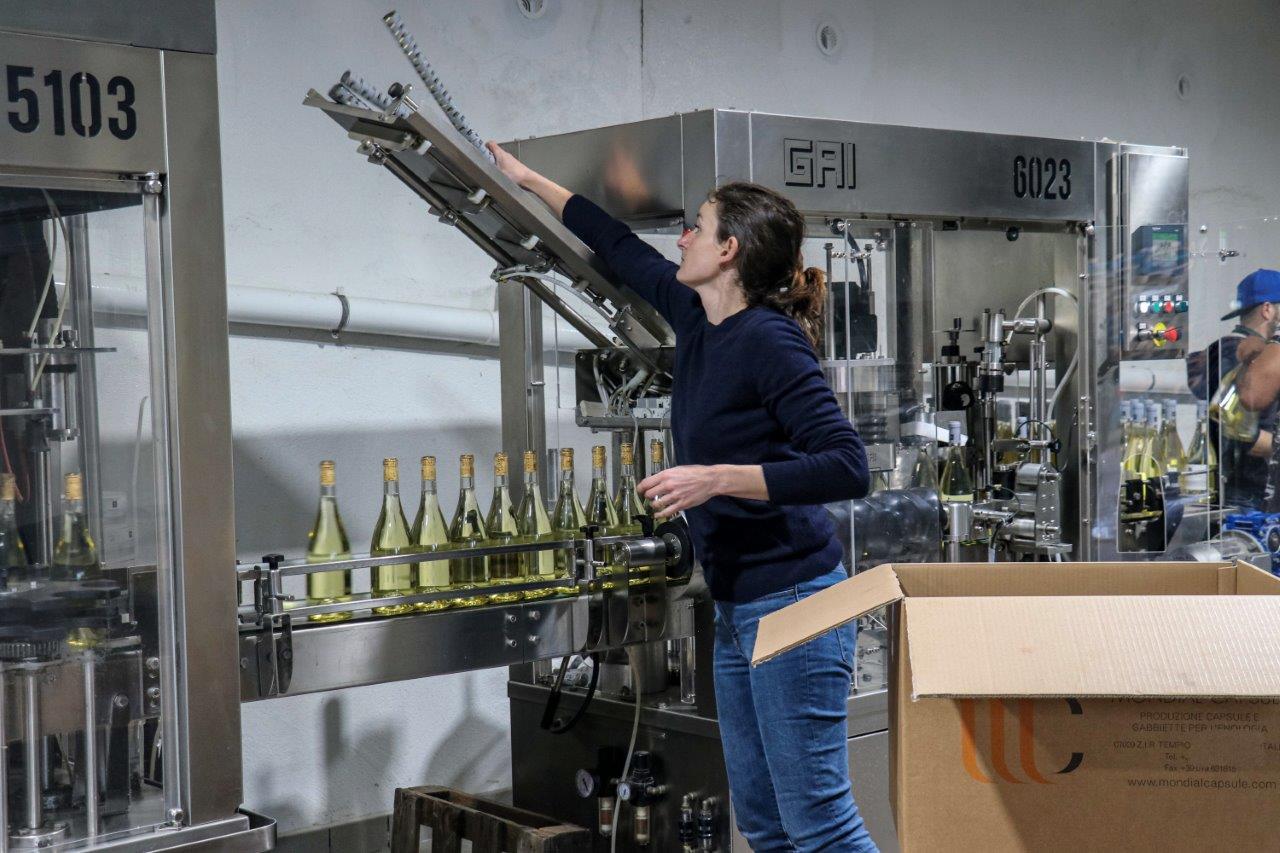
Alexandra De Peretti Della Rocca bottles the estate's wines
Domaine de Tanella: wines of character
This estate (see Domaine de Tanella results at GGIC) has remained in the same family for generations. In 1975, Jean-Baptiste de Peretti della Rocca assumed responsibility for the property, having learned the craft of viticulture alongside his father. Today, he manages its 80 hectares together with his children, Alexandra and Marc-Aurèle. Located just three kilometres from the Mediterranean coast, the estate has preserved its distinctive identity while continually refining its practices to meet the highest quality standards. Indigenous grape varieties lie at the heart of its philosophy, underpinning wines of genuine character shaped by meticulous winemaking practices and a precise, vintage-driven approach. "Our entire range of six wines is produced from a single white grape variety, Vermentinu", explains Alexandra de Peretti della Rocca. The variety's remarkable ability to reflect differences in soil and site gives rise to a collection of wines that are both diverse and complementary. Depending on the parcel, they reveal varying expressions of minerality, tension and acidity alongside notes of white fruits and citrus. As drinking patterns lean increasingly towards white wines, Vermentinu is further cementing its reputation as a signature, sought-after grape variety. Yet despite its growing popularity, the estate remains unwavering in its commitment to quality.
San Gavino: island freshness
The vineyards of San Gavino (see San Gavino results at GGIC) lie between sea and mountains in southern Corsica, a dramatic landscape where rugged terrain shapes a powerful mineral backdrop. Here, a 2.5-hectare block of vines thrives on the wind-swept, clay-granite soils, defined by diurnal shift and the fragrant influence of the surrounding maquis. Thierry Lebegue and his son Jules continue to uphold the estate's traditions, championing the island's signature grape varieties. "We produce three whites, all from Vermentinu", explains Jules Lebegue. "The variety is particularly well-adapted to warm conditions while naturally retaining freshness. It yields wines that are precise, light and approachable, a style that resonates with today's consumers. Their appeal lies both in their distinctive personality and their immediate drinkability. During the summer months, our white wines are our best sellers, reflecting broader shifts in drinking habits". Approximately one third of the estate's revenue comes from export sales.
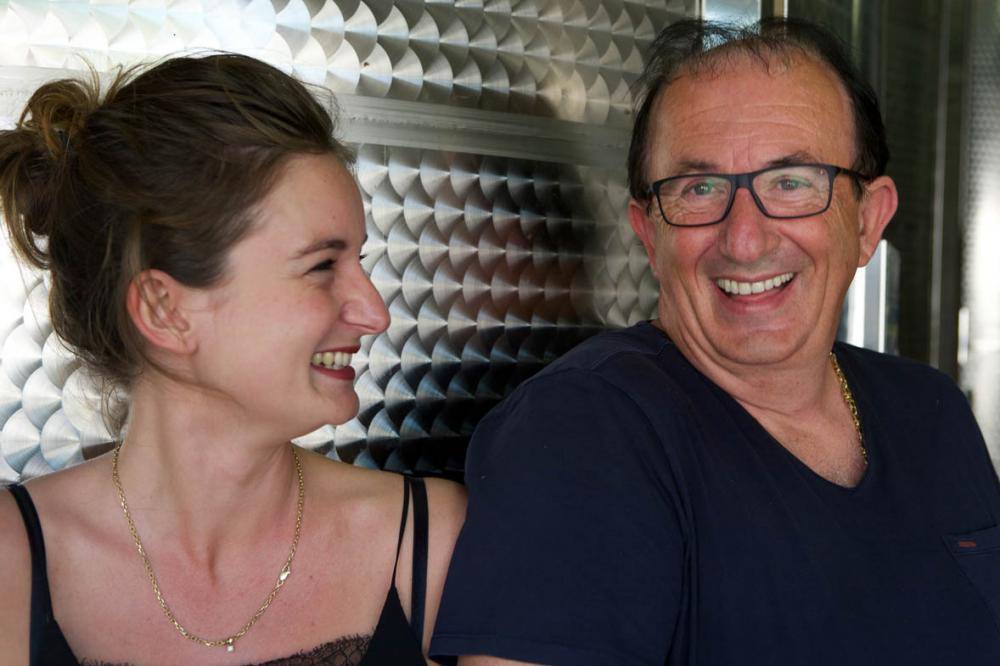
Alexandra De Peretti Della Rocca with her father Jean-Baptiste
Languedoc
Domaine Carrière Audier: an impressive family heritage
Domaine Carrière Audier (see Domaine Carrière Audier results at GGIC) traces its origins back to 1910, when Félicien and Fernande Carrière began cultivating six hectares of vines, selling their harvest to local negociants. In 1999, Jérôme Audier joined the family estate as a young winegrower alongside his wife Laurence. The story continued in 2020 when their daughter Aurélie became the sixth generation to take part in the estate's development. Set in the northern reaches of the Saint-Chinian appellation, the vineyards stretch across 60 hectares of schist soils. This distinctive terroir produces wines with a strong sense of identity, from characterful reds to fresh, fragrant whites centred on Chardonnay. "Chardonnay is an expressive variety and our low yields allow it to develop intense fruit character", stresses Laurence Audier. "Our white wines are rounded in style with fruit taking centre stage. The same philosophy applies to Viognier, another key white variety". The fruit is sent direct-to-press then fermented at low temperatures. The IGP Haute Vallée de l'Orb Chardonnay displays ripe fruit notes. On the palate, its attack is ample, rounded and fat in a style that shines as an aperitif while remaining a versatile companion throughout the meal.
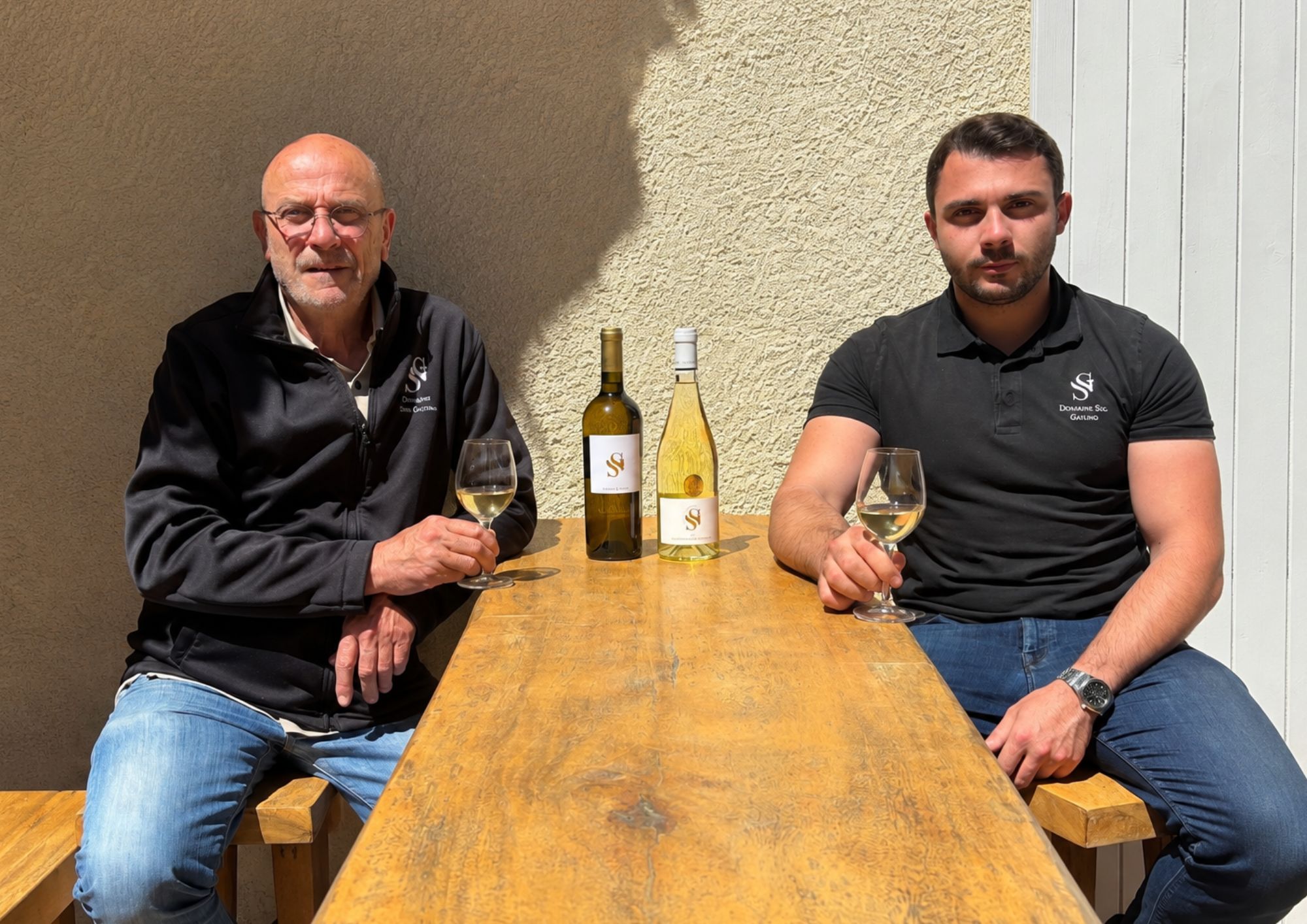
Thierry Lebegue with his son Jules
Roussillon
Les Vignerons de Caramany: finely-etched wines
Freshness, vibrant aromatics and balance lie at the heart of the white wines crafted by Les Vignerons de Caramany (see Les Vignerons de Caramany results at GGIC). Tucked in the heart of the Agly Valley, the winery makes wines that capture the distinctive terroirs of Roussillon. Here, vineyards flourish under a Mediterranean climate, their roots penetrating deep into challenging, unspoilt soils that impart both tension and aromatic expression. "Our white wines achieve full ripeness while also retaining excellent natural acidity thanks to the elevation of our vineyards, set at an average 300 to 400 metres above sea level. They also display aromatic finesse driven by white-fleshed fruits and a long, persistent finish", comments cellar master Maude Bonnin. "Chardonnay performs particularly well on our clay-limestone soils which consistently produce wines of balance". The cool nights that sweep across the plateaux allow the fruit to ripen slowly, encouraging greater aromatic refinement. Citrus, fruit and delicate floral notes unfold across a textured, harmonious palate that accurately encapsulates the identity of Roussillon's terroirs. "Chardonnay enjoys worldwide recognition thanks to the great wine regions that have built its reputation", adds Bonnin. "Our Chardonnay Karmasutra, launched three years ago, has been particularly successful. Historically, the winery focused primarily on red wines, whereas today we produce nine different white wines. Their share of total production has risen from 2% to 15% and some of them have already sold out, with new stocks not available until the next harvest".
Château de Jau: Roussillon's epitome of balance
Celebrated for the variety of its terroirs, Château de Jau (see Château de Jau results at GGIC) produces white wines that showcase the breadth of styles produced across Roussillon. Here, Mediterranean grape varieties strike a balance between ripeness and liveliness. "Our primary objective is to achieve harmony and freshness", explains estate owner Simon Dauré. "Vermentino introduces notes of citrus fruits and white flowers, while Chardonnay contributes texture and roundness. Harvesting at an earlier stage allows us to preserve brightness and aromatic precision". In recent years, white wines from Roussillon have evolved towards lighter and more approachable styles. As a result, many white wine enthusiasts are discovering the region's ability to produce high quality wines with a strong sense of place. Demand for white wine continues to rise both in France and internationally as consumers seek out lighter, lower alcohol wines suited to a broader range of drinking occasions. The trend is evident not only across European markets but also in Brazil, Japan, the United States and Canada.
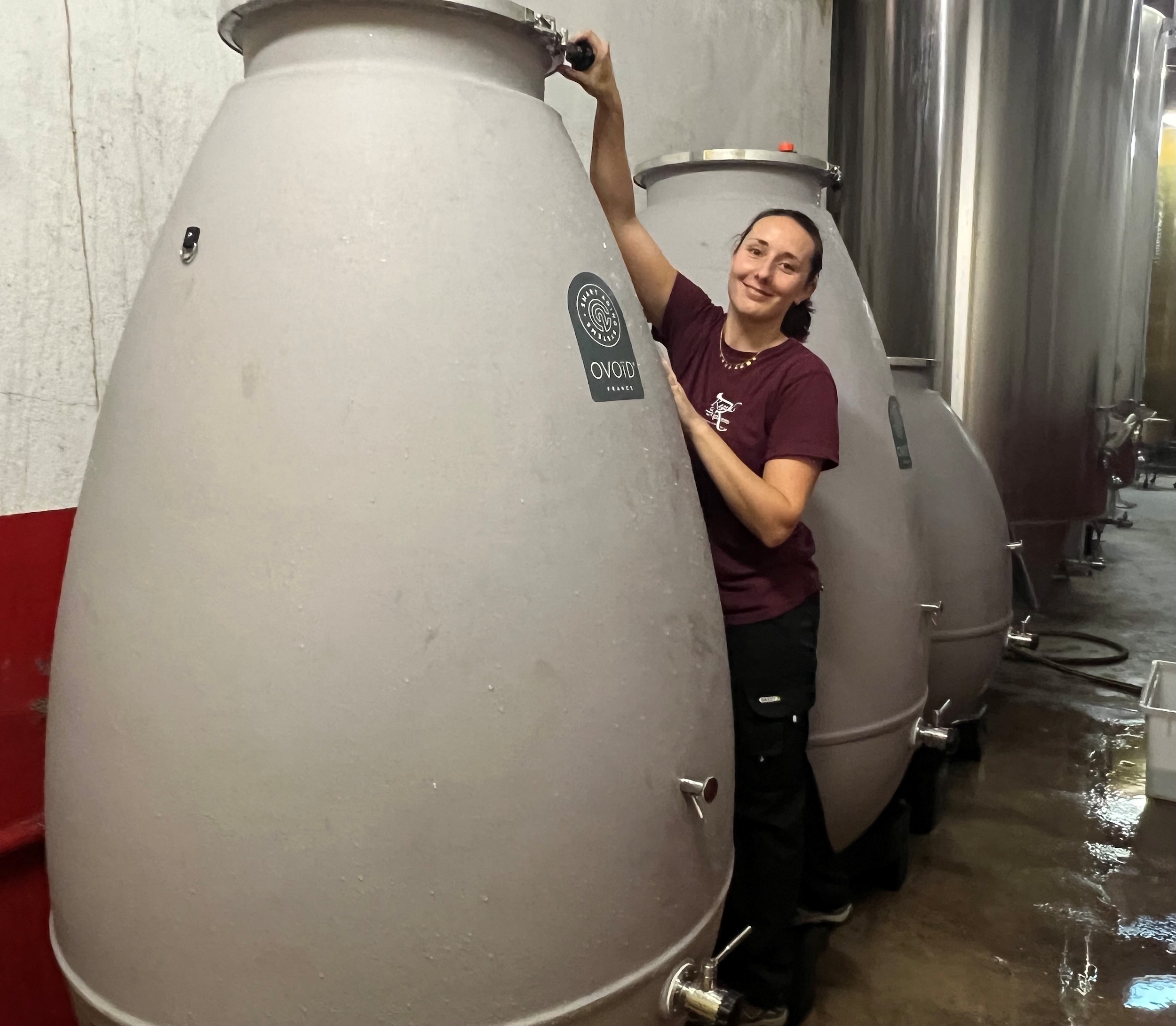
Maud Bonnin, the cellar master beside the ovoid tanks at vignerons de Caramany
A booming category
White wines from southern France have entered a new era, redefining their place on the global wine stage. Combining generosity, freshness and aromatic expression, they offer a compelling expression of the diverse terroirs and sun-drenched landscapes from which they originate. Whether through Chardonnay in Languedoc or Vermentino – known locally as Rolle – in Corsica and Provence, these varieties demonstrate an ability to adapt in regions that are renowned for their sunshine. They show that abundant sunshine need not come at the expense of balance or vitality. They embody a contemporary vision of southern French wines that is increasingly piquing the curiosity of consumers. As consumer preferences continue to evolve, these wines are attracting growing attention for their accessibility, versatility and balance. Their success mirrors broader shifts in drinking habits that increasingly favour white wines. Southern French whites are winning recognition well beyond their regions of origin, establishing themselves as some of the most dynamic and sought-after expressions of the Mediterranean wine landscape.