By Cynthia Ribeiro – Photos: courtesy of the estates – Consorzio del Vermouth di Torino, posted on 16 June 2026
Their revival is underpinned by the rediscovery of traditional recipes revisited through modern distillation techniques. These iconic drinks have gained in complexity, supported by higher quality standards and traceability. Join us as we drill down on them in our report.
Vermouth di Torino: from royal elixir to contemporary Italian signature
Few beverages capture the intersection of wine culture, botanical knowledge and social ritual as precisely as vermouth. Born in Turin in the late eighteenth century, it emerged at a time when aromatised wines were evolving beyond their practical function to become objects of taste, refinement and conviviality.
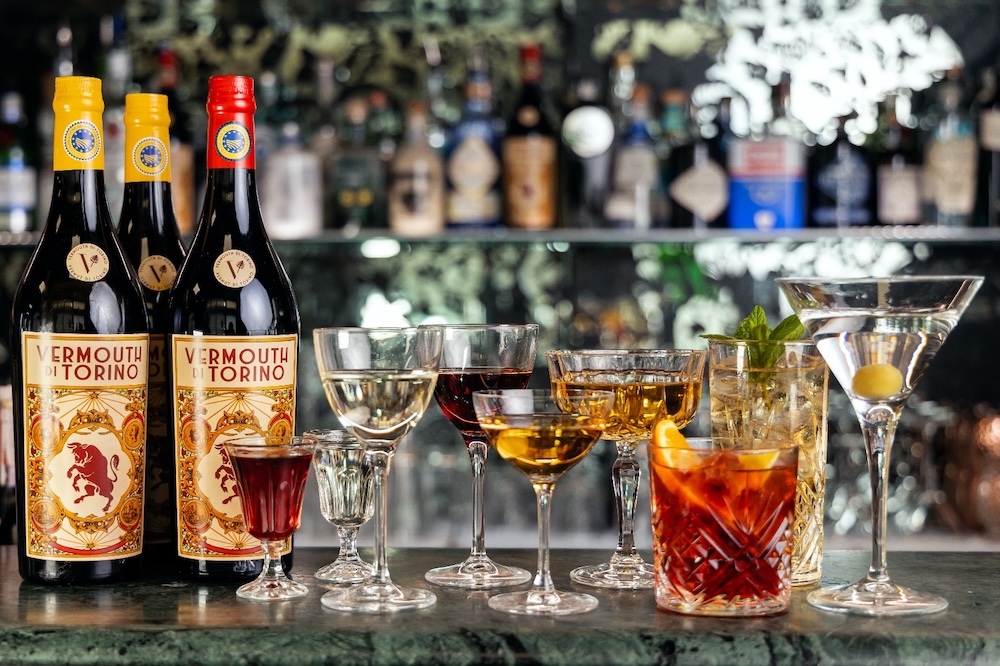
Initially conceived to enhance wine through botanicals while improving its stability, vermouth quickly gained prestige at the Savoy court, where it became a symbol of elegance. From the outset, it remained firmly rooted in wine. Under European regulations, wine must account for at least 75% of its composition, defining its structure and freshness, while botanicals shape its aromatic profile.
In Piedmont, this identity is also formally protected. As Bruno Malavasi, President of the Consorzio del Vermouth di Torino, emphasises, it is essential to distinguish between vermouth in general and Vermouth di Torino IGP, the only vermouth in the world recognised with a Protected Geographical Indication. The designation requires Italian wine, Piedmont wormwood, a minimum alcohol level of 16%, and full traceability throughout the production chain, now reinforced by official certification.

Roberto Bava and Bruno Malavasi (President of the Consorzio del Vermouth di Torino).
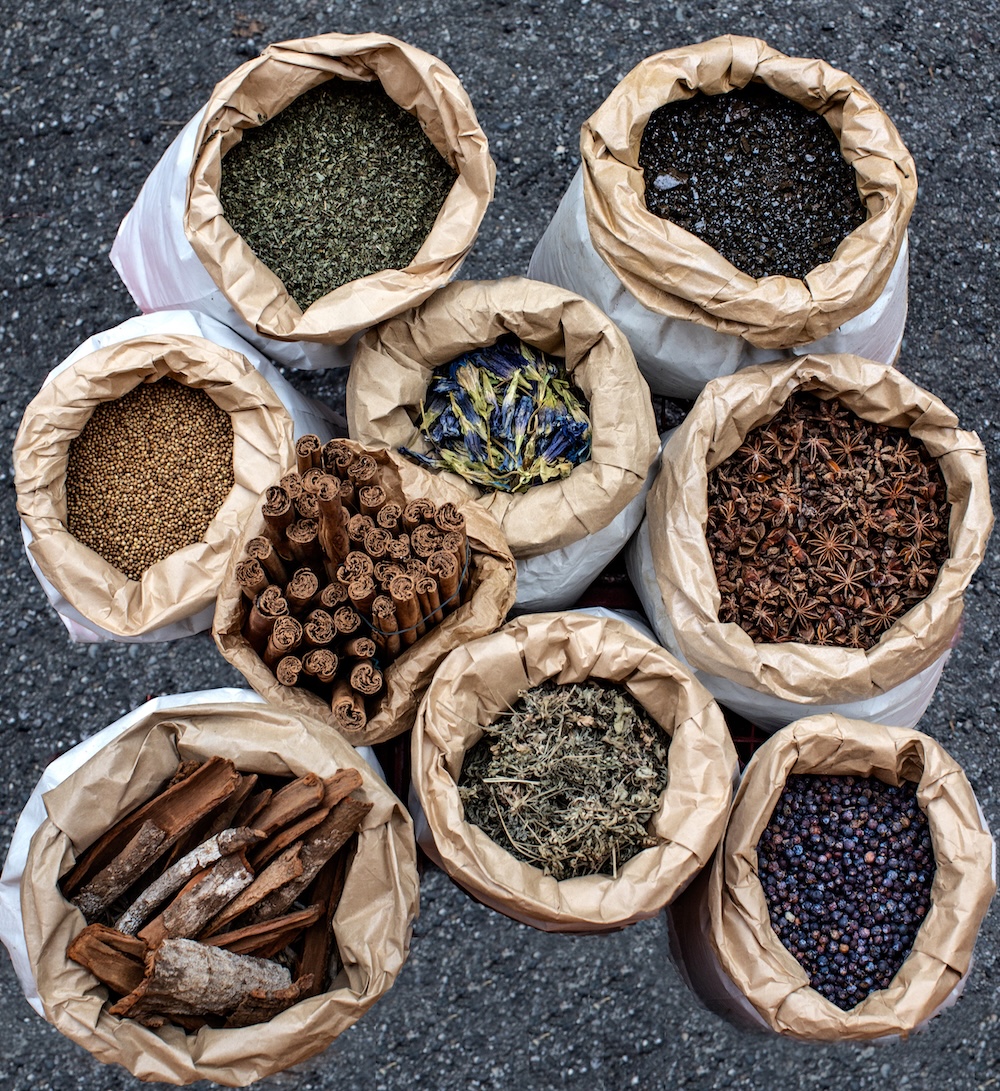
For Malavasi, wine remains the "essential canvas," while botanicals define style. Dry expressions lean toward Mediterranean herbs such as thyme, sage and marjoram; bianco styles move into citrus and spice; rosé introduces floral tones; while red vermouth develops depth through roots, woods and bitter botanicals such as gentian, cinchona and rhubarb.
This renewed focus on identity is reflected in the category's expansion, driven by exports and the global spread of the aperitivo culture. No longer confined to cocktails, vermouth is increasingly understood as a product of origin with its own sensory relevance.
At its core, vermouth is an exercise in balance. A base wine, typically white, is aromatised, fortified and sweetened, yet no single element dominates. What defines vermouth is the equilibrium between bitterness and sweetness, freshness and aromatic complexity.
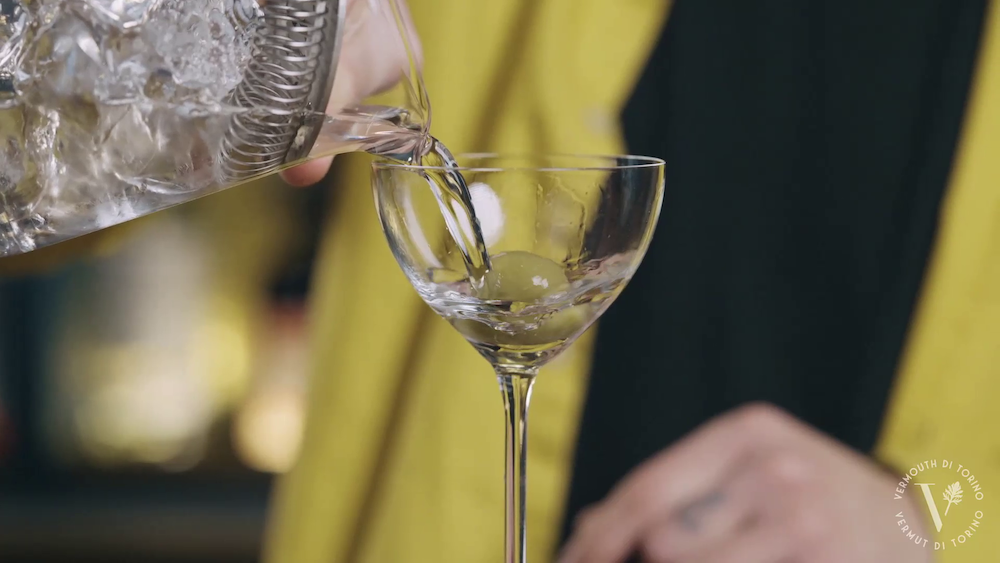
This balance is achieved through a precise process. A base wine, sometimes partially red, is infused with selected botanicals before fortification and sweetening. Wormwood remains essential, but it is only one component within a broader aromatic structure. Depending on the style, vermouth can move from herbaceous and citrus-driven profiles to floral, spicy or more deeply bitter expressions. This versatility allows it to move naturally between aperitivo, neat consumption and mixology.
Cocchi: Precision and Continuity
Among the producers shaping the category, Cocchi stands out for its precision and historical coherence. Founded in 1891 in Asti, the house treats wine as a defining element of structure and expression. Under Roberto Bava, production follows historical recipes, adapted only to account for natural variations in botanicals.
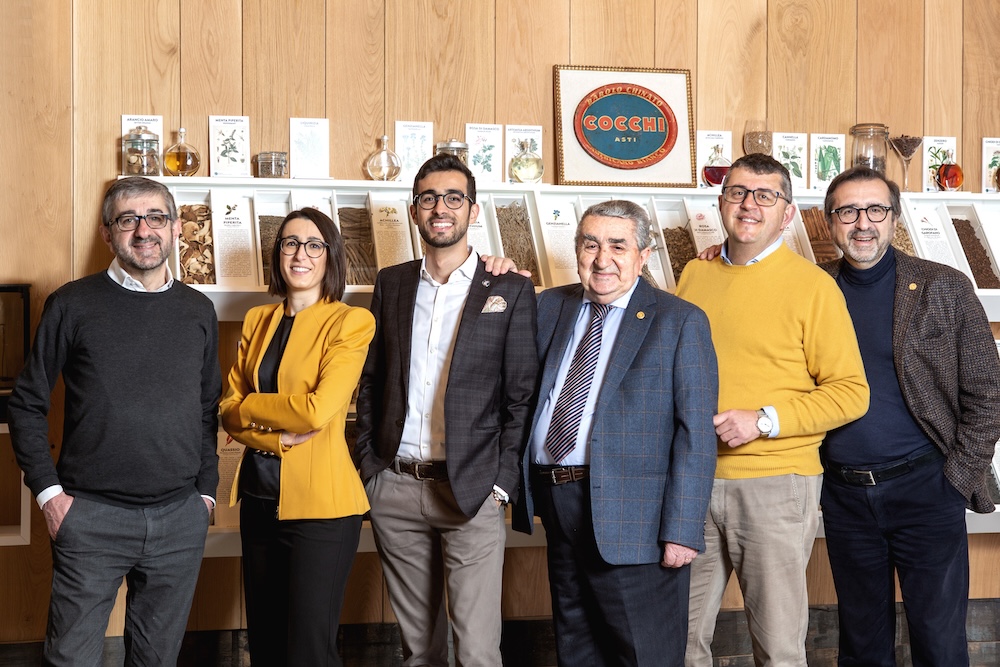
The Bava Family
The emblematic Storico Vermouth di Torino, based on Giulio Cocchi's original formula, unfolds in layers: artemisia and citrus on the opening, followed by rhubarb, cinchona, cocoa and balsamic wood. Caramelised sugar adds roundness without obscuring structure, resulting in a profile that is both layered and composed.
The Extra Dry Vermouth di Torino, based on Cortese, offers a more linear expression of alpine herbs, mint and citrus, particularly suited to classic cocktails. In contrast, Dopo Teatro Vermouth Amaro explores a deeper register shaped by Barolo Chinato and bitter botanicals, echoing the Piedmontese tradition of post-theatre vermouth. Together, these expressions illustrate Cocchi's ability to move across styles while maintaining a clear identity.
Martini: A Global Expression
If Cocchi represents precision, Martini embodies vermouth's global language. Founded in 1863, the brand helped shape its international perception.
Martini approaches vermouth as an expression of Italian lifestyle, inseparable from the aperitivo culture and its emphasis on sociability and ease. The house balances tradition and innovation, maintaining historic recipes while relying on modern extraction and blending techniques. Wine remains the structural backbone, typically based on neutral white varieties such as Trebbiano and Airén.
Within the range, Martini Rosso remains the archetypal bittersweet expression, central to cocktails such as the Americano and Negroni. Martini Bianco offers a softer, more floral profile aligned with contemporary preferences, while Rosato introduces spice, and Extra Dry retains its essential role in the Martini cocktail.
Saffirio: Vermouth as Terroir
A more intimate interpretation emerges in the Langhe with Saffirio, where vermouth is approached as an extension of the estate's identity.
Led by Sara Vezza, the project is rooted in both memory and a defining technical choice: the use of Nebbiolo Rosato as the base wine. In a category often built on neutral wines, this shifts the focus back toward grape and territory — a philosophy explored further in our feature on Nebbiolo, the prince of grape varieties in north-west Italy.
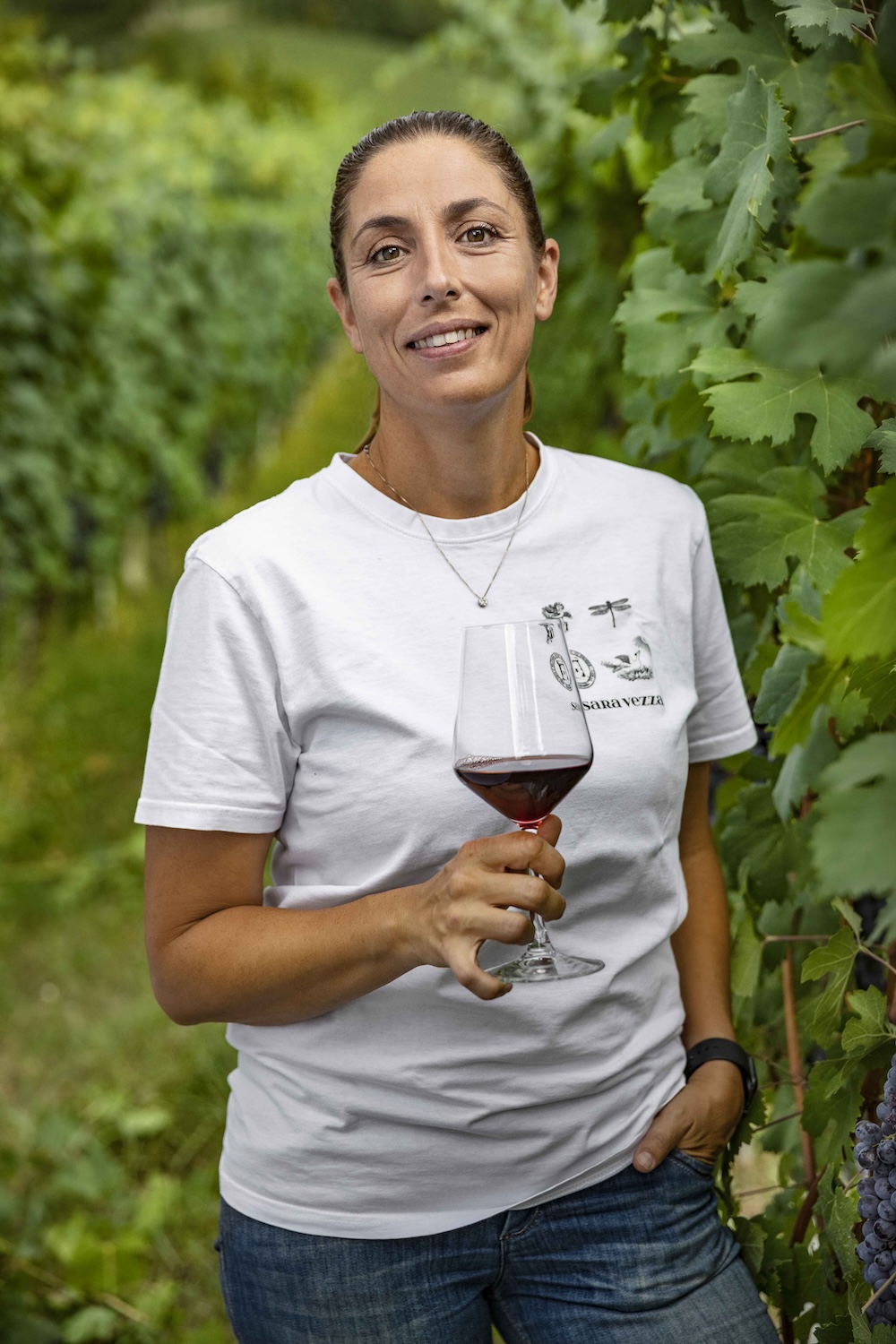
Sara Vezza
The estate's Vermouth Rosso di Torino is a wine-driven, artisanal expression defined by precision and restraint. Produced in collaboration with The Spiritual Machine using certified Italian botanicals, it favours clarity over aromatic excess, allowing the Nebbiolo base to remain fully present. Vibrant acidity, floral lift and controlled sweetness shape its profile.
Saffirio maintains a focused presence without adapting its style to different markets, reinforcing a commitment to identity. Even the wild orchid on the label reflects this philosophy, linking the product to biodiversity and place.
A Category Repositioned
Vermouth today is no longer defined solely by its past. From the structural clarity of Cocchi to the global reach of Martini and the terroir-driven approach of Saffirio, the category is being actively reshaped.
What is taking place is not a simple revival, but a repositioning. Vermouth is once again recognised for its depth, versatility and cultural relevance.
Amaro: bitterness, balance and the Italian art of infusion
If vermouth reflects the meeting point between wine and botanicals, amaro expresses their transformation through infusion.
Among Italy's spirits, amaro holds a singular position, shaped as much by tradition as by a deeply ingrained sense of place. Unlike vermouth, which begins with wine, amaro is built through infusion: alcohol transformed by roots, barks, flowers and spices into something far more layered than its individual components.
Its origins lie in monastic and apothecary practices, where herbal preparations were valued for their restorative qualities. Over time, these infusions moved into daily life, becoming closely associated with the end of a meal. That role as a digestif remains central, even as amaro continues to evolve beyond it.
No single formula defines the category. Its identity emerges instead from diversity: of botanicals, of techniques and of regional interpretations. Ingredients such as gentian, cinchona, rhubarb and citrus peel appear frequently, but always within compositions that are often closely guarded. What matters is not the ingredient itself, but how it contributes to the overall structure.
Bitterness, often seen as its defining trait, is only one element within a broader architecture. It interacts with sweetness, aromatic lift and, at times, a measured alcoholic warmth. The result ranges from lighter, citrus-driven expressions to darker profiles marked by herbal depth and balsamic undertones.
Few producers illustrate this balance between continuity and evolution as clearly as Amaro Lucano. Founded in 1894 in Pisticci, Basilicata, it was first developed by Pasquale Vena in the back room of his biscuit workshop. More than a century later, the original recipe remains unchanged, still preserved by the Vena family.
As Tommaso Pezzini explains, safeguarding this heritage is not an exercise in nostalgia, but a way of keeping it active in the present — translating inherited knowledge into a contemporary language of conviviality without compromising identity.
Based on more than thirty botanicals sourced globally, the formulation remains confidential, yet its stylistic signature is clear. The palate opens with citrus and floral notes, followed by herbal depth. Bitterness is present but controlled, supported by subtle sweetness and lightly spiced nuances, with a finish that remains fresh and persistent.
A crucial element in this balance is the maturation phase, during which the infused liquid rests and its components settle into alignment. Often understated, this stage plays a decisive role in shaping the coherence of the final expression.
While firmly anchored in the digestivo tradition, amaro now moves fluidly across contexts. Behind the bar, its combination of bitterness, aromatic complexity and freshness makes it particularly effective in cocktails. As Pezzini notes, this does not represent a departure from tradition, but an expansion of it.
This shift is reflected in Amaro Lucano's international trajectory. Present in more than thirty countries, it has established a strong foothold in the United States and is gaining increasing attention in Asia. Its role as the official amaro of The World's 50 Best Bars signals a positioning that extends well beyond its regional origins.
Yet its expansion is not without challenges. In markets unfamiliar with bitter profiles, these flavours can initially be perceived as medicinal rather than gastronomic. Bridging that gap requires context, education and experience, through which bitterness reveals itself not as an obstacle, but as part of a more nuanced sensory language.
Grappa: from by-product to a refined expression of Italian distillation
While amaro expresses infusion, grappa represents distillation at its most direct. Grappa holds a distinctive place within Italian spirits. Produced exclusively from grape pomace, it represents one of the most direct continuations of winemaking. Unlike brandy, which is distilled from wine, grappa remains closely tied to the grape itself, carrying the imprint of variety and origin.
Its production is strictly regulated: it must be made in Italy from Italian pomace, under standards that ensure authenticity and quality. Over the past decades, however, the category has undergone a profound transformation. Once associated with rustic, high-alcohol expressions, grappa is now increasingly defined by precision and refinement.
This shift is largely technical. The use of discontinuous, typically steam-heated stills allows for greater control over extraction, preserving aromatic integrity while reducing harsher components. As a result, styles have diversified, younger grappa highlight freshness and varietal clarity, while aged expressions gain depth through interaction with wood. Mono-varietal grappa have reinforced the connection between distillation and viticulture.
At the same time, grappa has been repositioned in the market. Rather than competing on volume, it increasingly defines itself through craftsmanship, raw material quality and premium positioning.
Talosa: Grappa as a Continuation of Wine
At Talosa, grappa is approached as a natural extension of the estate's winemaking. Produced from fresh pomace derived from its own Vino Nobile di Montepulciano, it maintains a direct link between vineyard and distillation. Sangiovese, long celebrated as the emblematic grape of Chianti and Tuscany, shapes the profile, contributing floral notes, finesse and balance. Distillation, carried out with the historic Nannoni distillery, follows an artisanal approach in discontinuous stills, preserving aromatic clarity and precision.
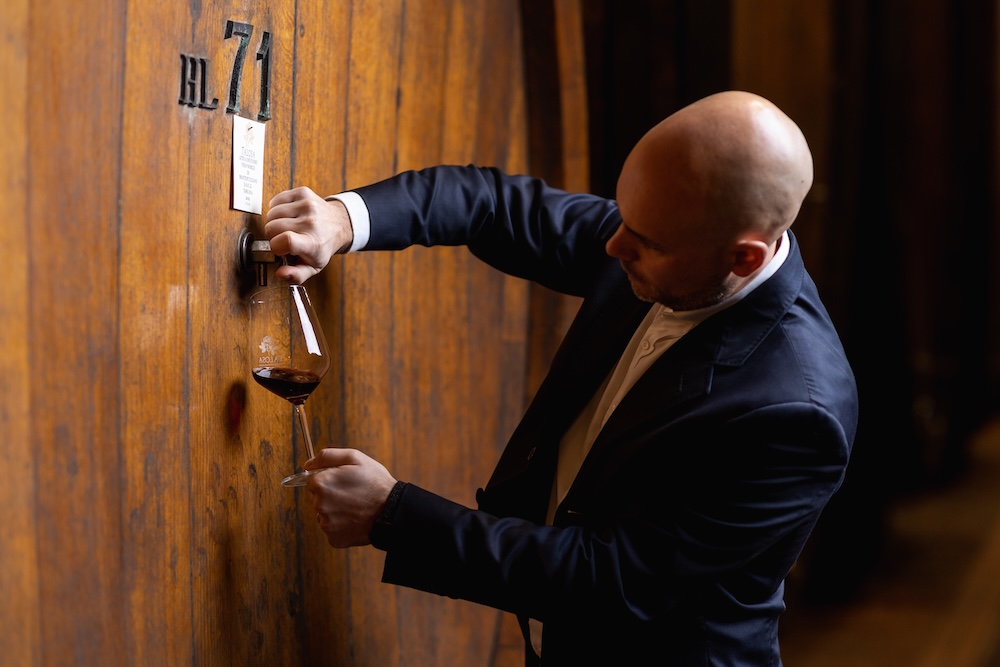
Edoardo Mottini Jacorossi, CEO of Talosa
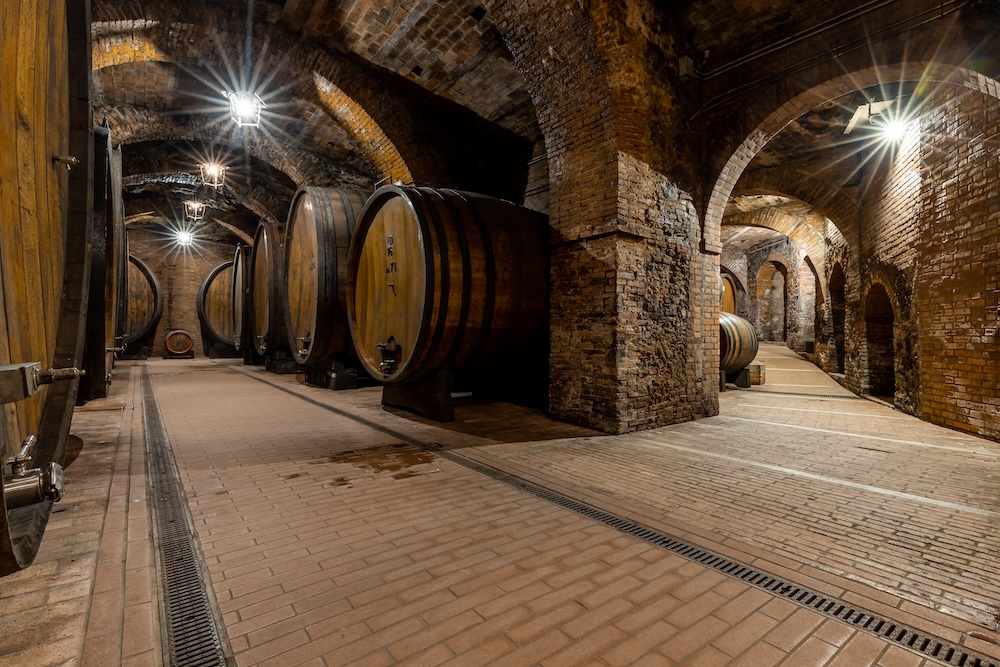
Inside the historic grappa cellars of Talosa.
The estate's Grappa di Vino Nobile di Montepulciano is conceived as a mono-varietal distillate focused on purity. In its un-aged form, the absence of wood allows the character of the grape to remain fully visible: delicate floral notes, subtle fruit nuances and a smooth, balanced palate with a clean finish. A barrique-aged version is currently under development.
Bottega: Precision and Contemporary Technique
A more technical interpretation emerges with Distilleria Bottega (see Distilleria Bottega results at GGIC), where grappa is rooted in the distilling traditions of Veneto but shaped by innovation.
Production combines traditional copper stills with advanced techniques, including vacuum distillation and multi-stage processes designed to preserve delicate aromatic compounds while ensuring purity. Raw material selection remains central, with fresh pomace undergoing controlled fermentation before distillation.
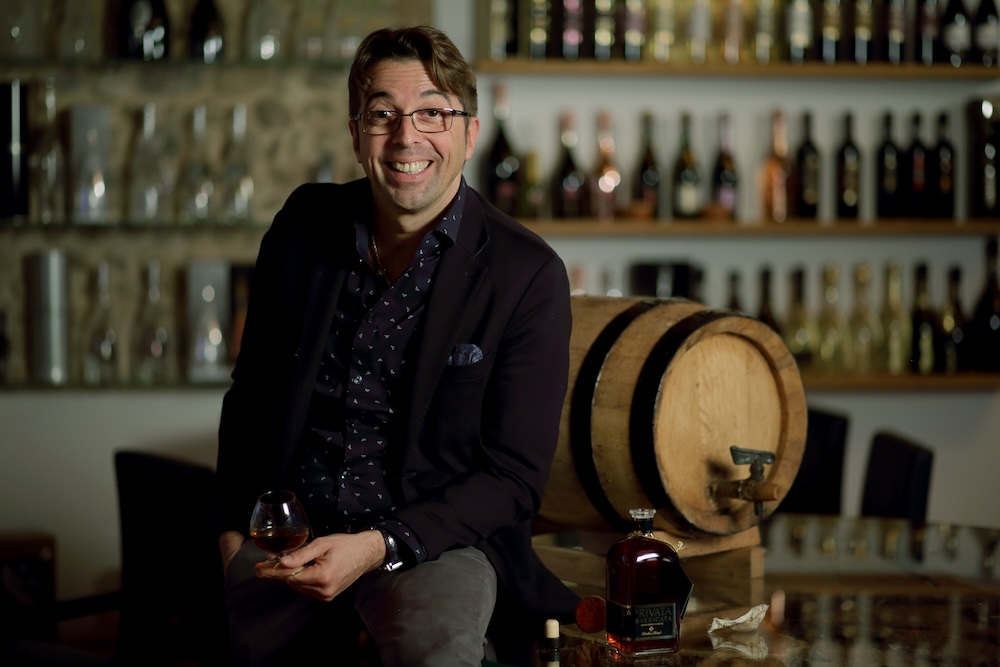
Stefano Bottega
Among its key expressions, Grappa Riserva Privata Barricata stands out for its structure and complexity. Aged in Slavonian, Limousin and American oak, it develops a layered profile where floral and fruity notes integrate with spice and wood-derived roundness. The palate is smooth and composed, with a long, polished finish.
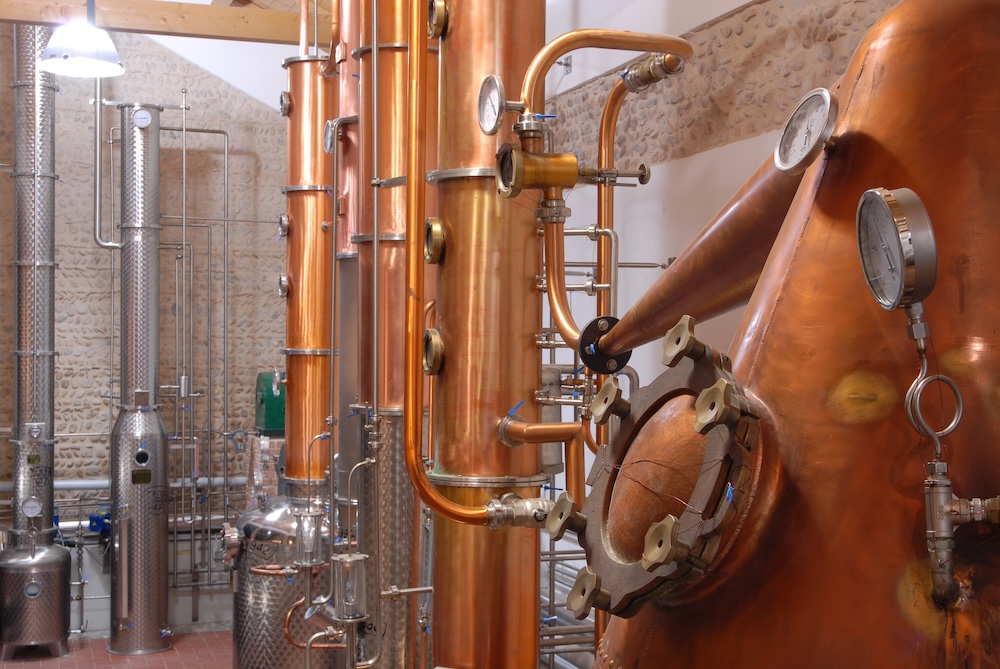
Distilleria Bottega
While grappa remains a relatively niche category internationally, producers such as Bottega continue to expand its presence, particularly across Europe, the Americas and Japan. At the same time, the category is exploring new directions, including its growing role in mixology.
Italian gin: a Mediterranean interpretation of an international spirit
If these categories are rooted in tradition, gin represents a more recent yet increasingly expressive chapter in the country's spirits landscape.
Juniper remains its defining element, yet what distinguishes Italian gin is context. Many producers draw on local ingredients, Mediterranean herbs, citrus peels and wild aromatics, creating profiles that reflect landscape as much as technique. Production is often artisanal, using discontinuous stills and careful temperature control to preserve aromatic clarity. In some cases, low-temperature or vacuum distillation is employed to refine extraction and maintain precision.
The resulting style is both structured and expressive. Juniper remains central but is integrated into a broader aromatic composition, often leaning toward herbaceous and citrus-driven profiles with a softer, more rounded texture.
Silvio Carta: Gin as a Reflection of Sardinia
Within this landscape, Silvio Carta offers a particularly coherent interpretation of gin as an expression of place. Based in Sardinia, the distillery builds its identity around a close relationship with its environment, beginning with the exclusive use of Sardinian juniper.
This approach extends to botanicals cultivated in its own garden, including rosemary, thyme, sage, santolina and helichrysum. Distillation, carried out at low temperatures in traditional discontinuous stills, preserves aromatic integrity while ensuring consistency.
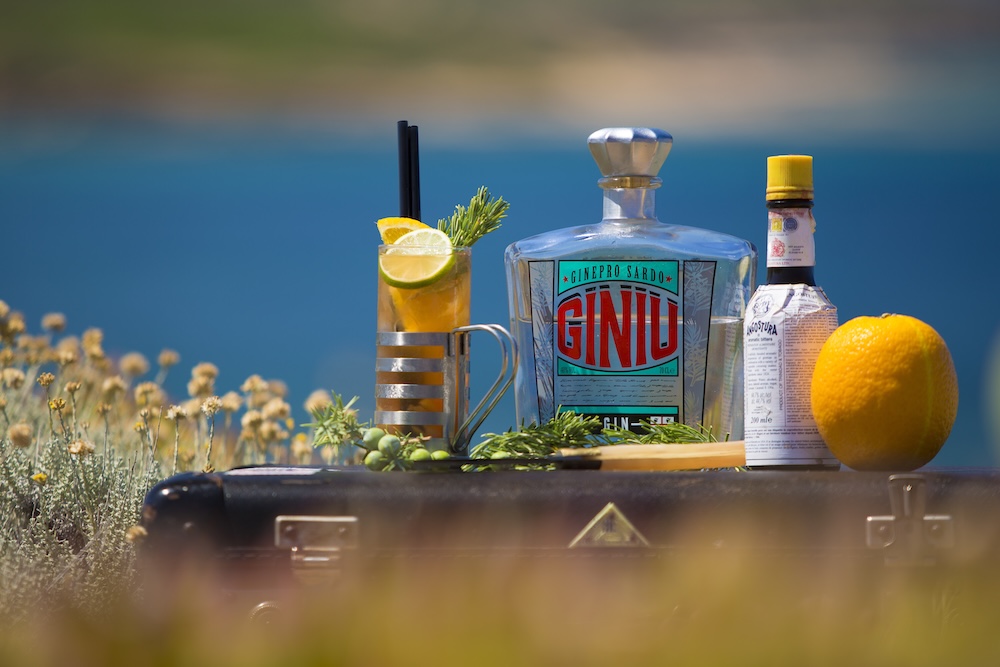
Among the key expressions, Giniu, often described as the first Sardinian gin, presents a classic juniper-led profile supported by Mediterranean notes. Pigskin Pink, infused with Sardinian myrtle berries, offers a fresher and more aromatic style, while Boigin Saffron, made with Sardinian saffron DOP, moves toward a more complex and gastronomic register.
Beyond the glass, these gins are conceived not only for cocktails but also for the table, pairing naturally with Mediterranean cuisine. As Italian gin continues to expand internationally, its defining strength lies in this ability to translate place into flavour.
Together, these categories illustrate the breadth of Italian spirits today. From vermouth's balance to amaro's depth, from grappa's precision to gin's contemporary expression, what emerges is not a fixed tradition, but a dynamic landscape, one that continues to evolve while remaining firmly anchored in origin, technique and cultural identity.