By Sylvain Patard – Photographs: courtesy of the estates, posted on 21 August 2026
Since 2020 and the onset of the pandemic, the Cognac industry has been rocked by one crisis after another. Cash flow has been bled dry, transactions have dwindled and prospects are pretty lacklustre in its two key markets, the United States and China. For all that, Cognac has lost nothing of its global aura. And as the industry members we spoke to confirmed, there are reasons for hope, particularly for those active in France and Europe.
Before looking ahead, it’s worth revisiting the timeline. In 2020 – the year Covid-19 struck – Cognac sales declined by 22.3% in value compared with the previous year*. The rebound came swiftly: 2021 saw volumes rise by 16.2% and values by 30.9%*, surpassing even pre-pandemic levels.
Then came 2022 – the year war broke out in Ukraine – putting a damper on recovery. Sales dipped by 4.8% in volume versus 2021. Despite the marginal volume shortfall, values continued to perform well, partly driven by premiumisation and favourable exchange rates. Still, the slowdown carried the early signs of something deeper.
By 2023, the data revealed a more marked decline, likely worsened by the October 7 attacks in Israel which added further tension and concern. At this point, Cognac had clearly entered a phase of decline or correction, particularly in the USA and China, following the post-pandemic surge.
After a post-pandemic rebound, 2023 marked the start of even greater tension in the market place
After the ‘traditional’ wars came the economic war
In July 2025, China imposed anti-dumping duties ranging from 27.7% to 34.9% on European brandies, including Cognac, for a five-year period. A few prominent French companies were exempted provided they complied with minimum price requirements. The United States followed suit, placing further pressure on France’s Cognac industry by threatening to introduce steep new tariffs, creating not only significant cause for concern but also uncertainty. Such customs barriers place a strain not only on profitability but also on market access and inevitably competitiveness outside Europe. Added to this are rising costs for raw materials, logistics, containers and energy, which further hamper growth.
The outlook may seem bleak but there are green shoots and opportunities. The rise of mixology – and growing popularity of Cognac-based cocktails – has helped broaden the spirit’s audience. No longer reserved solely for drinking neat or after dinner, Cognac is increasingly used as a premium ingredient, particularly in American bars.
The long-standing presence of the top Cognac houses in the United States – in terms of marketing and distribution – makes this market relatively mature and well understood. Premium Cognac – VSOP and XO – still holds significant potential for growth in the United States. However, inflationary pressures and new taxes introduced since the beginning of Donald Trump’s second term also make it vulnerable.
To maintain their foothold in the Chinese market, Cognac firms now need to focus more on higher bottle values to offset the volume declines. They must also plan ahead or negotiate Chinese customs duties, as the current exemption granted to the major producers is only temporary. Sooner rather than later, they may have to pivot towards other Asian markets such as Vietnam and India, or even Africa, to limit their reliance on China.
Ultimately, the halcyon days before 2021 in Cognac’s two powerhouse markets now feel like a distant memory. In the interim, however, many producers have been waging a daily war in other markets – foremost among them France – where their narrative is more pragmatic. We asked several of them to share their experiences.
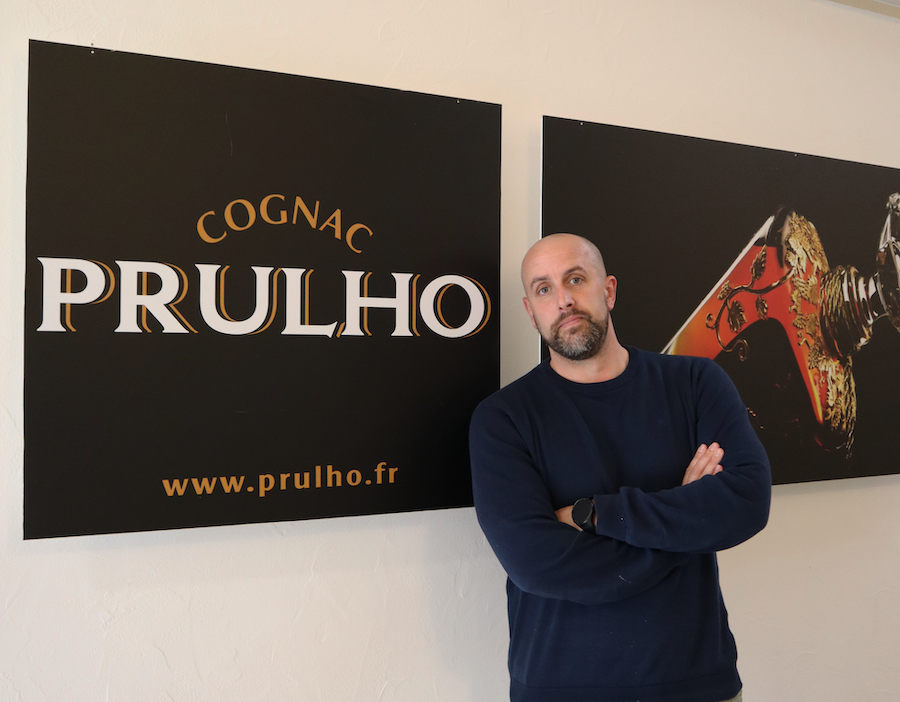
Alexandre Renaud, export sales director at Prulho, remains optimistic despite the challenges
Prulho: A dynamic brand
For several generations, this family-run Cognac house has upheld its recognised expertise in crafting outstanding spirits. Nestled in the heart of the Cognac wine region, it produces its Cognacs from brandies sourced in the prestigious Grande and Petite Champagne crus. The company offers a wide-ranging portfolio, from the most traditional to the most contemporary styles and has diversified into premium spirits – gin, whisky and vodka – alongside Pineau des Charentes. Its main markets are located in France and Europe.
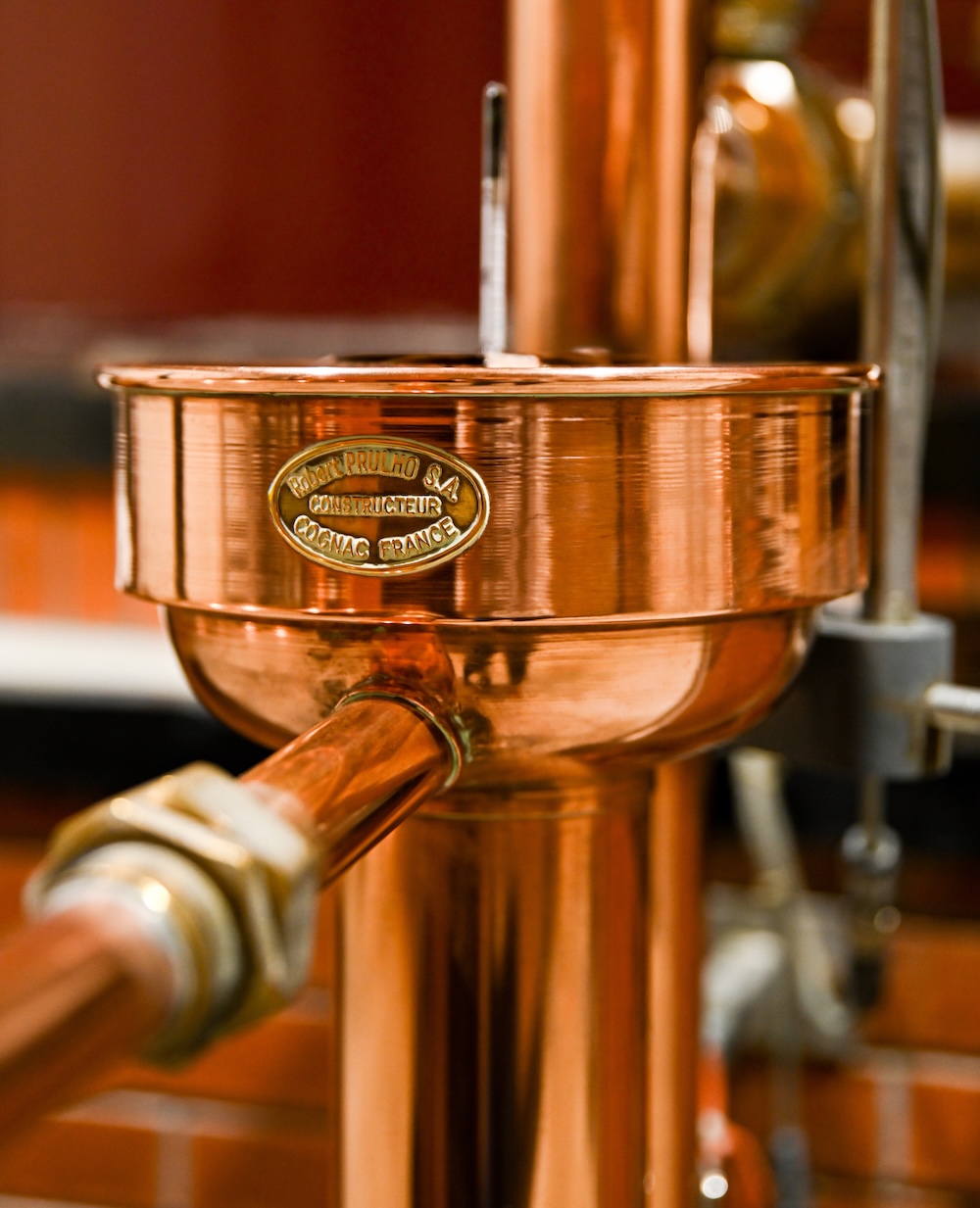
Prulho was originally a renowned still manufacturer
Alexandre Renaud, its export sales director, shared his insights: “Because most of our products are marketed in France, we have been able to cushion the impact of the crisis affecting certain export markets. Our close connections with the domestic market provide stability and greater flexibility to respond to shifting demand. The past two years have been extremely positive, with steady growth, the launch of new ranges and a strengthening of our international presence. We’re also seeing encouraging trends – a return to genuine values, the quest for authentic products and a renewed appreciation for French craftsmanship, all of which bode well for our industry”.
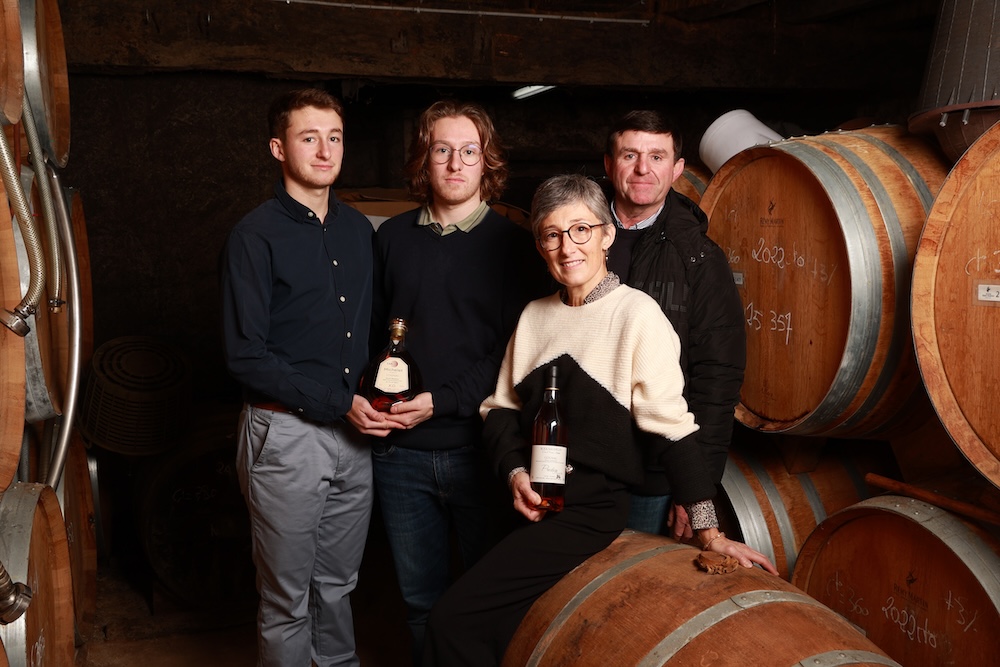
The entire Michelet family in its Segonzac facilities
Michelet: the family-made Cognac
Located in Segonzac, the capital of Grande Champagne and a Cognac 1er Cru, this company belonged to the Massé family since 1608. Over the centuries, it has weathered countless challenges. In 1964, Francis Michelet and his wife Anne-Marie took over the 4-hectare property, established a distillery and expanded the vineyard to 16 hectares. Their son Eric joined them in 1995, launching direct-to-consumer sales in 1998 and subsequently extending the property to 30 hectares of Grande Champagne vineyards alongside his wife Karine. In 2017 they opened a shop, reinforcing their commitment to tradition and the sharing of family heritage. Today, their sons Benjamin and Thibault carry forward the family passion, poised to write the next chapter in Domaine Michelet’s story.
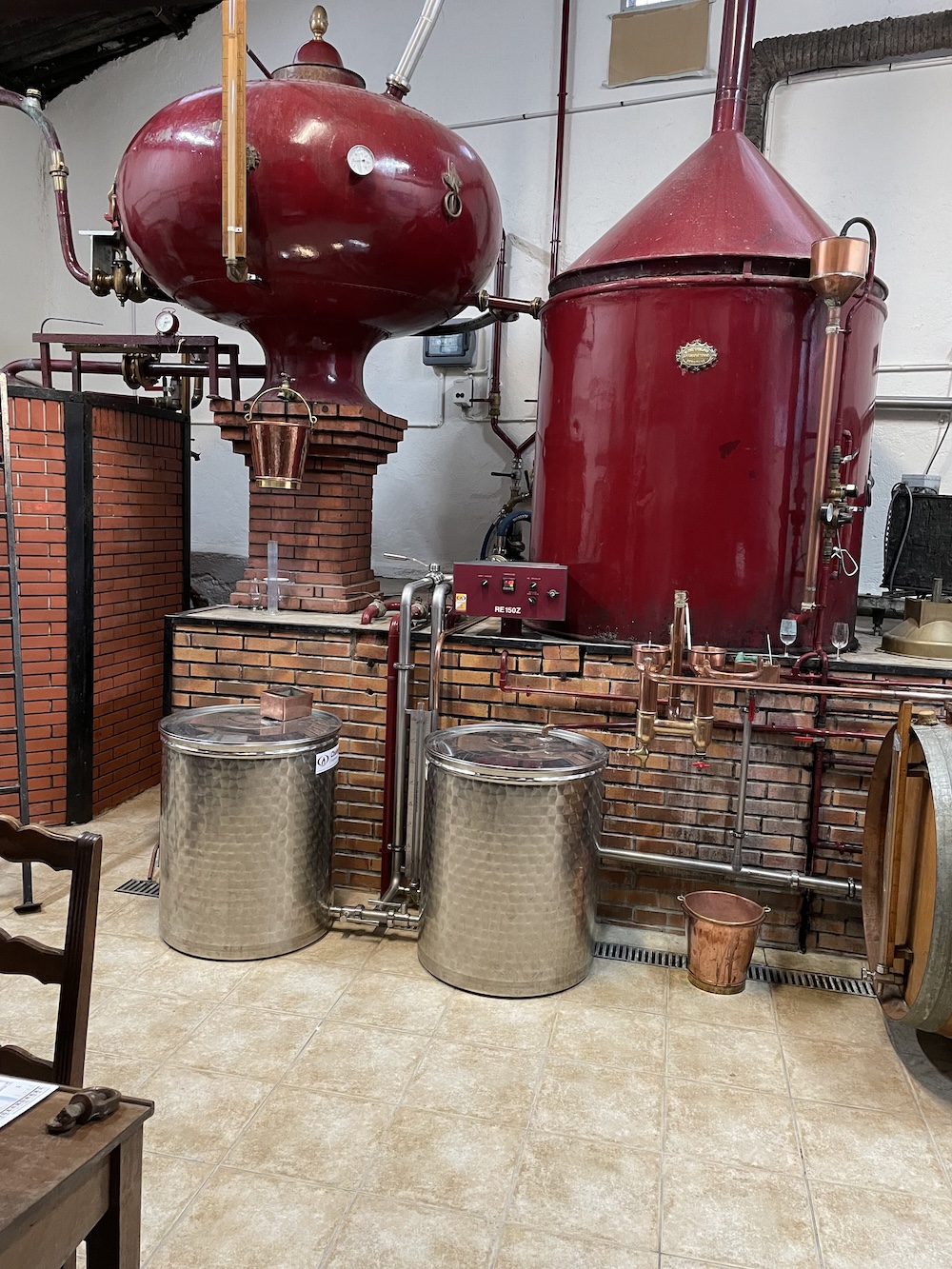
A traditional still at the Michelets
Eric Michelet reflects on recent trends: “Over the past couple of years, sales in France have remained largely stable. By contrast, we have seen a notable decline in sales to the major Cognac houses, private customers and export markets. The current climate, especially the fall in disposable income, does not promise any immediate improvement. Weathering the storm requires adaptation and innovation, and this is something we embrace constantly”. One of the pillars of the range – the Grande Champagne XO – earned a 90/100 rating from our tasting panel, standing the company in good stead. This distinctive Cognac captivates with aromas of apricot and blood orange, a refined texture and chiselled aromatics. It is a charming mirror to its terroir.
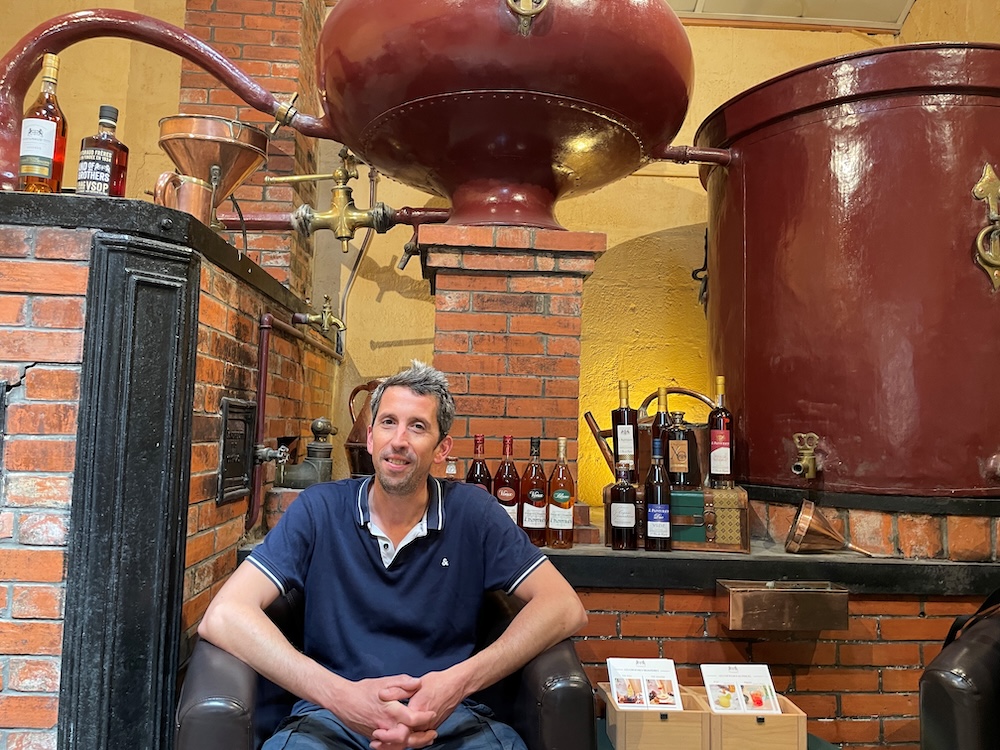
Emmanuel Painturaud in his Segonzac facilities
Cognac Painturaud: The pioneer of direct-to-consumer sales
This family-owned estate, founded at the end of the 19th century, is based in Segonzac, in the heart of Grande Champagne. Now in the hands of the fourth generation, the family farms around forty hectares and produces a portfolio of 6 Cognacs and 6 Pineaux. Today, its main markets are France, Russia, Hong Kong, New Zealand, Germany and the Caribbean.
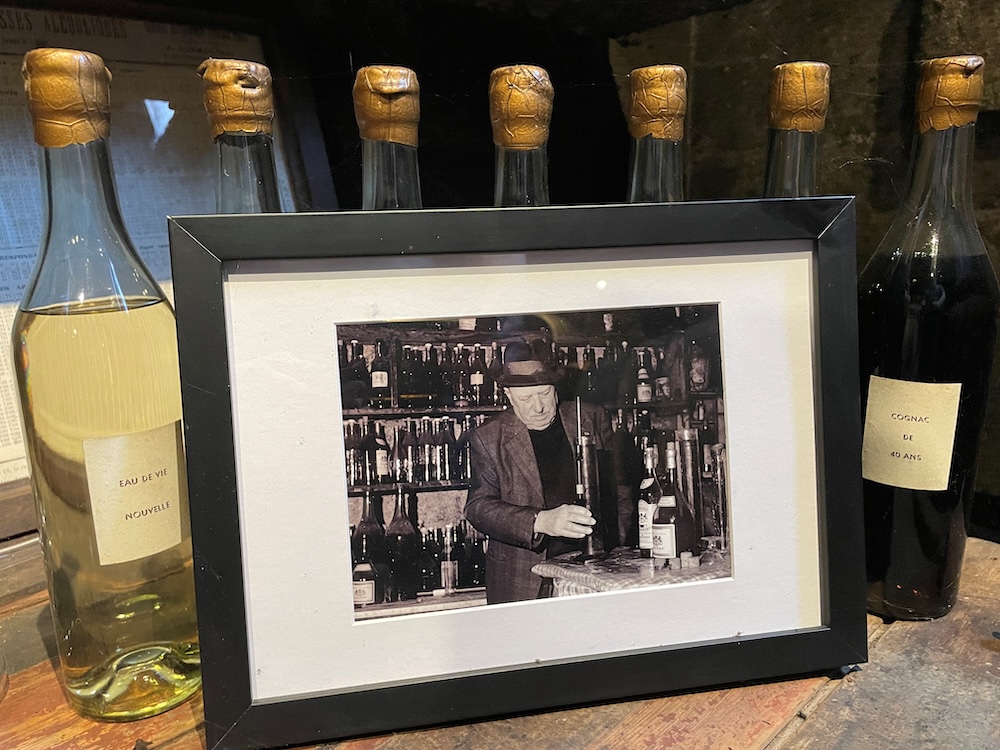
Cognac Painturaud’s founder can still be seen in the family cellar
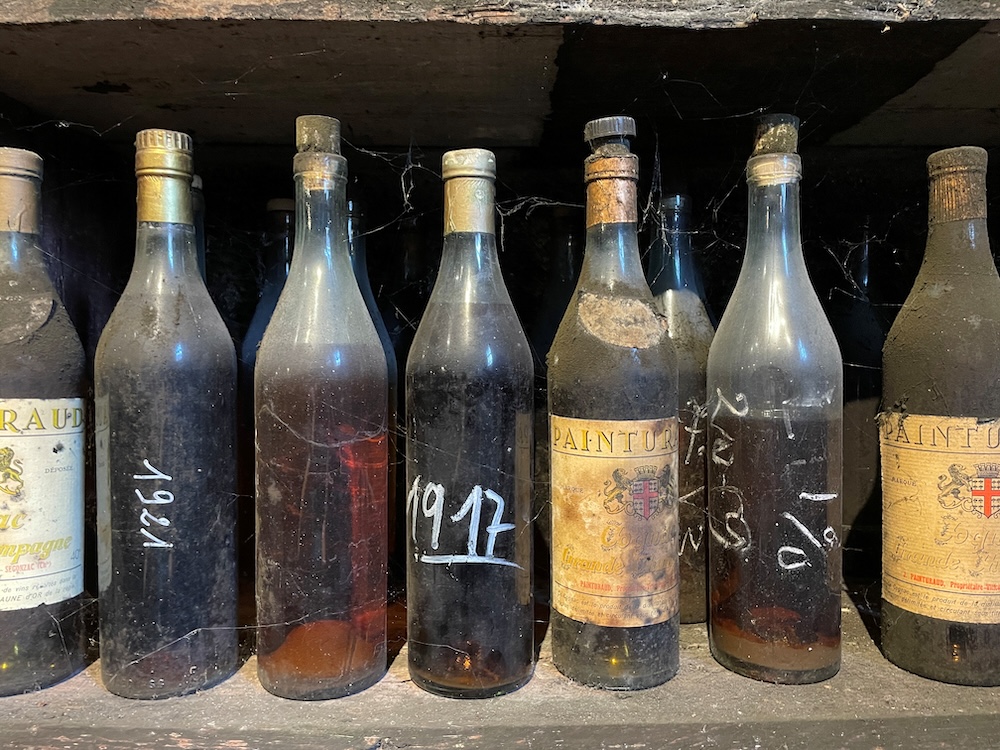
A handful of mature Cognacs which lend the spirit its magic
Emmanuel Painturaud explains that focusing on the French market has shielded the family business from the severe downturn witnessed in some export markets. “We are seeing a slowdown abroad but are constantly exploring new opportunities, particularly through international exhibitions. Developing this sales channel remains a work in progress. From our perspective, the crisis has only had a moderate impact because we have no presence in the USA or China. You could even say that France is our saving grace! We have been selling direct to consumers for 90 years and nearly 50% of our sales come through the cellar door, mostly via wine tourism, which allows us to constantly connect with new consumers”.
Over the last two years, business has been reasonable. “Despite the current climate, our sales are stable. We witnessed a slight slowdown last year but nothing alarming – 2023 was a record year for turnover, and at the moment 2025 seems balanced in relation to 2024. The real challenge is planning ahead. We lack a short or medium-term vision because the landscape changes so rapidly. The unstable geopolitical situation since the end of Covid has seriously disrupted business, and global consumption is declining.”
Emmanuel Painturaud naturally hopes for an economic rebound, but the timing is uncertain. “Unfortunately, Cognac sales continue to decline and industry members are not optimistic about when the crisis will end. Some speak of five years, others ten… If the conflicts subside, international trade relations stabilise and prices gradually ease, without undermining the value of our products or our craft, then maybe we can start to hope for a recovery”.
Is the end to the crisis in sight?
There are certainly a lot of ‘ifs’, but history reminds us that such crises are cyclical – the 1930s, 1970s and 1990s for example all saw downturns followed by periods that were much more prosperous. What sets 2025 apart though is the nature of the challenges. They are more complex, more manifold and above all, their effects ripple across the globe, making resolution slower and more difficult. The Cognac industry, however, remains resilient and, more importantly, is skilled at letting time take its course.
*Source BNIC