By Mauricio Llaver - Photographs: Courtesy of Catena Zapata, Matt Wilson, posted on 11 August 2026
Laura Catena is the CEO and founder of the Catena Institute of Wine in Argentina. She is also a biologist, graduating magna cum laude from Harvard University, and holds a medical degree from Stanford University, which explains her passion for promoting the health benefits of wine.
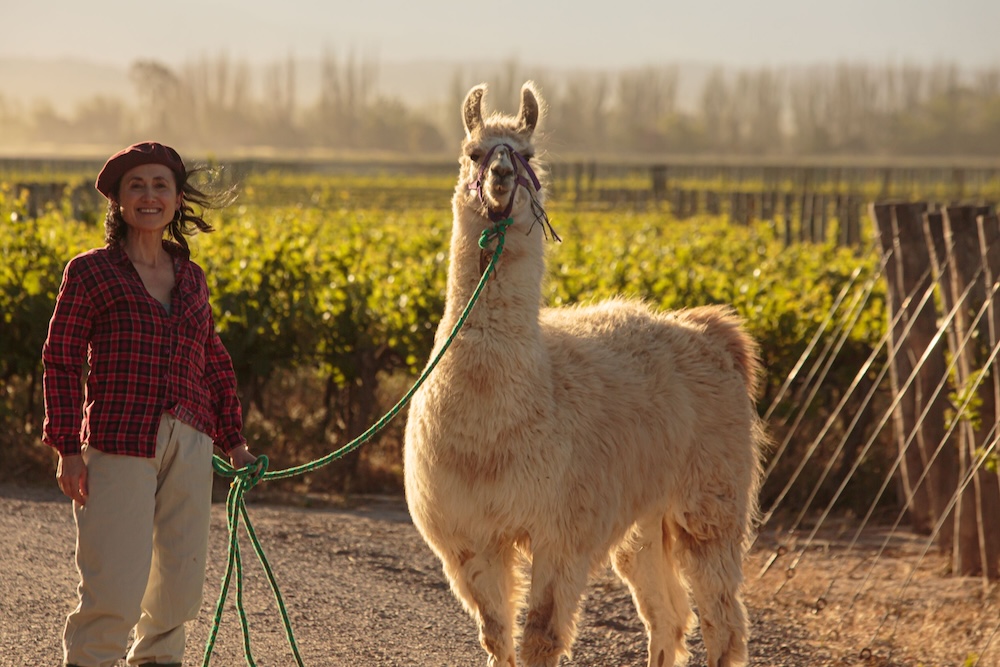
Laura Catena with Llama
Born in Mendoza, Argentina, she is a fourth-generation winemaker, joining her father, the legendary Nicolás Catena Zapata (see Catena Zapata results at GGIC), in 1995. Her mission? To craft wines able to compete with the world's best — a story that runs parallel to how Malbec put Argentina on the world stage. She also founded her own winery, Luca (see Luca Wines results at GGIC) in Mendoza, and worked as an emergency room physician at the San Francisco Medical Center in California for 27 years.
Dr. Catena is not only recognised as the 'face' or ambassador of Argentine wine, she is also a writer. In 2010, she published her book Vino Argentino: An Insider's Guide to the Wines and Wine Country of Argentina, published by Chronicle Books. It received outstanding reviews from Oprah Magazine, The New York Times, The Wall Street Journal, The San Francisco Chronicle, La Nación, Town & Country, Decanter Magazine, Wine Spectator, Vinous, Wine Enthusiast, Wine Advocate and Wine & Spirits, among other publications.
One of her most innovative projects is her foray into the no/low category with the 'Domaine EdeM' project (see Domaine EdeM results at GGIC). She shares her plans for the project in this exclusive interview for Gilbert & Gaillard.
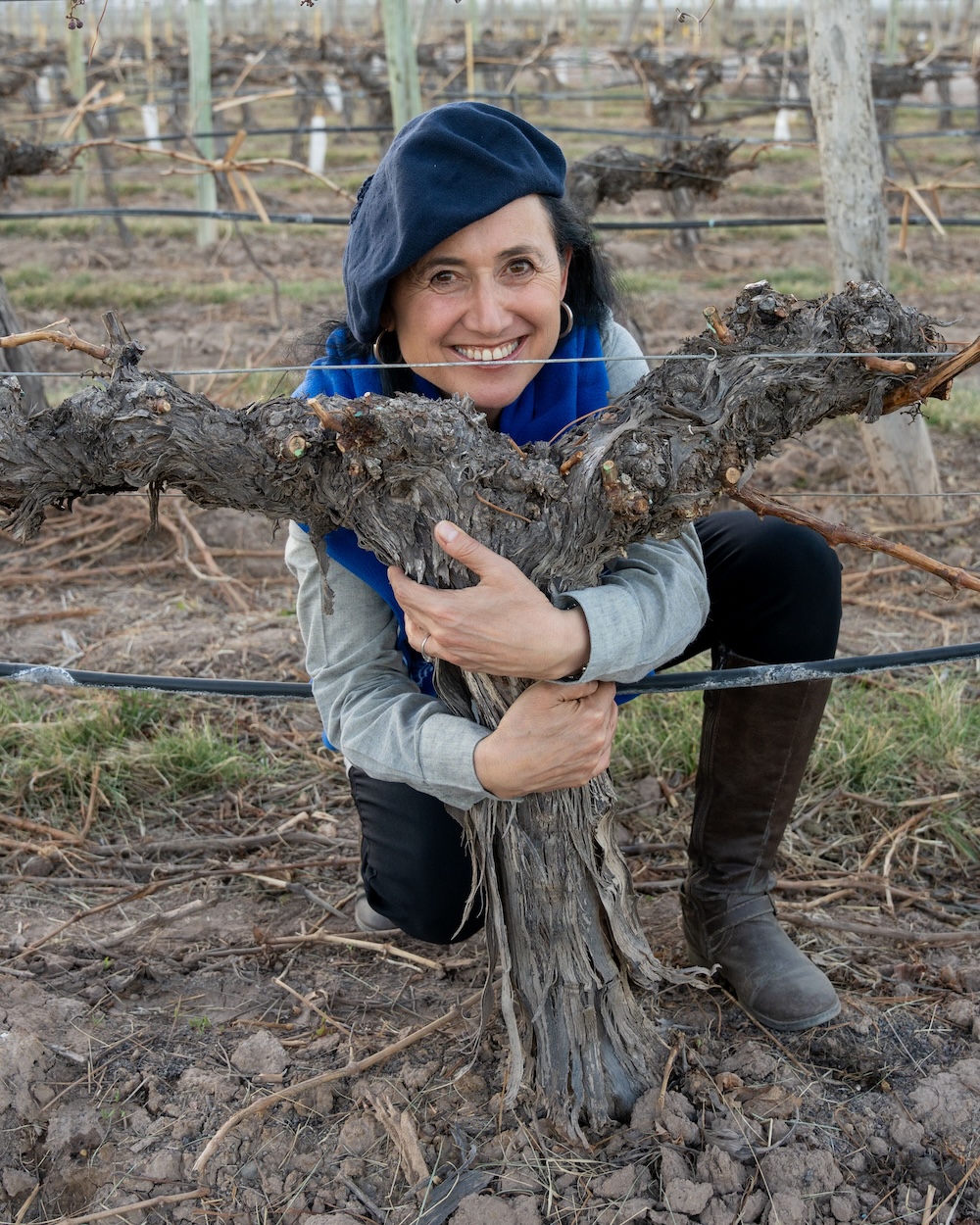
Laura Catena hugging a vine
Domaine EdeM: crafting no-low wines that stand up
In what way are you developing no/low wines?
We began working in this category four years ago, thanks to research at the Catena Institute of Wine, and we are already selling in Europe and the United States. The project is called 'Domaine EdeM', for 'Elena de Mendoza'. Elena is my mother's name and one day she asked my sister Adrianna and I to think about making a wine with lower alcohol content. It's part of a wider no-low category that has grown into a fully-fledged market segment.
Where do you produce the wines?
We have three types of wines: dealcoholised; non-alcoholic wines infused with botanicals; and what we call '7%'. We produce the dealcoholised wines in Spain using Airén grapes and a technology that saves significant amounts of energy. We make the non-alcoholic wines in Argentina using Chardonnay grapes and must, which we infuse with botanicals in varying proportions. They are all sparkling wines.
Are you satisfied with the results?
The no/low movement is so new that it's not even clear which styles will prevail. But our teams blind taste the wines being released, and ours always win.
Is there anything that particularly impresses you about this new movement?
Alcohol-free wines are consumed in different ways because drinking patterns are different. In fact, I consider them to be 'replacement wines' because they're perfect for those in-between days when, even if you want a break from alcohol, you don't want to miss out on the experience of drinking wine, which is much more than just alcohol: wine is culture, it's a gathering, it's a ritual.
How often should one drink alcohol-free wines?
From a medical point of view, it would be best to have no more than two alcoholic drinks at a time and skip two or three days a week. The reason for skipping isn't that drinking alcohol every day is bad for you, but rather that it's easier to avoid becoming dependent. Alcohol is very different to cigarettes: nobody smokes just a few cigarettes - 95% of smokers smoke too many. With alcohol, on the other hand, 70% drink moderately. So, for me, non-alcoholic/low-alcohol wines are for those days when you're not drinking alcohol, but you want to treat yourself to a glass.
So you see a future for them?
Yes, but they have to be really good. Non-alcoholic beers are quite good, so the same has to happen with wine. There are many non-alcoholic/low-alcohol wines that are starting to be very good, and that's very promising — much in the vein of what Italy's no and low alcohol pioneers are achieving on their own turf.
Are there any statistics on this?
More than 95% of consumers of non-alcoholic products are consumers of regular wines. At least today. But it's possible that in the future, young people who don't drink alcohol today, whether for fashion or health reasons, will enter the world of wine through non-alcoholic/low-alcohol wines.
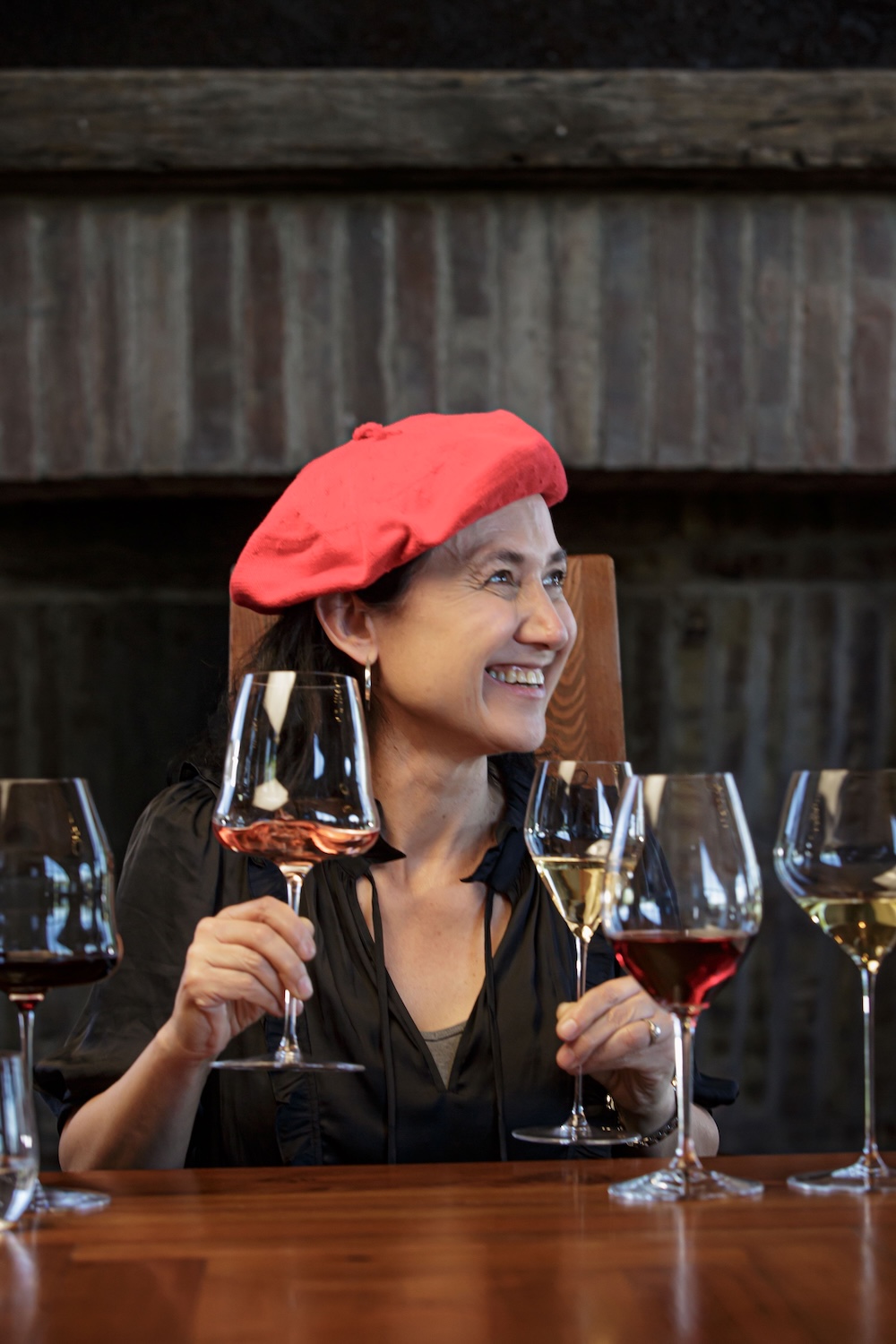
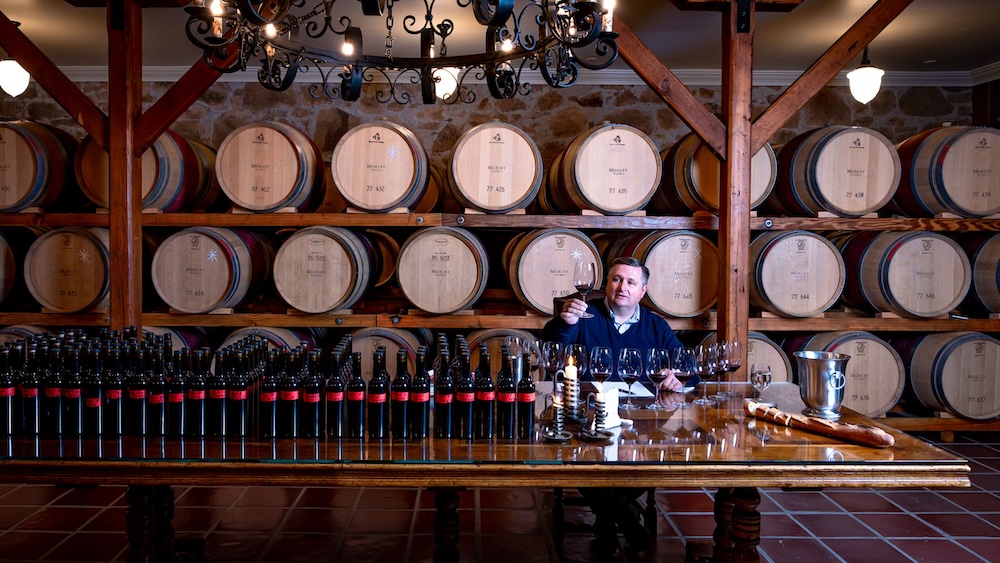
Laura Catena, the rollercoaster tasting
Wine, health and the anti-alcohol movement
What are your thoughts on the increased demonisation of alcohol consumption?
What's happening is a catastrophe in Europe and very bad in the United States. It's not yet as bad in Asia and Latin America, but the situation in Europe is very serious. I'm outraged by what's happening in France, where it's forbidden to say that alcohol can be good for your health, even though there are thousands of articles demonstrating that moderate consumption can reduce mortality from heart disease. That law isn't based on science, and it leads me to ask: "How can the birthplace of wine be swayed by something so unscientific?" Which also surprises me, because the French are very scientific.
Is the same thing occurring in all European countries?
No. Today, the leaders in wine and health are Spain and Italy, and especially Spain where a study is underway that in around four years' time will answer the question of whether the Mediterranean Diet with wine is better than without it. But the issue is widespread and is affecting many products, such as Parmigiano Reggiano cheese, which has been given warning labels for high salt and fat content for political reasons. I find this absurd because it's a historic, artisanal product consumed in small quantities. And in Ireland, they're due to introduce a warning that, in my opinion, is neither medically nor scientifically sound, to the point that we've decided to stop selling wines in Ireland.
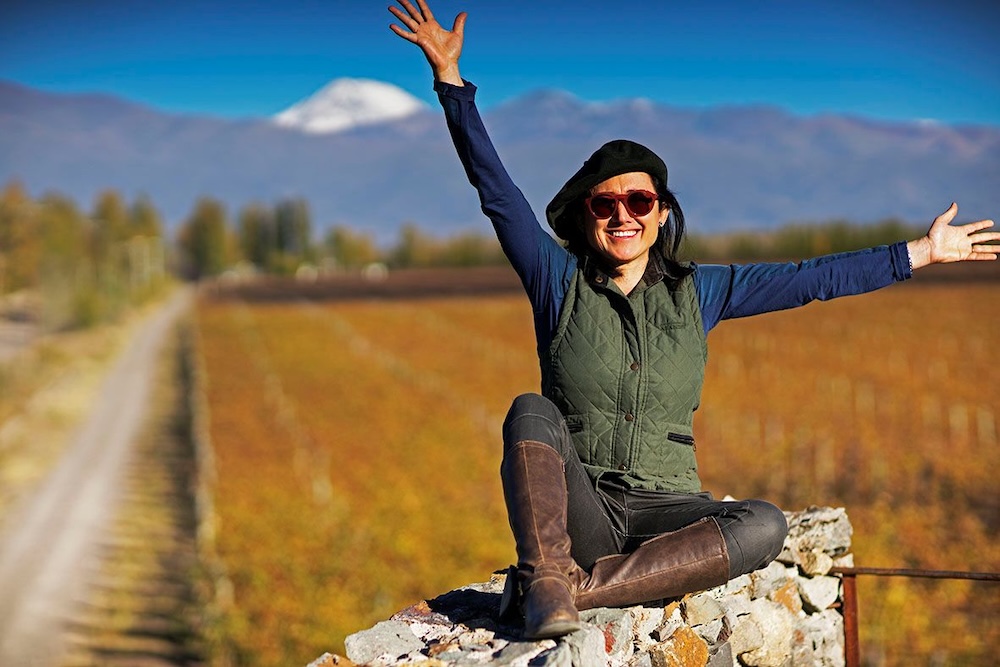
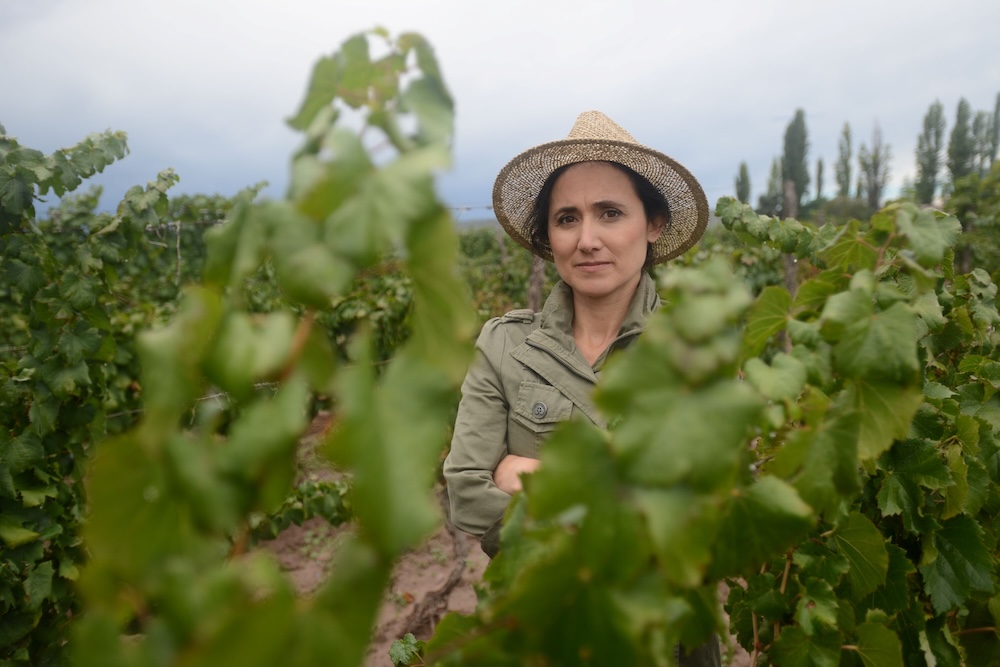
Former ER physician Laura Catena now grows wine in Argentina (credit Matt Wilson)
Why did you make such a drastic decision?
Because I'm not going to put a lie on my bottle, and also because I'm a doctor. They're making it compulsory for labels to say 'Alcohol causes cancer and liver disease'. That's not right! They should say 'Excessive alcohol causes...' What's happening is very strange.
How would you defend wine consumption in this context?
It's very clear that excessive drinking increases heart, brain and psychiatric problems, and can even cause cancer. But this begs the question: what is excessive drinking? In general, moderate consumption is up to two drinks per day for men and one drink for women. Also, you should never drink more than four or five drinks in two hours, because that can be toxic and cause accidents, among other things. But moderate alcohol consumption, accompanied by food, is like a kind of aspirin with beneficial cholesterol-lowering and cardiovascular effects. The problem is that if they start adding labels saying that alcohol is bad, we won't be able to conduct studies like the one on the Mediterranean Diet in Spain, which would greatly clarify the situation. The anti-alcohol movement is dangerous because if they defeat wine, they defeat our historical civilisation – wine is sacred in many cultures.
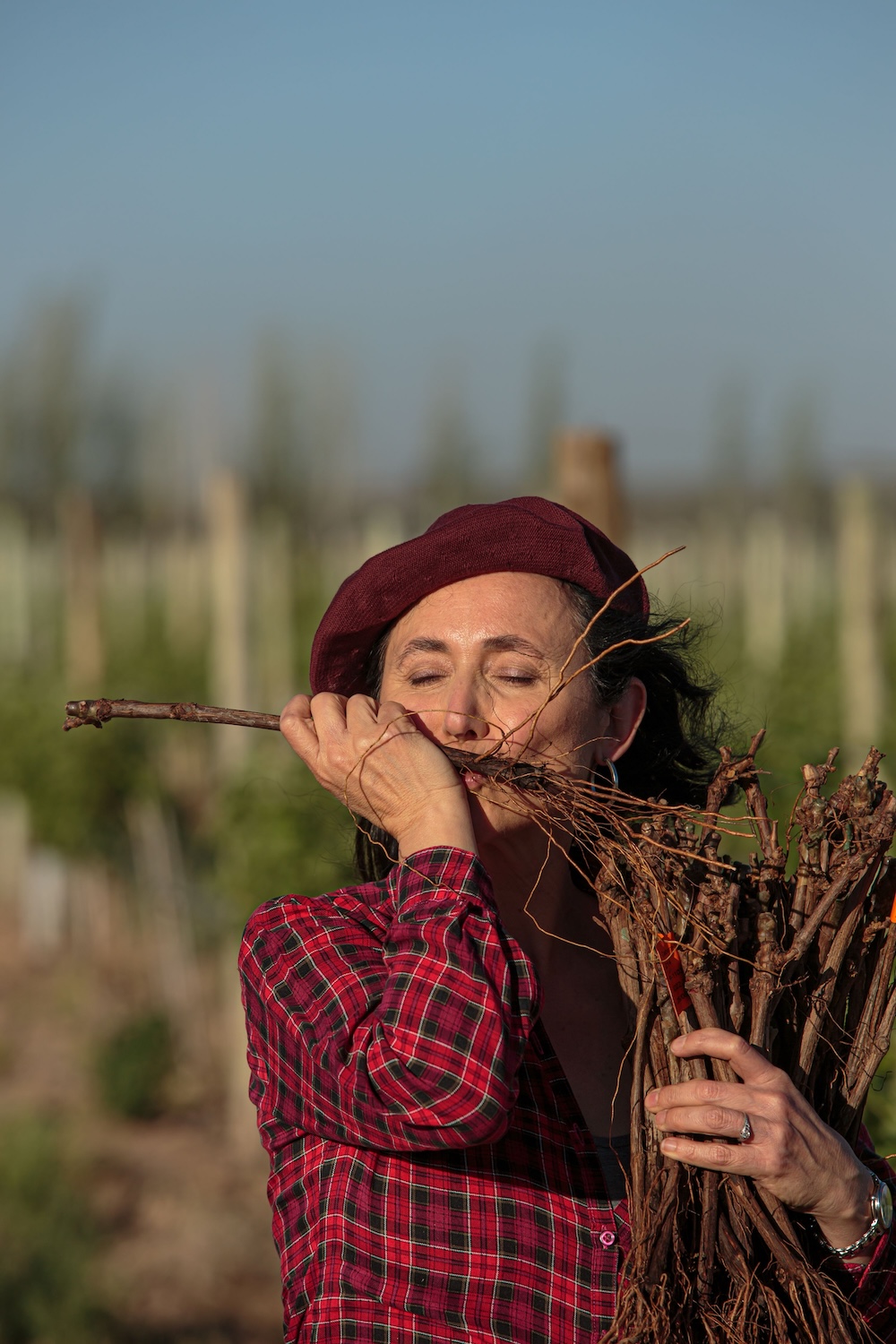
Laura Catena kissing an old vine