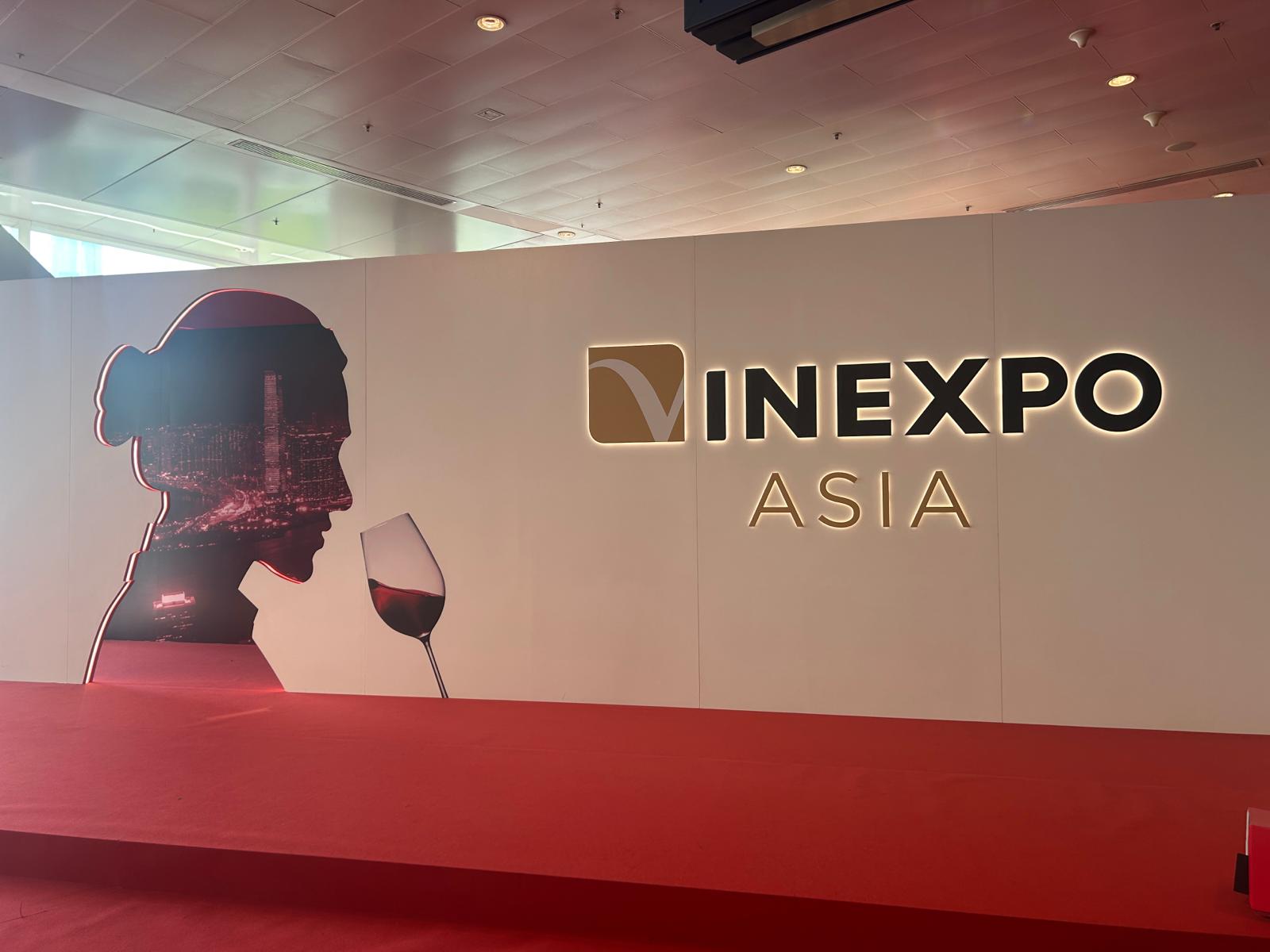
The tenth edition of Vinexpo Asia confirmed, from 26 to 28 May at the Hong Kong Convention and Exhibition Centre, its standing as an essential crossroads for wine and spirits in Asia-Pacific. Less euphoria, more maturity: in a demanding climate, the fair held its course and reminded a sector in search of bearings that, to sell, you must first meet.
We expected a barometer; we found a compass. The tenth edition of Vinexpo Asia, held from 26 to 28 May at the Hong Kong Convention and Exhibition Centre, did not set out to dazzle: it did better, confirming the resilience of a gathering that has become, over nearly three decades, the rallying point of the wine and spirits trade in Asia-Pacific. In a demanding global climate, holding steady is itself an achievement — and the fair held its course with style.
The figures speak for themselves. Vinexposium reports 14,273 trade visitors from 76 markets, up from 59 two years earlier, and 38 producing countries instead of 35. Nine new exhibiting nations made their debut, from Austria to Uruguay, while twenty-eight trade associations took part, against nineteen in 2024. This fanning-out, far from a mere display effect, signals the undiminished appeal of Asian markets for producers the world over, right down to the pavilions of France, Italy, Germany, New Zealand and Spain.
Institutional backing confirmed that foundation. Opened by Hong Kong's Under Secretary for Commerce and Economic Development, the fair drew the French Ambassador, the Ambassador of the European Union and twenty-five consuls general and trade advisers from eighteen countries, alongside the steadfast support of the Hong Kong Tourism Board. In a sign that the ecosystem is being built to last, the latter has just sealed a five-year protocol with the Bordeaux Wine Council around wine tourism and gastronomy: one more bridge between the European vineyard and the Asian connoisseur.
An edition of maturity
The audience, too, has matured. Fewer browsers, more decision-makers: such was the prevailing impression in the aisles. Wine is no longer a discovery for these now complex and discerning markets; it is a matter of selection. Three-quarters concentrated on Mainland China, Hong Kong, Taiwan and Macao, attendance saw the growing weight of Japan, Korea, South-East Asia and Australia — markets reputed to be more dependable in value. The conversations reflect it: more concrete, more precise, geared to the long term rather than the grand gesture.
This new demand is an opportunity for those who can adapt to it, at a time when the sector is exploring new frontiers, from diversifying tastes to opening markets. Professionals agree: in Asia, the future favours not the one who exports but the one who localises — language, formats, storytelling, capable teams. The fair embraced this shift perfectly. Its Be Spirits space, already in the spotlight at the latest Wine Paris, tripled its exhibitor base, gathering 105 houses from eighteen countries, while the rise of no-alcohol was confirmed, with one reference in ten. Twenty-five masterclasses and conferences fed this build-up of expertise, turning the fair into a genuine place to learn the market.
The merit of the meetings
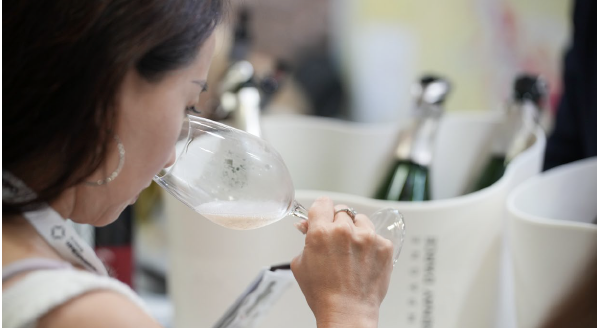
And here lies the essential, where Vinexpo Asia fully justifies its purpose. In an industry shot through with uncertainty, where every decision is weighed, a trade fair is worth, above all, what it makes possible: the encounter. For three days, importers, distributors, sommeliers and producers gathered in one place, shared a glass, opened conversations that no remote exchange would have struck up. These meetings, scheduled or improvised, are the fuel of commerce: they do not all translate into an immediate order, but they trigger the relationships from which tomorrow's business will be born. Offering that chance is the most valuable service a fair can render to a disrupted industry.
Hong Kong, a super-connector between China and the world, remains the ideal vantage point from which to read Greater China and Asia as a whole. « When the market grows more complex, knowledge becomes a tool », notes Rodolphe Lameyse, head of Vinexposium. The organiser has drawn the consequences: from 2027, Vinexpo Asia will become annual, anchored in a single Asian hub, to offer exhibitors the stability and clarity they are calling for.
The 2026 vintage did not claim to upend the table. It did something more lasting: holding the course, keeping the doors of dialogue open and reminding us that, in uncertain times, talking remains the first act of selling. At that game, Hong Kong is still unbeatable.