By The Gilbert & Gaillard Team - The Gilbert & Gaillard team – Photographs: courtesy of Domaine VIK, posted on 04 December 2025
At the heart of the VIK estate in Chile, oenologist Cristian Vallejo has turned a simple concern into a visionary initiative: WineLab. Born from his desire to help young oenologists find their place in a demanding market, this student competition has quickly become a unique springboard for revealing the talents of tomorrow.
Altruism as a Driving Force
One of the most striking aspects of WineLab is its ability to unite an industry often shaped by competition. Cristian Vallejo highlights a true “spirit of generosity toward the youth,” which quickly brought the sector’s major suppliers together.
Everyone joined without hesitation—no one questioned the presence of competitors. The goal of supporting the next generation outweighed individual interests.
A strong symbol of this collective effort is the involvement of a major Chilean bank. More than a sponsor, it sees WineLab as a concrete way to support the country's future professionals.
The wine awarded for second prize is even gifted to the bank’s top clients, turning the students’ work into a source of storytelling, visibility and pride.

A Catalyst for Internationalisation
Initially designed to support Chilean oenology students, WineLab quickly expanded to include participants from abroad—particularly from Brazilian universities.
Cristian Vallejo is convinced that this momentum will pave the way for student exchanges, joint thesis projects and a broader enrichment of viticultural practices.
The human and educational impact already extends far beyond the boundaries of the competition itself.
“If the competition had remained Chilean, it would have reached its limit. Internationalisation brings healthy competition, fresh perspectives, a different culture, and a higher level for everyone.”
A Pedagogical Turning Point
The most significant shift triggered by WineLab lies within academic training itself.
During the first edition, the victory of a less-expected university sent shockwaves through the academic community. Leading institutions were forced to question themselves: Where had they fallen short?
The conclusion was clear: students lacked hands-on experience in blending, flavour construction and sensory projection.
In response, several universities revised their curriculum and introduced a six-month course focusing on blending, tannins and applied oenological decision-making.
A profound educational shift directly driven by WineLab.

Science, Sacrifice and Forty Harvests
Beyond the competition, Cristian Vallejo carries a philosophy of his own.
While today’s generation may be attracted by the “romantic side” of blending and tastings, he reminds them that true oenological excellence begins with fundamentals:
- physical work,
- rigour,
- discipline,
- deep understanding of the vineyard,
- scientific analysis (densities, data, temperature).
He often reminds students that a winemaker’s career offers only around 40 harvests.
Forty opportunities to learn, improve and evolve.
A single mistake can compromise the work of hundreds of people—a responsibility young professionals must fully grasp.
Constructive criticism, he insists, is essential: a tool for progress, turning failures into growth.
The Pursuit of “Readable” Complexity
When asked about his work at VIK, Cristian Vallejo summarises his focus through three main pillars:
- Tannin structure, shaped from the vineyard onward
- Aromatic expression, inspired by the purity and precision of northern Italy
- The support of science, to pinpoint the exact moment when a blend “locks into place”
His aim is clear: to craft wines that are complex yet readable, rich yet delicious, ambitious yet immediately understandable.
Even with excellent tasting scores, he believes perfection remains a moving horizon.
The ultimate goal: a delicious, harmonious complexity, instantly recognisable.
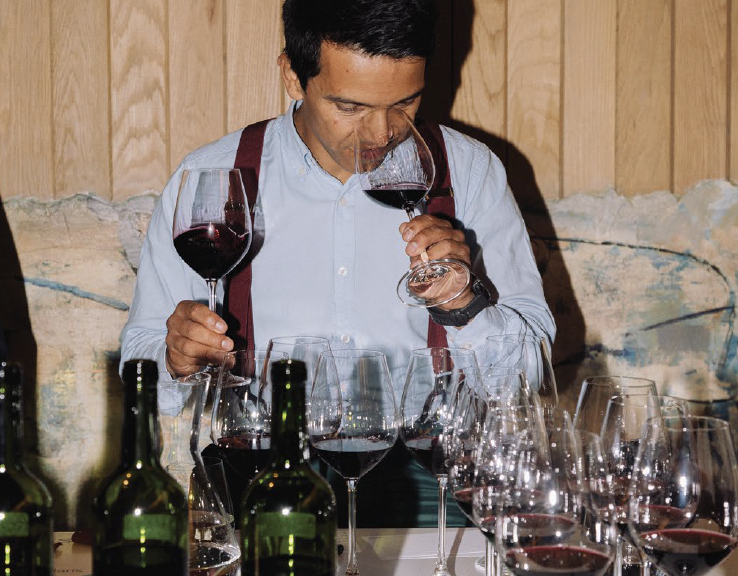
This meticulous approach is paying off. Today, VIK wines are increasingly identified blind by professionals—a sign that a distinct identity, a sensory “through-line,” has taken shape.
Beyond Wine: A Holistic Vision
For Cristian Vallejo—and for the owners of VIK—the mission goes beyond producing wine.
It is about building a model of community: supporting small producers, integrating local artisans, and fostering a philosophy where passion, excellence and social responsibility move forward together.
WineLab is therefore more than a competition: it is a cornerstone of a broader vision where the future of oenology is shaped through transmission, collaboration and human-centred excellence.
A Demanding Professional Framework
Far from being an academic exercise, WineLab subjects participants to a process worthy of top estates:
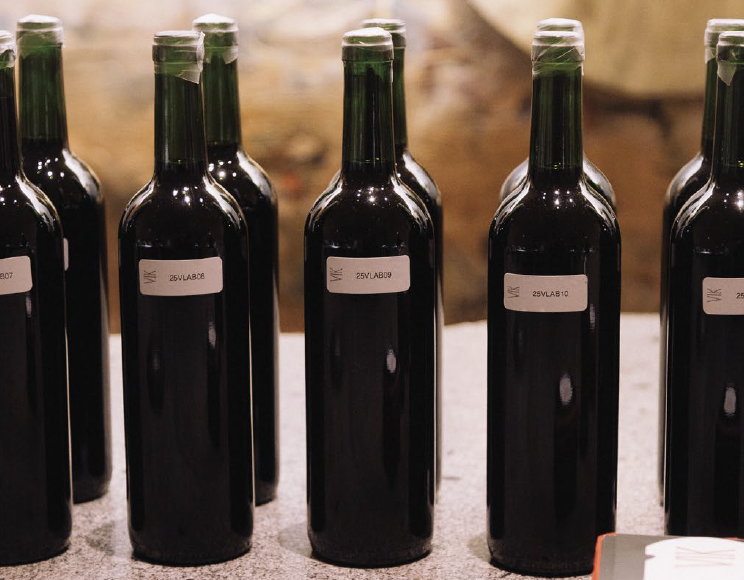
- Production of 20 wines by the students
- Six months ageing in Barroir barrels (VIK’s in-house cooperage)
- Selection of 20 wines → 6 finalists
- Grand finale judged by an exceptional international panel
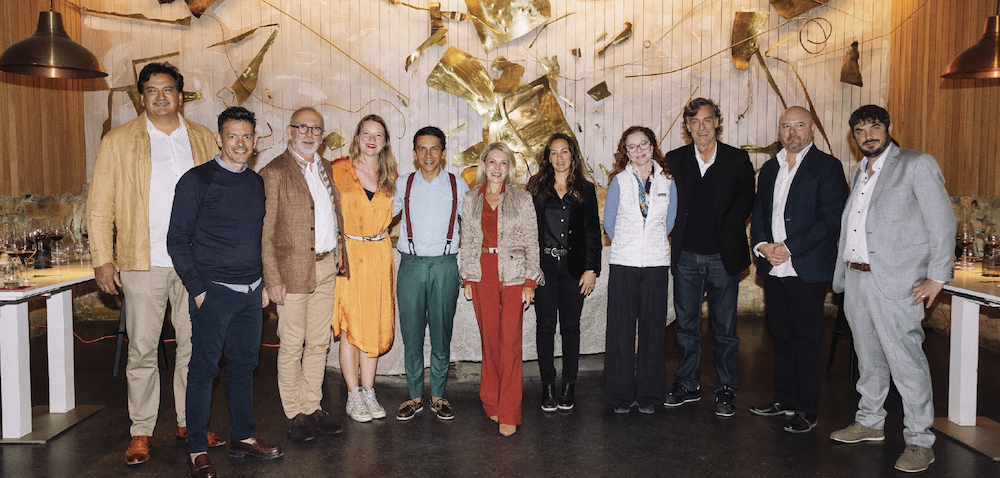
The 2025 jury brought together some of the most influential figures in wine:
- Karen MacNeil, global wine author & critic
- Amanda Barnes, MW
- Daniella Romano, W50 Best LATAM
- Alejandro Iglesias, journalist & consultant
- Jean-Luc Sylvain, Tonnellerie Sylvain (France)
- Marcelo Pino, Chile’s Best Sommelier 2011
- Ricardo Bobadilla, Vinicas
- Vivien Morvan, Gilbert & Gaillard
And the VIK technical team: Cristian Vallejo, Andrea García and Priscila Fernández.
The 2025 Winners: A New Generation Steps Forward
After an extremely close tasting, the 2025 winners were:
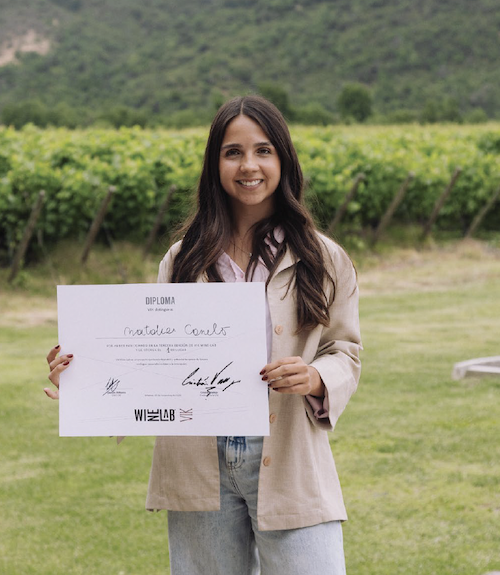
Natalia Canelo – Pontificia Universidad Católica de Chile
1st Prize: Trips to France & Italy + 24 bottles + full marketing package + 3-month internship at VIK
Cristián González – Universidad de Chile
2nd Prize: Trips to Portugal & Italy
Lenise Albrecht Luz da Silva – UNIPAMPA, Brazil
3rd Prize: Trips to France & Italy
A Brazilian award in the top 3—a powerful symbol of WineLab’s openness and the renewed dynamism of the region’s oenological landscape.