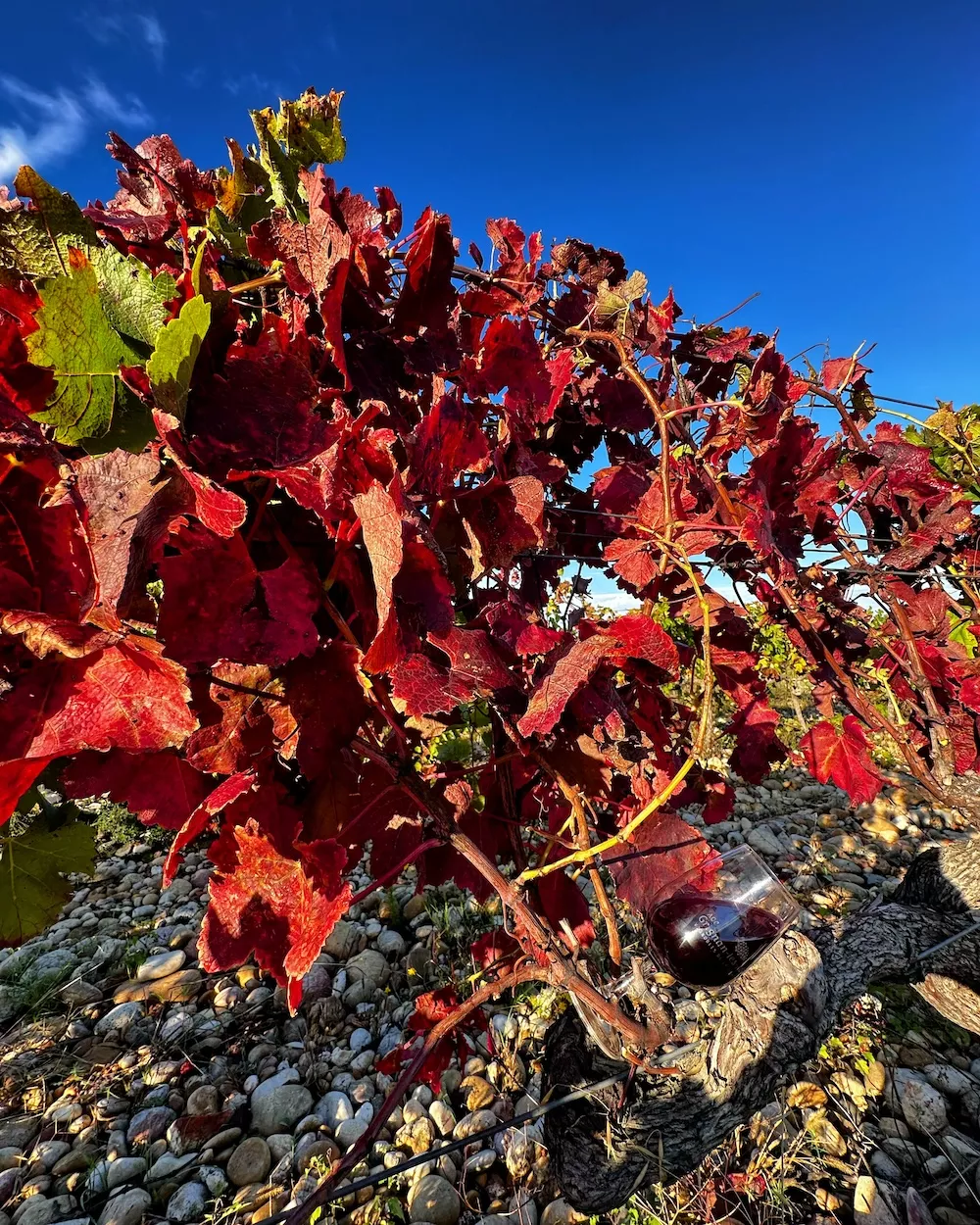
Italian wine is not just a production industry: it is a cultural, economic and territorial system based on a co-operative structure that is unique. The Protection Consortia model is one of the most advanced tools ever developed to guarantee quality, identity and collective value. It is a system that allows even the smallest producers to be represented, protected and valued through a shared structure that aims to defend and promote designations and wine regions.
Italian wine consortia: a unique co-operative model
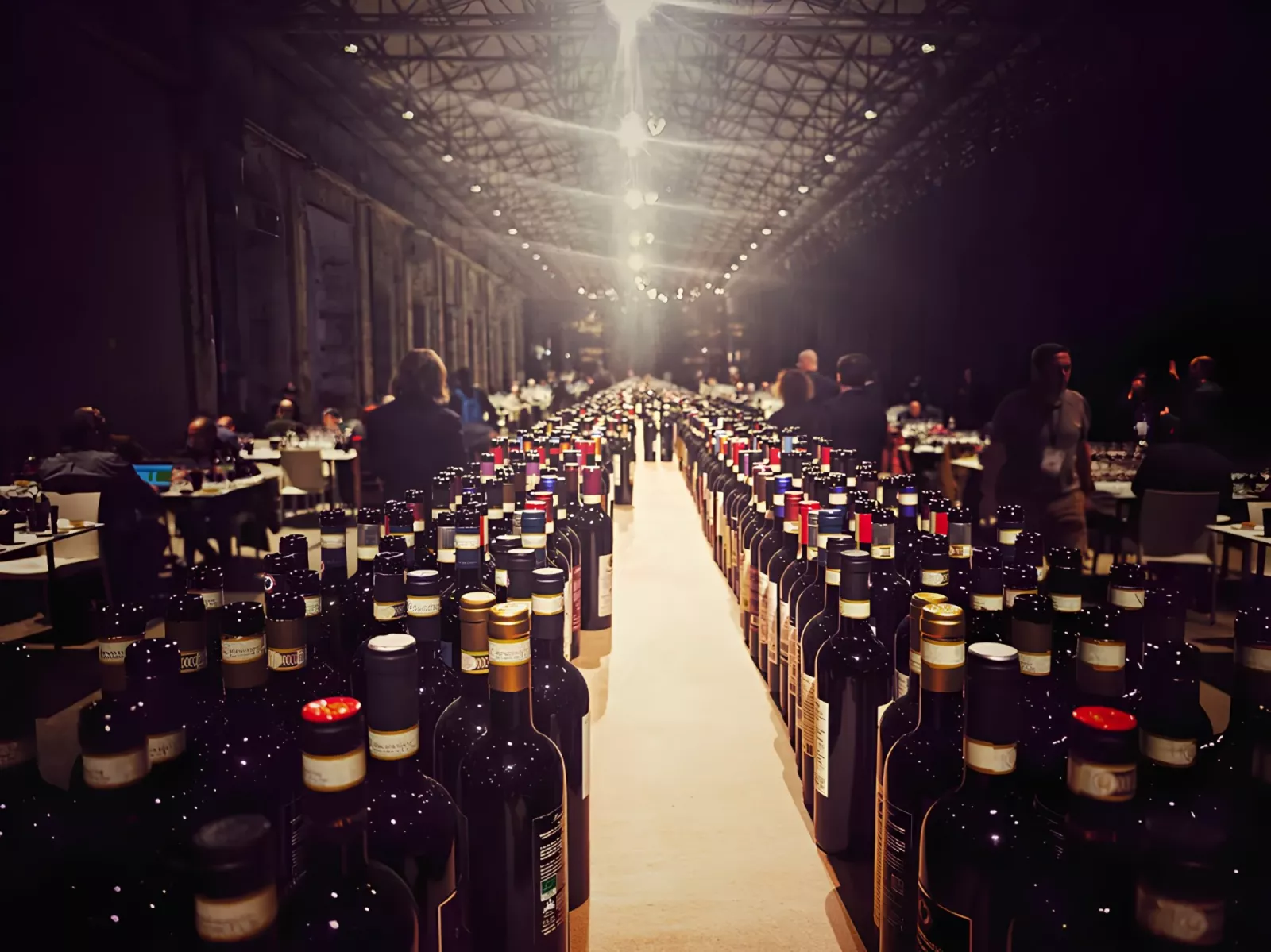
The Chianti Classico Collection, one of the largest consortium presentations in Italy, allows the media and industry members to preview wines across the Chianti Classico spectrum
Italian wine is not just a production industry: it is a cultural, economic and territorial system based on a co-operative structure that is unique. The Protection Consortia model is one of the most advanced tools ever developed to guarantee quality, identity and collective value. It is a system that allows even the smallest producers to be represented, protected and valued through a shared structure that aims to defend and promote designations and wine regions.
No other wine producing country has developed such a widespread and organised network, able to combine agriculture, industry and co-operation in a single course of action. A Consortium is not just a protection body: it is a platform for territorial governance that turns individual interest into collective interest. In this sense, Italian wine is one of the highest expressions of co-operative economy applied to quality.
Geographical Indications are not just a brand: they are a shared narrative made up of landscapes, traditions, biodiversity and local knowledge. Consortia are therefore guardians of a heritage that goes beyond the product itself, spanning both identity and culture.
Federdoc: the confederation of Italian consortia
The Alta Langa Consortium has 179 members, covering 500 hectares of vineyards, with 3.5 million bottles potentially certifiable
Founded on 9 July 1979, Federdoc has a clear mission: to unite and represent the Designation of Origin system for Italian wine. Today, it brings together around 80 Protection Consortia and represents more than half of national PDO production, equivalent to more than 12.4 million hectolitres. It is the only entity in the Italian wine sector where agriculture, industry and co-operation co-exist in a structured manner, encouraged to work together to face the challenges of a constantly evolving sector.
The system of Italian Geographical Indications for wine is based on a unique governance model, built over time by Protection Consortia and co-ordinated nationally by Federdoc, which acts as a reference point, providing strategic direction and institutional representation. Over the years, the Federation has made a decisive contribution to developing an advanced governance model for the sector. It does not limit itself to a merely representative role, but acts as a driving force and plans ahead, capable of providing the Designation system with specialised operational tools to support the quality, credibility and market standing of Geographical Indications.
Valoritalia and Equalitas
This course of action included the creation of Valoritalia, the main body for the quality control and certification of PDO wines in Italy, which operates as an independent third party guaranteeing impartiality, thoroughness and uniformity in applying production regulations to protect both consumers and the reputation of Italian wine. Federdoc also supported the creation of Equalitas, the national reference standard for the sustainability of the wine sector, based on an integrated approach that considers environmental, social and economic aspects together and is applicable at company, product and territorial level.
Valoritalia and Equalitas, while operating in separate areas, contribute equally to strengthening the certified quality, transparency and credibility of Italian Geographical Indications on national and international markets.
A voice in Italy and in Europe
Federdoc's constant presence at industry roundtables and its continuous dialogue with institutions give voice to the Consortia that oversee and defend national winemaking heritage on a daily basis. At European level, it played a prominent role, as a founding member, in the creation of EFOW, the European Federation of Origin Wines, a federation that brings together the main countries producing wines of origin and which counts Federdoc as one of its most eminent stakeholders in the protection of Geographical Indications and the fight against agro-piracy.
Italian wine, with its rich array of grape varieties and areas, finds its highest expression in GIs. A wine of origin is not just a product: it represents history, culture and landscapes. The Consortia operate on a dual front: promoting knowledge of designations and defending excellence from imitations and fraudulent practices. The recent European reform recognised their strategic role, assigning them new skills related to sustainability, the promotion of wine regions and the fight against practices that diminish the value of GIs.
Therefore, Federdoc's future priorities are: to support Consortia in the regulatory transition, to promote synergy and partnership, and to continue the work of popularising Geographical Indications, addressing younger generations and promoting moderate and mindful wine consumption. The end goal is to make wine increasingly accessible and understood, without sacrificing its cultural value and identity.
Alta Langa: the patient and mindful construction of a modern designation
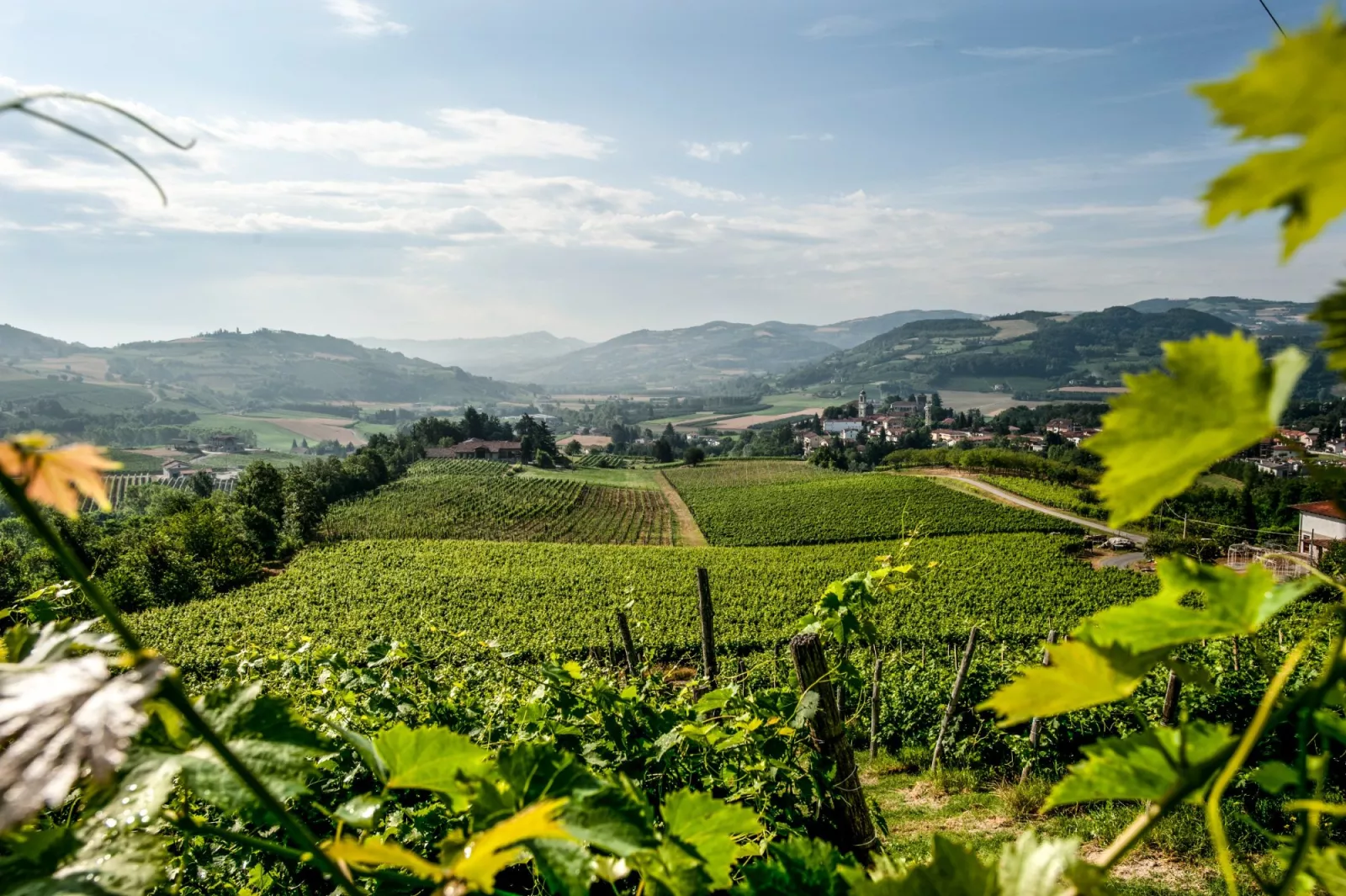
The Alta Langa DOCG wine region is the only Italian designation to set a minimum elevation of 250 metres for vineyards, with the average lying at 440 metres above sea level
Alta Langa is a fascinating case in the Italian consortium landscape: it is a young designation in form, but is deeply rooted in history, created to stimulate dialogue with the national and international markets. The Alta Langa DOCG journey was not hastily embarked upon: it is the result of traditions that have their roots in the second half of the 19th century and stems from a conscious choice to use time as an ally. Identity and consistency were placed at the heart of the project, with the strong belief that only patient growth could create credibility. Today, that long wait has proved to be a strategic investment: the time is now right for high-quality bubbles and the designation is proving itself to be a recognisable, strong and authoritative system.
In the early nineties, Alta Langa sprang from a shared vision: to face the market with a rigorous quality model and a well-defined territorial identity. The area’s distinctive features underscore the strength of the project: high altitudes (the only PDO specification that sets a minimum altitude for vineyards above 250 metres, with an average of 440 metres), sedimentary soils of marine origin, strong temperature variations and an ideal climate for slow ripening. These natural conditions make the wine region particularly suited to the traditional method, producing wines that display finesse, elegance and longevity.
Strict rules for traditional-method sparkling wines
The growth of the designation was slow and gradual, never forced. Strict discipline has played a central role in defining a consistent style and in ensuring credibility and high-end positioning. It is one of the strengths of Alta Langa and testifies to the vision of its founding fathers: only vintage wines, at least 30 months of ageing on the lees, high-elevation vineyards and the use of Pinot Noir and Chardonnay for at least 90% of the blend, with a limited proportion of indigenous grape varieties. This clear regulatory framework leaves no room for shortcuts and guarantees quality.
From an institutional point of view, the Consortium plays a central role in the protection and promotion of the wine region. It oversees regulations and quality, fosters dialogue between producers and institutions, coordinates the promotion of wine on markets and develops cultural projects that raise awareness of the area’s identity. Another emblematic initiative was the geological map of the Alta Langa created by geologist Edmondo Bonelli, both a technical and cultural tool that makes the territory’s nuances more visible, reinforces the designation’s transparency and consolidates its authority. It demonstrates how a modern Consortium does not just promote, but works to build territorial knowledge and awareness.
South Tyrol: collective excellence and the use of science to support terroir
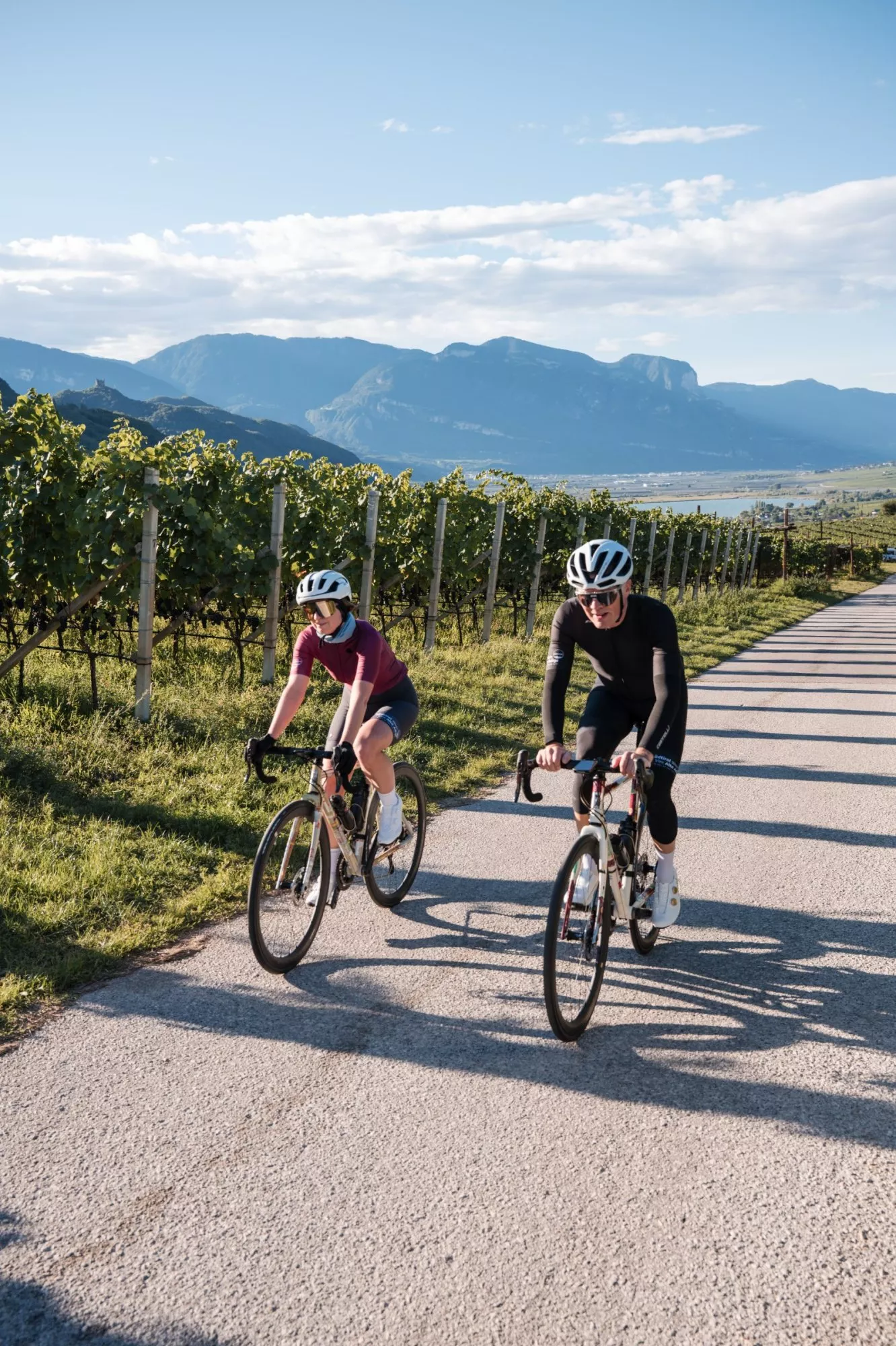
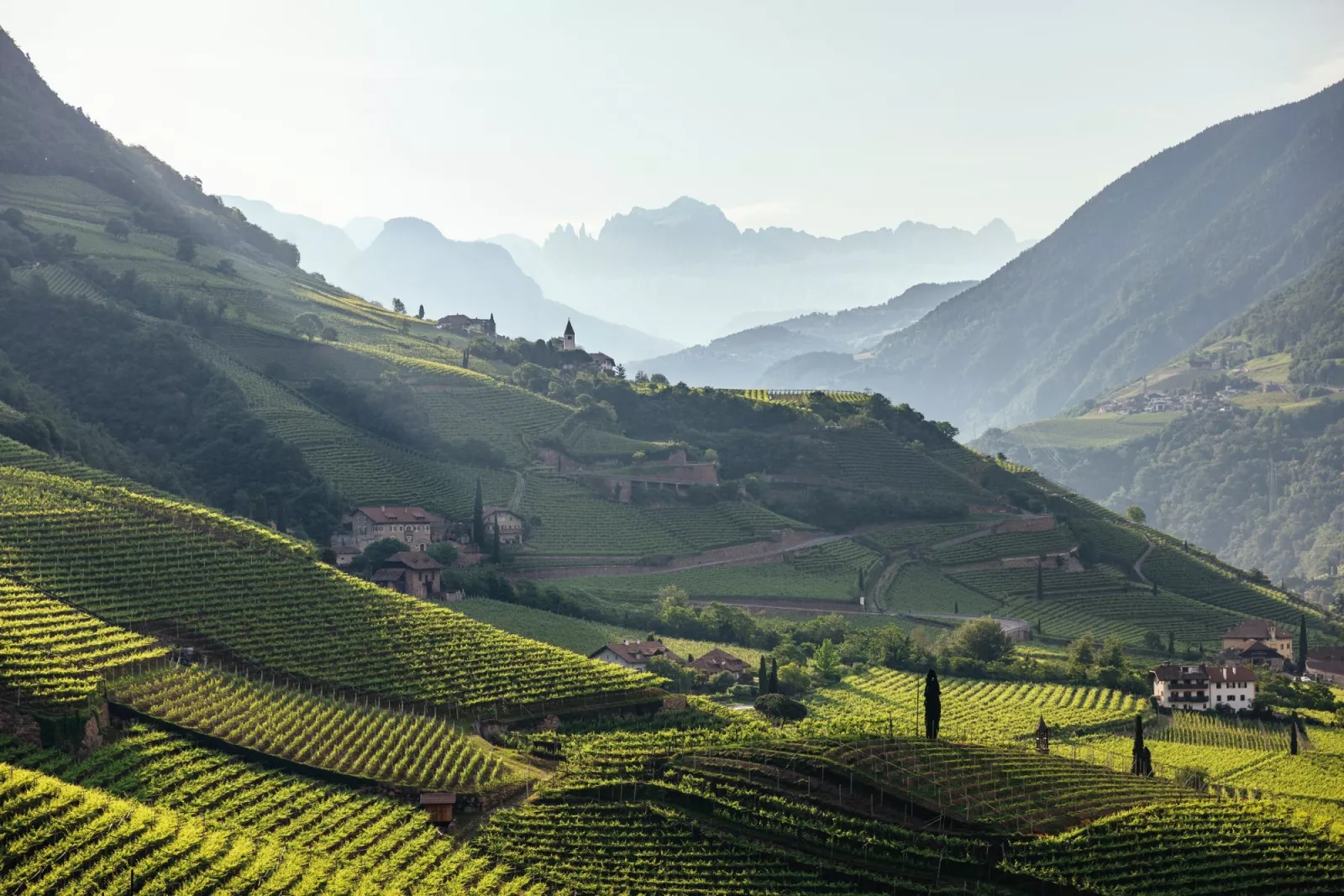
The Alto Adige Wine Consortium encourages and promotes wine tourism as a key driver for promoting the region and its wines
The Alto Adige Wine Consortium was founded in 2007 with the aim of bringing together all the players in the South Tyrolean wine industry (co-operatives, private companies and independent winemakers) behind a single strategic vision, transforming regional fragmentation into collective strength. In a small winegrowing area, with a very complex identity, the Consortium is now the main institutional, technical and cultural point of reference for South Tyrolean wine.
Approximately 4,800 winegrowers cultivate 5,850 hectares of vineyards, producing some 40 million bottles per year, of which more than 96% have the DOC designation. These numbers reflect a shared strategy based on quality, unique character and regional distinctiveness. South Tyrol is one of the smallest wine regions in Italy, but also one of the most internationally recognised, demonstrating how a small size can become a real advantage when supported by a shared vision.
The Consortium acts as an interface between producers and institutions, coordinating activities ranging from the protection of designations to applied research, from sustainability to global communication, with a strong focus on training. Its mission is not limited to the product itself: the goal is to pass on the intrinsic culture of South Tyrolean wine. The publication of the emblematic tome Vino in Alto Adige: storia e presente di un territorio vinicolo unico (Wine in South Tyrol: Past and Present of a Unique Wine Region) supports this aim. The 520-page book recounts centuries of winemaking tradition and enshrines wine as cultural heritage rather than restricting it to purely economic value.
Zoning, UGA and research
Innovation lies at the strategic heart of the South Tyrolean model. In this wine region, research is never an end in itself, but stems from a continuous dialogue between tradition and science. The work on zoning and Additional Geographical Units (UGA), culminating in regulations approved in 2024, led to the identification of 86 UGA associated with the most suitable grape varieties for expressing the character of individual places. It is a paradigm shift: it is not the grape that guides the territory, but the territory that guides the choice of grape variety.
Collaboration with research centres and universities (in particular with the Laimburg Research Centre) allows the Consortium to support even the smallest companies in adopting modern and sustainable agronomic practices. This scientific work addresses crucial issues such as climate change, water management, soil health and socio-economic sustainability, summarised in the Consortium's 2030 Agenda.
A unified narrative for a multilingual region
In terms of communication, South Tyrol is a unique case: a naturally multilingual region that has chosen a unified and coherent narrative for its wine. The integrated communication strategy, developed across multiple languages and international markets, promotes individual company identities within a strong collective message. The Consortium does not replace companies: it amplifies their value through structured collaboration.
From an institutional point of view, the Consortium performs a management function for the entire provincial sector: protection and development of the designation, updating of regulations, technical and regulatory support for producers, co-ordination of European projects, promotion of sustainability and official representation in international institutions and markets. These activities are paired with the promotion of wine tourism and global communication that consolidates the image of South Tyrol as a model of modern and mindful winemaking.
The South Tyrolean case shows how science, culture and co-operation can merge in a consortium system capable of turning regional complexity into a strategic advantage.
Chianti Classico: when a Consortium becomes an identity
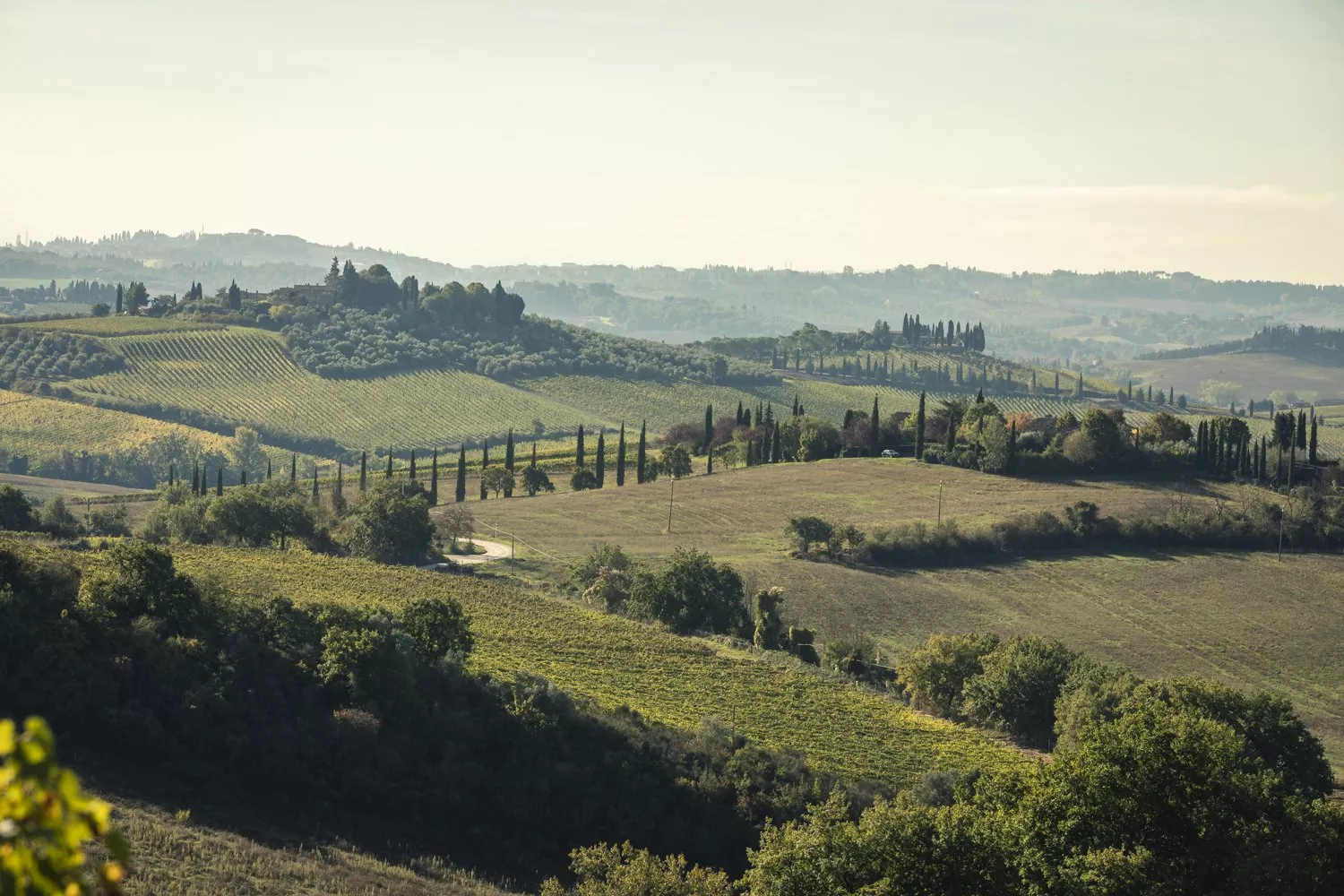
The evocative landscapes of the Chianti Classico appellation area
The Chianti Classico Wine Consortium was the first to be founded in Italy, in 1924. Today, it represents some 500 producers and the Black Rooster brand is among the most recognisable wine-related symbols in the world. The designation has its roots in 1716, when Cosimo III de' Medici officially set the boundaries of the wine region, now spread over 70,000 hectares between the provinces of Florence and Siena, with 10,000 hectares of vineyards and average annual production of 35-38 million bottles exported to more than 160 countries.
Chianti Classico has a very strong identity defined by several factors: it is a unique wine region with great cohesion between winemakers and a recognisable iconographic symbol. In 1924, thirty-three producers understood that collective strength could surpass individual interest. Their vision was to believe in unity of purpose and in working together to manage production capable of representing an entire region. The same values still guide the Consortium today.
The choice of the ‘Black Rooster’ logo proved to be a strategic one: the brand makes a bottle immediately identifiable on shelves worldwide and guarantees quality, authenticity and belonging to a specific region. In Chianti Classico, wine is not only an agricultural product, but the result of a complex system combining history, landscapes, rural architecture and knowledge handed down through generations. It is a region where wine is a form of tangible culture.
The Consortium’s institutional activities hinge on two focus areas: promotion and protection. On the one hand, it promotes exhibitions, fairs, training courses, initiatives supporting responsible consumption and wine tourism programmes; on the other, it defends the DOCG from violations, counterfeiting and unfair commercial practices, collaborating with MASAF and regional institutions for the international protection of the brand and the evolution of regulations.
Recent European legislation has also reinforced the role of Consortia as promoters of wine tourism and hospitality, turning them into key players in the cultural and economic development of rural areas.
Etna DOC: region before grape variety
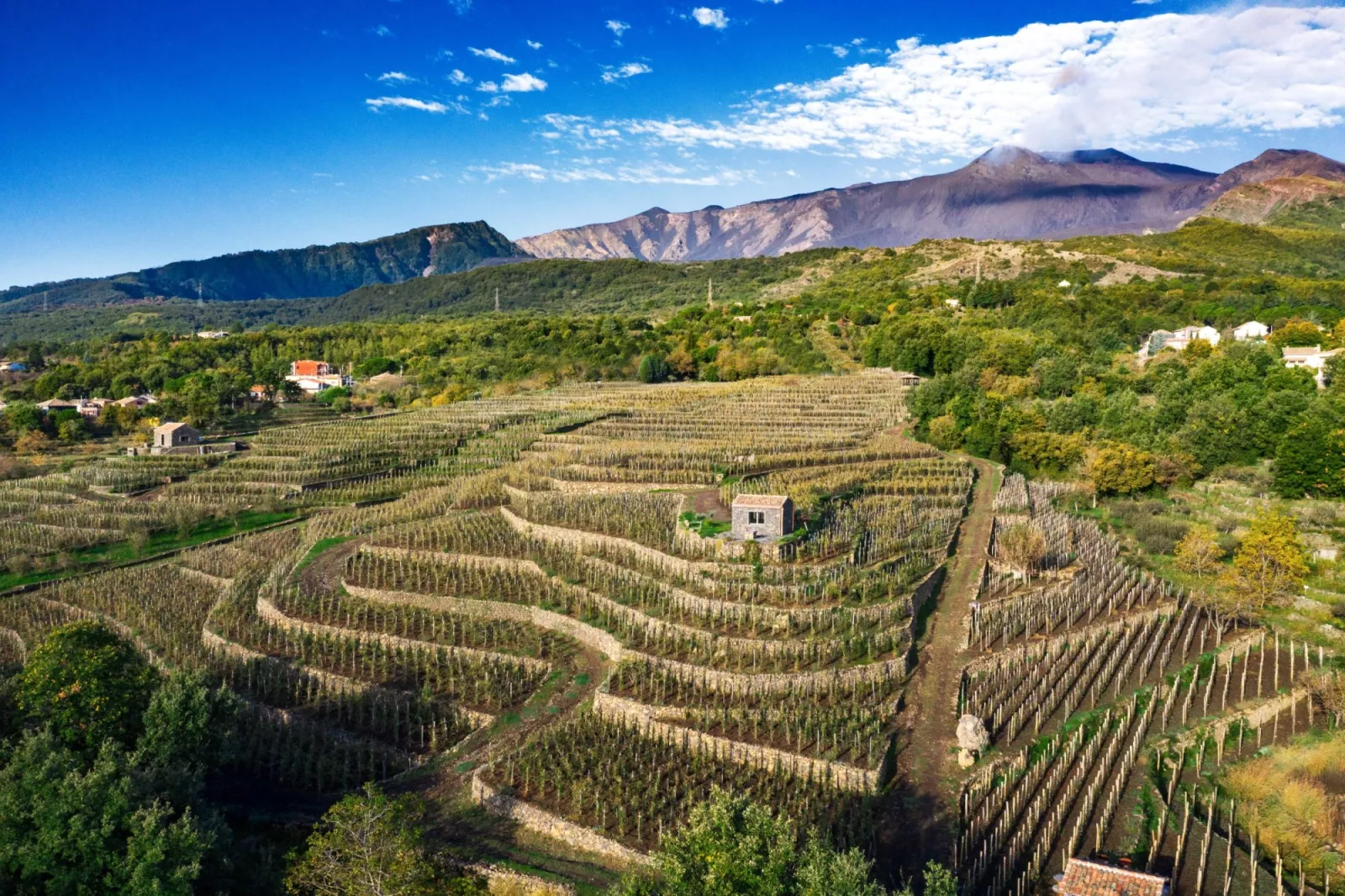
Etna is one of the most obvious examples of how the consortium system can become guardian and interpreter of an extraordinary wine region. The Etna area is often defined as an island within an island: a complex and constantly changing ecosystem where geology, climate and wine culture are intertwined in a truly unique way. The 133 contrade are spread across the four slopes of Etna DOC, which will exceed 150 with the next update to regulations, symbolising regional fragmentation that is not dispersion but an asset. Differences in exposure, volcanic soils showing different evolutions, strong temperature variations and the centuries-old adaptation of varieties such as Nerello Mascalese, Nerello Capuccio and Carricante (together with other typical varieties) produce wines that are among the most recognisable on the Italian wine scene. In this region, winemaking is defined as heroic, shaped over the centuries in terraces supported by dry stone walls built from lava stone, which carve out the landscape.
Etna DOC, established in 1968 (the first Sicilian designation and among the first in Italy), was born with a strong territorial vision already embedded. In 1994, the Consortium for the Protection of Etna DOC Wines was founded with the aim of protecting and promoting this heritage. In 2018, it was recognised as ‘Erga Omnes’, which confirmed its official role in protecting and representing the entire designation. Today, the area includes about 1,400 hectares of vineyards, 480 winemakers and production in the range of 6 million bottles, numbers that have doubled in the last decade, testifying to structured, lasting growth.
The contrade, a language of terroir
The identity of Etna DOC is based on a key principle, supported by the consortium's communication strategy: putting the region before the grape variety. Geology, climate and landscape structure (with terraced slopes and dry stone walls) are combined with age-old winemaking traditions, which predate phylloxera and are passed down from a time when the local economy already revolved around wine. The concept of terroir is amplified by the system of Additional Geographical Mentions, the contrade, which make it possible to highlight micro-territorial differences.
From an institutional perspective, the Consortium focuses on promotion and protection, but also looks to the future with ambitious projects. The most significant is a certified approach to the designation’s sustainability, which is considered of strategic importance for preserving the environmental, social and economic value of the region. Spreading the word about the advantages of this approach will be one of the pillars of the PDO’s future narrative, strengthening the link between wine quality and responsibility for the region.
Etna shows how a Consortium can transform geographical complexity into a visible identity, making region not just origin, but a shared language.
Mandrolisai: unity of purpose to revive a region with a strong identity
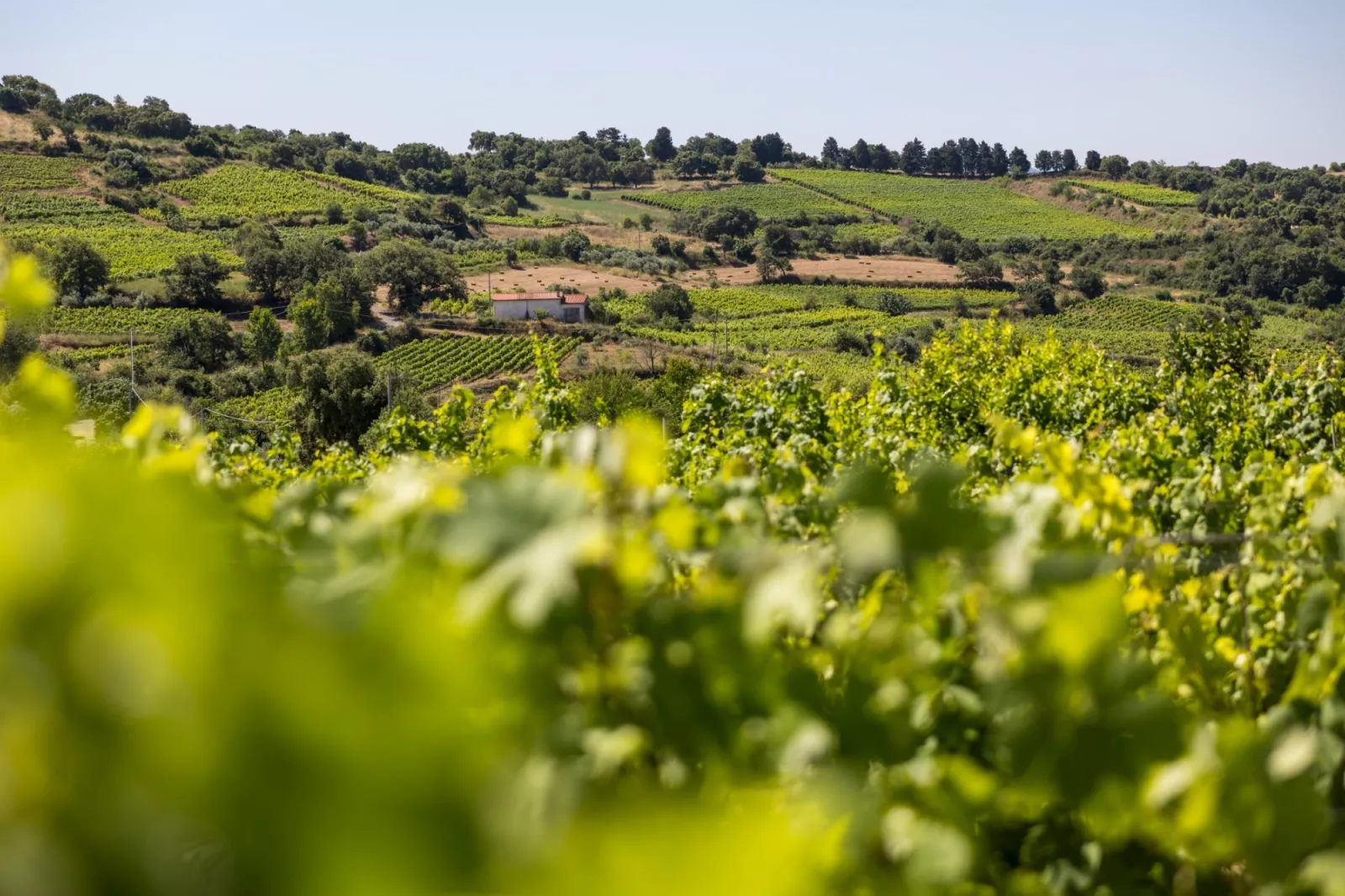
Mandrolisai is the only Sardinian wine region where the PDO hinges on the interaction between three complementary grape varieties - Bovale, Cannonau and Monica di Sardegna
The Mandrolisai Wine Consortium is a concrete demonstration of how the Italian consortium model can become a tool for promoting even the smallest designations of origin. Founded in 2024 by a group of producers from the heart of Sardinia, the Consortium represents a historic milestone for an area that preserves one of the island’s most authentic winemaking identities. Mandrolisai spans the localities of Sorgono, Ortueri, Atzara, Samugheo, Meana Sardo, Tonara and Desulo: an inland, mountainous area, where viticulture retains an archaic yet surprisingly contemporary nature.
Mandrolisai boasts unique features on the Sardinian wine scene: it is the only designation on the island to proudly display the name of the region on the label, without being anchored to a single grape variety. This choice reveals a specific vision, where wine is not an isolated varietal expression but a synthesis of landscape, tradition and biodiversity. The region has in fact continued the practice of mixed vineyards, where Muristellu (Bovale Sardo), Cannonau and Monica grow together with other indigenous grape varieties, preserving an ampelographic heritage of extraordinary value in an era of increasing varietal standardisation.
The high-altitude vineyards, often located in positions that make mechanisation difficult, preserve ancient agricultural methods, now enhanced by increasingly mature technical and productive expertise. Thanks to greater agronomic and oenological awareness, local producers are streamlining and optimising what the past has taught them, adapting their approach to contemporary demand for sustainability, precision and respect for the ecosystem.
Mandrolisai is defined by altitude, heroic winemaking, strong pedo-climatic character and the integrity of its biodiverse setting.
The project launched by the Consortium in 2025 to promote the wine region includes national and international outreach initiatives and marks a new step in the Mandrolisai narrative, contained in the tagline ‘Il Territorio al Centro’ (Territory at the Centre).
The Mandrolisai wine consortium shows that the strength of the consortium system does not depend on the size of the designation, but on its ability to build a shared vision. Even an outlying area can become a main player when the wine producing community decides to speak with a single voice.
Consortia: turning diversity into a structured system
In a country with the number of vines, regions and designations that Italy has, the role of the Consortia is essential in transforming diversity into a structured system without erasing its differences. Consortia are where plurality and cohesion come together in harmony, ensuring that each area can express its voice within a credible and recognisable collective narrative. Without this shared structure, Italian wine geography would risk fragmentation. Thanks to the consortium model, complexity becomes organised value, concrete protection and a sustainable future. This is where identity is protected, quality is monitored and wine regions are turned into a shared project.
Italian wine consortia: FAQ
What is a Protection Consortium in Italian wine?
It is a body that brings together the producers of a designation to protect and promote it. Italy's model is unique worldwide and allows even the smallest producers to be represented. The first, the Chianti Classico Wine Consortium, was founded in 1924, and Federdoc now unites around 80 Protection Consortia under one national confederation.
What is Federdoc and what does it do?
Federdoc is the confederation of Italian wine consortia, founded on 9 July 1979. It brings together around 80 Protection Consortia and represents more than half of national PDO production, over 12.4 million hectolitres. It supported the creation of Valoritalia for certification and Equalitas for sustainability, and was a founding member of EFOW.
What are the rules for Alta Langa DOCG sparkling wine?
Strict ones. Alta Langa makes only vintage traditional-method wines, aged at least 30 months on the lees, from vineyards above 250 metres, with an average of 440 metres. Pinot Noir and Chardonnay must make up at least 90% of the blend, with only a limited proportion of indigenous grape varieties allowed.
What are the contrade of Etna DOC?
They are the Additional Geographical Mentions of Etna DOC. There are 133 spread across the volcano's four slopes, and they will exceed 150 with the next update to the regulations. They highlight micro-territorial differences in exposure, volcanic soils and temperature, in line with the consortium's principle of putting the region before the grape variety.
How big is wine production in South Tyrol?
Small but internationally renowned. Around 4,800 winegrowers cultivate 5,850 hectares of vineyards, producing some 40 million bottles a year, more than 96% of them DOC. Since regulations approved in 2024, 86 Additional Geographical Units (UGA) have been identified, each associated with the grape varieties best suited to the place.
Which Italian wine regions should I explore to understand the consortium model?
Start with five. Chianti Classico, with its Black Rooster and some 500 producers; South Tyrol, where more than 96% of the wines are DOC; Alta Langa for traditional-method sparkling wines; Etna DOC for Nerello Mascalese and Carricante from volcanic soils; and Mandrolisai, a Sardinian blend of Muristellu, Cannonau and Monica.